
Environment
Rare pinsapo firs lost in mountain fire
Reforestation project on San-Pedro to Ronda road, home to over 2,000 native trees, is destroyed
Javier Almellones
For several days, all eyes were on Igualeja and Parauta in the Serránía de Ronda mountains. The forest fire threatened both municipalities, forcing authorities to take preventive measures to protect the population. The flames even crossed the A-397 road San Pedro to Ronda road. Once the fire was finally brought under control, the damage suffered in other areas also began to emerge. One of the most severe cases was right beside that road, in the municipality of Parauta.
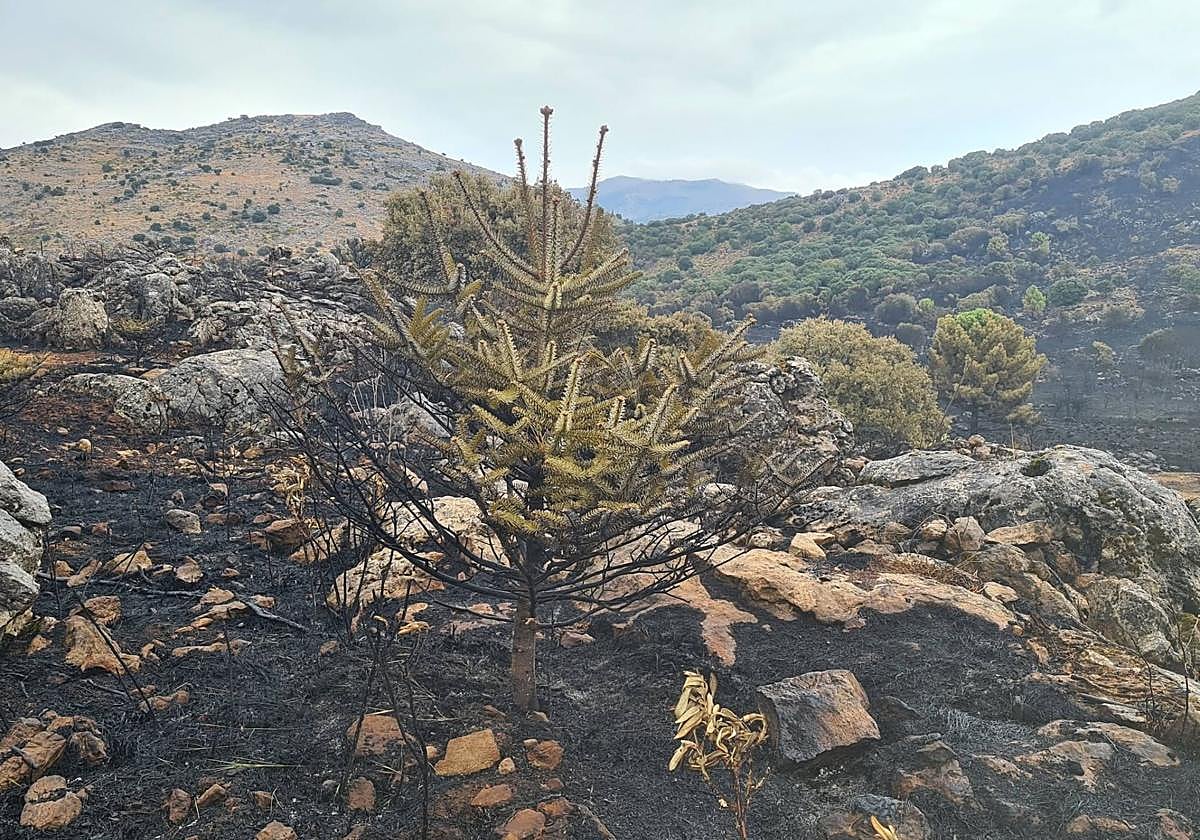
Next to the San Pedro-Ronda road lies El Navacillo, the estate to which José Gómez Zotano had devoted twelve years of work and a great deal of his hopes and aspirations. The fire has practically destroyed its twelve hectares. The house was spared, along with just a few of the rare pinsapo firs growing around it. The rest of the woodland he had gradually created over more than a decade has disappeared.
“Nothing is left. Nothing,” said this geographer and researcher at the University of Granada, still deeply shaken. He regrets that, despite the environmental disaster, no government authority has so far contacted him or the other property owners affected in the area.
Patient transformation
When Gómez Zotano acquired El Navacillo in 2014, it was a far cry from the forested landscape it eventually became. It was a former agricultural estate that had been abandoned since the 1950s and had previously been subject to intensive exploitation. Decades without activity had left large areas covered with gorse, some of it reaching up to two metres high, making the land almost impossible to cross.
A patient transformation then began. He restored old paths, cleared vegetation, created firebreaks, encouraged the growth of trees that had emerged naturally, and introduced new species to increase biodiversity. In 2018, volunteer workdays also made it possible to remove tonnes of waste that had accumulated on the property over decades.
The transformation was gradual. Trees that, when he arrived, barely rose above the ground eventually grew into sizeable specimens thanks to pruning, care and years of sustained forestry work.
Gómez Zotano was especially proud of the endangered ‘pinsapo’ Spanish firs, once widespread in this area but now under threat. Before the fire, he counted 314 specimens, originating from different reforestation campaigns and of different ages. Some had already reached around one and a half metres in height.
They were joined by maples, yews, holly trees, walnut trees, chestnuts, holm oaks, Portuguese oaks, rowans, hackberries, willows and poplars. More than 500 trees had been planted in total, and Gómez Zotano estimates that, including those that had flourished naturally, El Navacillo may have contained around 2,000 trees.
José Gómez Zotano’s home survived even though the fire destroyed practically the entire estate. Only around seven pinsapo firs, located next to the house, appear to have escaped, although some of them were damaged. The rest of the estate has been reduced to ashes.
This was not merely a personal initiative. Some of the trees came from other projects. One such effort led to the planting of 56 pinsapo firs at El Navacillo through an initiative by the public paths association in the Serranía de Ronda, funded by the la Caixa foundation and carried out with the cooperation of other organisations. Those trees were already part of a broader environmental restoration project on the estate.
Sierra de las Nieves
Gómez Zotano’s connection with the protected pinsapo fir extends far beyond his own property. Through the University of Granada, he has spent years studying the historical landscapes of the Sierra de las Nieves habitat and trying to identify places where this species was present before largely disappearing.
Gómez Zotano was at El Navacillo when the fire broke out. He had stayed overnight because painters were working at the house. Around midnight, he received a call from a neighbour warning him to leave the property as the flames approached.
Initially it appeared the fire was some distance away. In the morning, he went to the emergency response centre set up near the restaurants on the other side of the road and, he recalled, was initially told that the area was safe. But the wind changed.
The fire began to race down the hillside with enormous force, eventually crossing the road and reaching his property. It crossed the road, jumped onto my land, and everything burned,” he explained despondently.
![[]](http://static.vocstatic.com/voc26/latest/assets/images/favicon/surinenglish/apple-touch-icon-57x57.png)