
Legal
Malaga court ends neighbour dispute over five trees by ordering their felling
The provincial court has concluded that the age of the trees and their role in protecting the privacy of the property do not justify non-compliance with the distances laid down by law
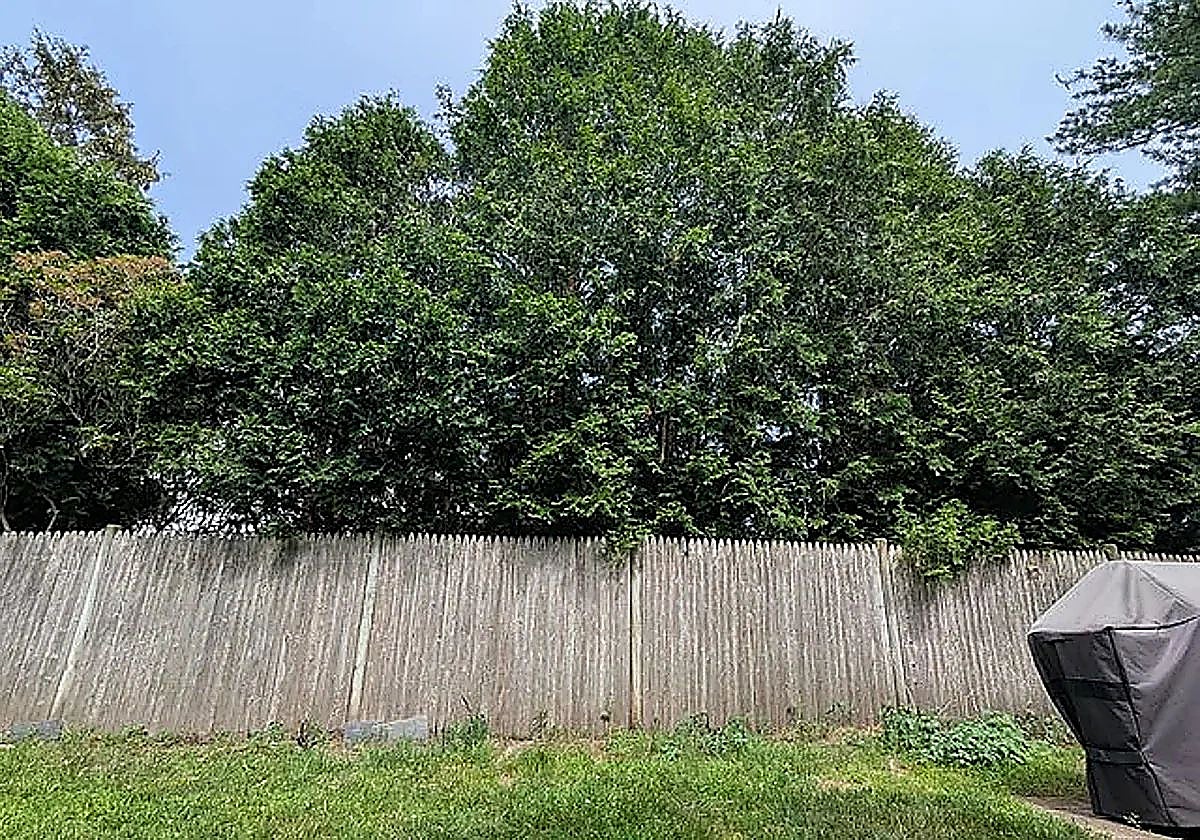

A long-running dispute between neighbours in Manilva over trees planted too close to a property boundary has ended in court, with the Malaga provincial ... court ordering the owners to either cut down or transplant five trees that fail to meet the legally required distances.
When the owners bought their home in 2019, the trees already formed part of the neighbouring property. Some had stood there for more than 20 years. The problem was their location: all five grew too close to the boundary separating the two plots.
Three pine trees, each more than seven metres tall, stood next to the swimming-pool area, while several cypress trees reached heights of up to 12 metres. The pines stood about 90 centimetres from the boundary wall, while the other trees stood 1.3 and 1.7 metres from the boundary. None met the two-metre minimum distance required for tall trees.
Related story
The new owners repeatedly asked their neighbours to remove the trees, but they refused. They stated that the trees had stood there for more than two decades and caused no harm because they had pruned them to prevent branches from falling onto the adjoining property. They also maintained that the trees helped protect their privacy.
The dispute continued escalating and eventually reached the courts. The provincial court has now upheld the requirement to "cut down or transplant" the trees that breach the legal distances.
It ordered the owners to remove trees growing less than two metres from the boundary, as well as shrubs or low-growing trees less than 50 centimetres away. The work must also remove the roots to prevent the plants from growing back.
An impossible agreement
Before going to court, the neighbours tried to reach an agreement, but without success. The affected owners asked for the vegetation either to be removed or moved to a location that complied with the permitted distances and height limits.
A November 2025 ruling refers to a formal letter sent on 29 July 2020 and to emails sent to the defendants' legal representative. Neither approach resolved the dispute.
A technical report submitted with the claim concluded that five trees failed to meet the setback requirements established by law, as well as community rules governing their height and location. The claimants also stated that the planting breached applicable planning regulations.
The trees' age formed the neighbours' main argument against removing them. They had stood there before the claimants bought their home in Manilva in September 2019. The defendants also challenged the expert's measurements, denied that the trees caused any damage and argued that they had fulfilled their duty to prune them.
They refused to remove the trees because they had stood there for more than 20 years and helped preserve the privacy of their home.
The Estepona court sided with the owners who sought their removal. It found that five trees stood closer to the boundary than the law allowed and ordered the situation to comply with the regulations.
One of the neighbours appealed to the provincial court, again arguing that the trees predated the arrival of the new owners and that this should prevent the court from ordering their removal. The provincial court rejected that argument.
The court referred to Supreme Court case law on situations where trees already existed when someone acquired the neighbouring property.
The panel of judges made clear that buying a property when a neighbour's trees already stand in place does not mean the new owner must put up with them if they fail to meet the legally required distances.
However, the court noted that the restriction would not apply if the evidence showed that the trees had already existed when the plot was originally defined and registered as a separate property. In this case, the court said, the owners had failed to prove that this had happened.
The court also found that the trees' proximity created ongoing problems for the claimants. "The proximity of the trees creates an objective situation of continuing harm for the claimants," the ruling states, adding that this can be seen "simply by looking at the photographs" submitted to the court.
The owners have the right, the court said, to enjoy their property "without undue interference".
The neighbour also failed to overturn the findings of the technical report. Although they challenged the expert's measurements, they did not produce another expert report to demonstrate the alleged errors. The court therefore concluded that their objection amounted to "a mere allegation completely unsupported by evidence".
The technical report established that all five trees breached the rules governing their distance from the boundary and the applicable height restrictions.
The court also rejected the argument that privacy justified keeping the trees where they stood. That right, it said, "would in no way be affected" if the trees and shrubs were transplanted to a location that complied with the law.
![[]](http://static.vocstatic.com/voc26/latest/assets/images/favicon/surinenglish/apple-touch-icon-57x57.png)