
Animal welfare
Mystery of Malaga province's last wolf: clues to disappearance with no date
A she-wolf hunted in 1941 near El Chorro, later sightings in other mountain ranges and documents dating back five centuries help to piece together the demise of a species that is still very much present on the province's maps

Málaga
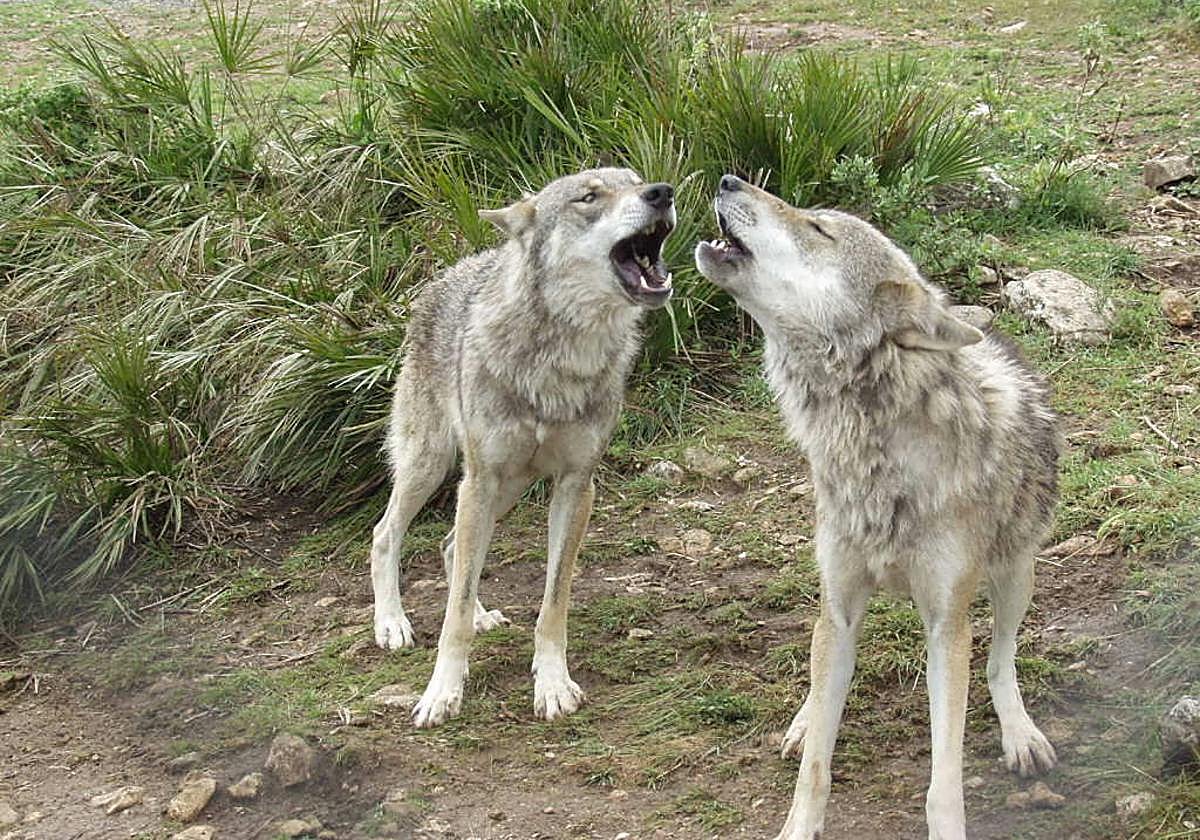
At the foot of the Torcal de Antequera, where wolves could still be found roaming free less than a century ago, there is now a ... park dedicated specifically to these animals: Lobo Park. The paradox is striking in a province where this predator was hunted for centuries until it became extinct. However, despite historical records and preserved accounts, there is still no definitive answer to one question: when and where was the last wolf in Malaga hunted?
To answer this question, we need to explore some of the main mountain ranges in Malaga and consult documents dating back to the late Middle Ages. The result is a story full of clues, but also of contradictions. It is one thing to know of the historical presence of these animals and quite another to determine when the last one disappeared.
One of the most concrete leads takes us back to 1941, in the middle of the post-war period. That year, a she-wolf is said to have been hunted down in the Cañada del Lobo, a spot in the foothills of the Sierra de Huma, near the Desfiladero de los Gaitanes. According to the account, the animal was eventually put on display at El Chorro railway station and the person who captured it received a financial reward.
Pedro Cantalejo Duarte recorded the incident in his book Guía para visitantes del Desfiladero de los Gaitanes. Caminito del Rey (El Chorro). He identifies that spot as the last place in those mountains where a she-wolf was hunted and notes that it may have been one of the last remaining members of the species in the area.
Cantalejo explains that he learnt of the story from Miguel Álvarez, a forest ranger who worked for years in the hills of Carratraca, El Chorro and the surrounding area. It was Álvarez who relayed the details of that capture to him, which other sources had more generally placed near Almorchón.
The scene at the station is revealing. In an era marked by food shortages, when a large part of the rural population depended on the resources of the countryside, the capture of a predator could become an event worthy of public display. "The year 41 was the year of famine," Cantalejo writes. For those trying to protect their livestock, the wolf was also a competitor.
However, the researcher warns that it is difficult to regard that female as the last remaining specimen in the whole of Malaga province. The lack of systematic records and the possibility that animals may have survived in other mountains make it impossible to establish absolute certainty.
Doubts grow as the investigation moves westwards.
Sierra Bermeja
Felipe Román, a biologist and chairman of Grupo Lobo Andalucía, has been compiling information on the historical presence of this species for years. His work includes municipal documents, publications and testimonies that cannot always be verified.
In the Sierra Bermeja, there are references to dead specimens from the late 1930s. Román has identified references dating from 1937 and 1939. One of the most detailed accounts appears in Sierra Bermeja: reto y refugio para la fauna: a paper co-authored with Diego Rodríguez Martínez and published in the journal Takurunna. The authors date the death of a female wolf to 1939 in the municipality of Casares, at the foot of the Sierra Bermeja.
The study raises an even more intriguing possibility: that some specimens may have survived in the area until around 1950. This is where one of the main problems with this research arises: distinguishing a reliable account from a memory distorted by the passage of time. It is difficult even to know whether the animal that someone identified as a wolf actually was one.
Román explains that in rural areas, a clear distinction has not always been made between wolves, feral dogs and other similarly appearing canids. Identification is particularly difficult when only an oral description remains and there are no remains of the animal.
A supposed wolf was reportedly hunted in the Sierra Bermeja around the middle of the 20th century. The animal is said to have been photographed alongside its hunters at the old Manicomio bar. However, Román has not been able to examine the photograph and the identification remains unconfirmed.
This shows how a story can persist for decades without anyone being able to verify it. Not all references carry the same weight.
Just when it seemed that the dates 1939 and 1941 might help narrow down the period of the wolf's disappearance in Malaga, another reference points to the Sierra de las Nieves. Various publications date the death of the last wolf in those mountains to 1947. This claim appears, among other sources, in the Atlas de la Serranía de Ronda.
However, none of the references allows us to reconstruct precisely what happened. Neither the hunter nor the specific location is identified, nor is there any original document that would enable us to verify the circumstances of the wolf's death.
Antequera
There is yet another clue that points back to Antequera. In El hombre y el Torcal de Antequera, Manuel Romero González and Julia Salazar Fernández state that the presence of a number of wolves was confirmed in the Torcal during the 1940s and 1950s. Once again, this information is intriguing, but the publication does not provide details of the circumstances surrounding each sighting.
The various sources paint a picture in which it is possible that wolves survived in certain parts of Malaga for longer than had traditionally been thought. However, they do not allow us to identify the last remaining wolf with absolute certainty.
Furthermore, the extinction of a species rarely occurs in a single instant. It may cease to reproduce in a particular area, with a few isolated individuals surviving for years before finally disappearing without anyone recording their death.
To understand how that situation came about, we need to go back several centuries, to a time when the problem was not finding the last wolf, but reducing its numbers.
In January 1494, the town hall of Antequera received complaints about wolves and the damage they were causing. Hunters, however, did not seem particularly keen to hunt them down. The reason was financial: the bounties on offer were lower than those paid in other territories.
A few months later, the wolves were once again the subject of discussion at town meetings. This time, their presence was used as an argument for clearing certain kermes oak groves in the floodplain, where they found refuge.
In 1514, a hunt was organised following complaints from a livestock farmer. The participants spent the day searching for wolves, but returned without catching any. They had lost a day's wages and the animals remained at large.
Five centuries later, the situation is paradoxical: researchers are searching for documents that might show when those predators disappeared.
Archidona
The archives of Archidona provide even further details. Historian Juan Luis Espejo Lara has reconstructed part of that persecution in his work Alimañas y alimañeros. La caza del lobo y el zorro en Archidona a finales del siglo XVII.
Between 1788 and 1799, eleven wolves were recorded as having been captured: four adults and seven cubs. This was not the first time the town hall had received reports of cubs.
On 9 June 1699, two further litters were reported to the town hall: one of six cubs and another of eight. This does not merely confirm the occasional presence of wolves, but also shows that these animals actually bred in those mountains.
The hunt was organised on the basis of bounties. Hunters were paid different amounts for males, females and young wolves and were required to provide proof of their catches to the authorities. At certain times, tails and ears served as proof for claiming payment.
The pressure continued throughout the 19th century. Espejo Lara's study cites a statistic from the directorate-general for agriculture which records 14 wolves captured in the province between 1885 and 1889.
In addition to the hunts and bounties, poison was also used. Felipe Román believes that this prolonged persecution, together with changes to the landscape, explains the gradual decline of the species in Andalucía. By the time the provincial committees for the eradication of harmful animals were established in 1953, the wolf was already considered extinct or extremely rare in the mountains of Malaga.
There is a way to find wolves in Malaga without visiting a zoo or delving five centuries back into the archives: simply consult a map. The names of numerous geographical features still bear traces of this animal.
La Cañada del Lobo, where Pedro Cantalejo places the 1941 capture, is one of the most significant examples, but there are others in the Sierra de las Nieves, such as the Puerto de los Lobos, near El Burgo, or the Cerro del Lobo and the Cerro de los Lobos.
Further south, the Sierra Blanca is home to the Salto del Lobo, near Ojén. In the Genal Valley lies the Majada del Lobo. Felipe Román points out that the Sierra Bermeja also has place-names linked to these animals, such as La Lobilla and the former Callejón de los Lobos.
Although these names do not enable us to date the species' presence or prove that all those places were inhabited by wolves, they do provide evidence of their historical connection with the area.
This coexistence may even date back to prehistoric times. In the Calvario gallery of the Ardales cave, there are two animal heads painted with ochre pigment more than 25,000 years ago. According to Pedro Cantalejo, one clearly depicts a doe, while the other has features that suggest it may be a canid, probably a wolf.
The identification is not definitive, but it prompts us to look much further back in time. For millennia, these animals shared the Iberian Peninsula with humans. Their disappearance from the mountains of Malaga, however, dates back to just a few generations.
Having retraced centuries of persecution and extinction, another question arises: could wolves one day return to the mountains of Malaga? Felipe Román believes that certain areas still offer conditions that might favour their presence. He specifically mentions the hills of Cortes de la Frontera and the Sierra de las Nieves, where there are sufficient food resources for these predators.
However, the chairman of Grupo Lobo Andalucía warns that having food available does not mean being prepared for a reintroduction.
Román believes that any potential recovery should be based on specific planning and measures that would enable the coexistence of wolves and livestock. The protection of flocks, the availability of wild prey and connectivity between natural areas would be key issues.
Perhaps the last wolf in Malaga died in one of those mountains during the 1940s or perhaps it survived for a little while longer in some remote corner, without anyone recording its demise. The truth is that a species which had shared this land with its inhabitants for thousands of years disappeared in the space of just a few decades. It is not known exactly when this happened, but its name still appears on the maps of the very same mountain ranges through which it once roamed freely.
