
Education
A Costa del Sol secondary school with top marks for multiculturalism
IES Mercedes Labrador is a secondary school in Fuengirola that currently has over 600 pupils who represent up to 45 nationalities from all five continents
Marina Rivas
Fuengirola
The province of Malaga, and especially the Costa del Sol, has become a magnet for global travellers. People from all over the planet come here keen to start a new life, to study, to find better opportunities, or simply to enjoy the environment, climate and the people. It is no secret that one of the great values and emblems of the Costa del Sol today is its multiculturalism, the mixture of cultures from all corners of the world that live side by side here.
As such, a true reflection of this reality is the Mercedes Labrador secondary school right in the centre of Fuengirola. The school is recognised in the area for welcoming students of no fewer than 45 different nationalities, covering all five continents. Students who, by setting an example and putting in hard work, demonstrate that everyone can live together in harmony.
More than 600 students turn up daily at the sound of the school bell. It comes as a bit of a shock, especially to those who grew up in other times, to see how, behind the school walls, classes with more than ten different nationalities and such disparate features and skin tones can be seen studying together, or even just playing in the school-yard. But here this is a daily occurrence.
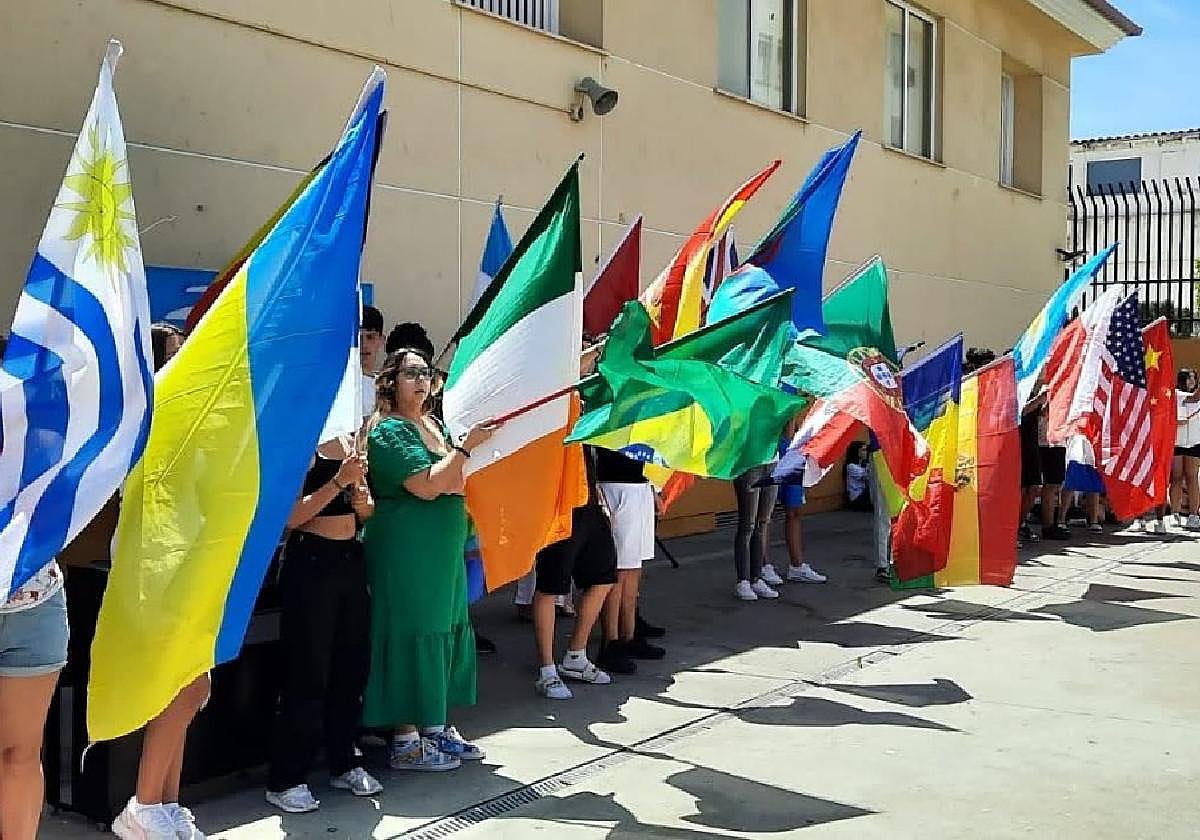
Every year the school holds an 'interculturality' day with workshops, music, sports, dancing and cuisine from around the world
Apart from the pupils who are Spanish nationals, most are South American and European. However, some students are from more diverse countries such as Senegal, the Philippines, Pakistan, China, India, Australia and the US. As the English teacher, Inma Casado, explained: "English helps a lot. It is a lingua franca that many have in common, because many of them have already studied a fair amount of it." However, although many are helped by using English to begin contact with other children, the ability of young people to grow and adapt to new situations is amazing. So, although many of them might have been born here, others arrive with little or no knowledge of Spanish.
This is where the work of Jesús Relinque comes into play, as the teacher for intercultural activities and ATAL (a transit class for foreign students needing language support).
In his classes these young people are taught about both the Spanish language and culture. In addition, to improve their chances further for better integration and adaptation, class schedules are also tailored for them at the beginning. That said, the teachers are adamant that the best learning happens when in contact with Spanish classmates.
"They also learn Spanish through contact with their peers, because most of them also want to integrate quickly. There are students who speak Spanish within three or four months, and it's amazing. In addition, it should be noted that the concept of traditional Spanish, with its traditional surnames, is seen less and less. The reality of today is different and this is it: multicultural," stated head of studies Santi Mora.
With the arrival of the noughties, the period when it was deemed that the number of nationalities in the area was really growing, the staff and management of the school came up with the idea of starting up a day for celebrating their cultural diversity. Intercultural Day, as it is known, is an event that, after around 20 years, has become the school's "big day". This year's day was held last month, although the preparations began several months previously, not only with the aforementioned staff, but also with Jesús Rojo (chief organiser), Adela López (head teacher), María Esperanza Bolet (deputy head of studies) and many parents and pupils dedicated to the event.
For the day around 50 different activities are organised to showcase what is special and authentic about each of the cultures present within the school. A day for gathering together in harmony, friendship and mutual appreciation.
"We start with some talks about interculturality. Then we have a food-tasting in which many families participate. There are also 'stands' where [students] dress in the typical costumes of their countries. There have been writing workshops, henna tattoos, other years we had braiding and African hairstyling, music, dance, crafts..." explained Casado.
Sushi workshops, karaoke, traditional games from around the world, friendship twine bracelets, painting, a batucada (a Brazilian percussion musical genre with strong African roots), a Japanese aikido workshop... All these activities are carried out in just one morning, with the help of parents. For example, the preparation of a long tasting table of typical dishes from different countries. This culinary experience and the parade of flags, with music and dancing, are undoubtedly the star events of this annual fun day.
![[]](http://static.vocstatic.com/voc26/latest/assets/images/favicon/surinenglish/apple-touch-icon-57x57.png)