
Construction
Marbella approves new regulation to address issue of abandoned developments
It may force the owners to either perform works or sell the property or land
José Carlos García
Marbella
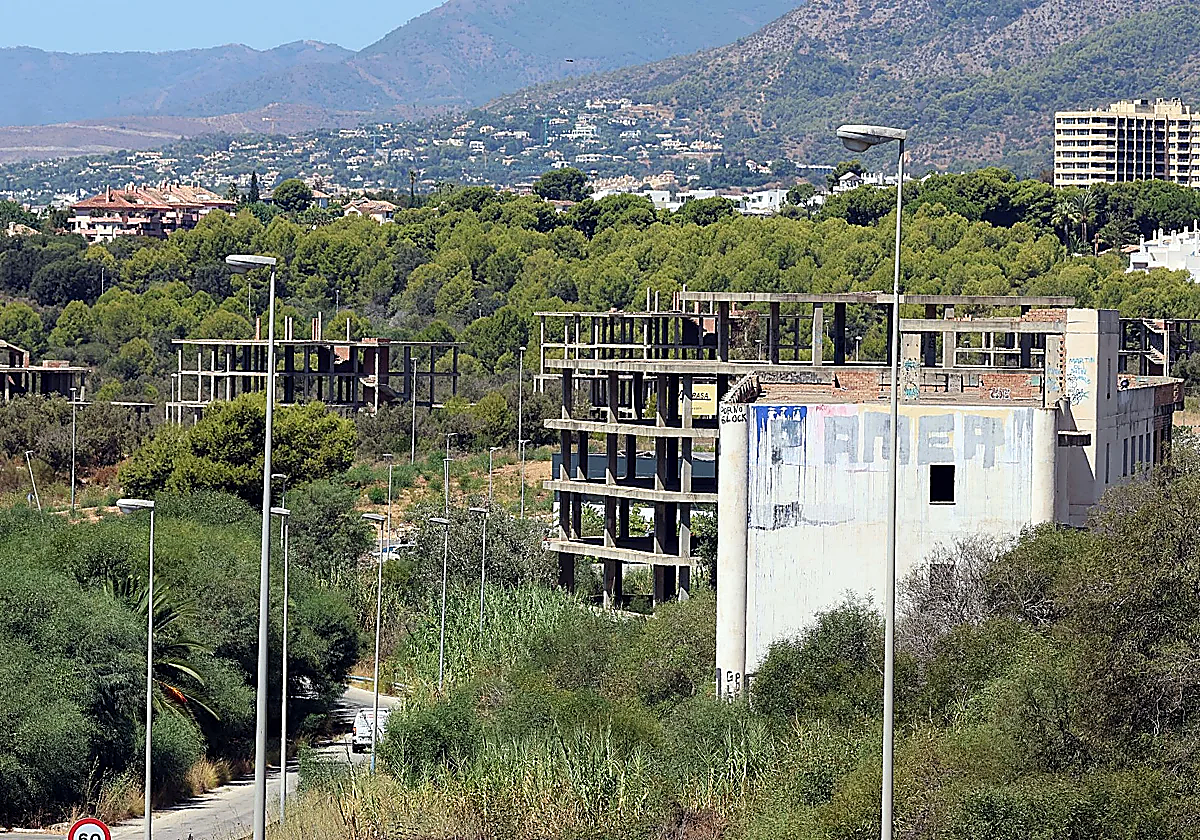
Marbella town hall now has a powerful tool at its disposal to address abandoned construction projects, substandard or dilapidated buildings and even vacant lots. The regulation came into effect a week ago.
The legal options it grants the town hall go far beyond simply creating a "blacklist" of urban planning violations. It allows for the execution of the project by substitution (by the town hall or an authorised third party), forced sale and even the possibility of acquiring the building for the municipal land assets (PMS) if a public tender for the sale of the lot or building fails to attract any bids.
The new RMSER regulation may include "undeveloped vacant lots", that is, urban plots with "minimum services" that have not been built upon; "paralysed constructions", as the text refers to works "started but abandoned or suspended", especially after the expiration or cancellation of the license; "deficient buildings", which are those properties "without habitability, safety or health conditions, or with unfulfilled execution orders"; and "ruinous buildings", in accordance with the provisions of the law in Andalucía.
The duty to preserve and build
For the town hall, this is "a regulatory tool" to "address problems of unsanitary conditions, insecurity and lack of public aesthetics" caused by "the abandonment of vacant lots, unfinished or demolished buildings or the harm done to all residents resulting from the destruction of existing built heritage". The bylaw "regulates the circumstances and consequences of failing to comply with the duty of conservation and construction".
Once a declaration of breach of the obligations giving rise to the registration and inclusion of the property in the RMSER has been made, this will be forwarded to the land registry and recorded in a marginal note, which will expire after three years unless updated. If, however, what is registered is a compulsory sale, this will have the "effect of a real charge".
Consequences for the owners
The legal text stipulates different consequences depending on the circumstances. If a property owner fails to fulfill their obligation to build, they must begin construction within one year of the date of the notice. If they fail to do so, the work will be carried out by substitution, meaning the town hall or an authorised third party will undertake the project. The cost is passed on to the owner and the proceedings may result in a forced sale of the property if the non-compliance persists, although the deadline is suspended if they apply for a building permit.
In the case of an urban ruin, in addition to adopting urgent safety measures, the owner must choose within one year between complete rehabilitation or demolition and the execution of a new construction (if the property is not protected). If they do not comply, the principle of execution by replacement will be applied.
In cases of unfinished construction or non-compliance with enforcement orders, the regulation provides for automatic transfer to the execution by substitution phase. However, in the case of construction halted due to the court's annulment of the permit, the owner must apply for a new permit or demolish the structure within one year. If they fail to do so, the town hall or a third party will carry out the work. If justified reasons exist, safety, hygiene and aesthetics must be guaranteed.
![[]](http://static.vocstatic.com/voc26/latest/assets/images/favicon/surinenglish/apple-touch-icon-57x57.png)