
Marbella house prices break 800,000-euro barrier for the first time
New data shows the average transaction value climbing steadily since the pandemic, even as the number of completed sales falls towards a decade low, with a rent-to-buy scheme reporting hundreds of enquiries from dual-income couples unable to save for a deposit
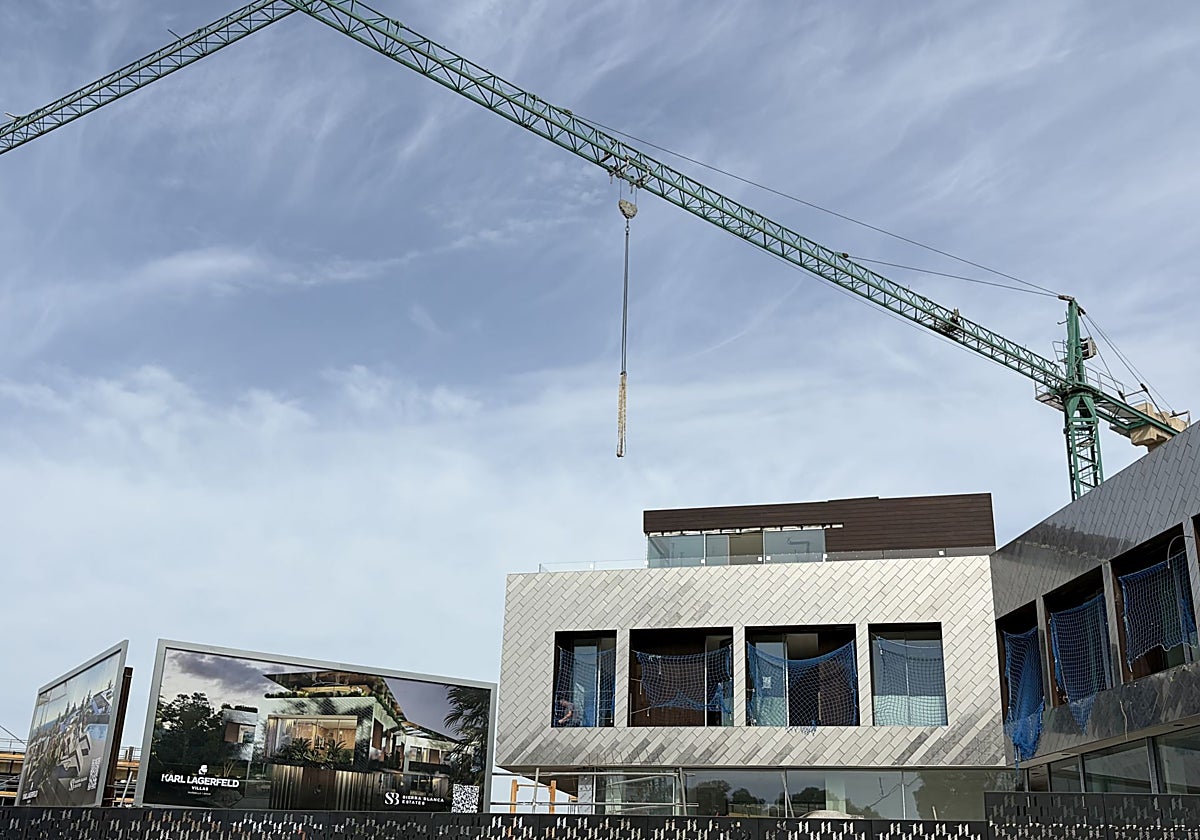

Marbella
Marbella's average residential property price has risen above 800,000 euros for the first time on a full-year basis, according to the latest ... figures from the 'Portal Estadístico del Notariado' (the Notarial Statistics Portal), which records completed property transactions rather than advertised prices.
The average value of a property transaction in the province's second-largest town stood at 803,522 euros through May, the latest month for which figures are available. That represents an increase of up to 38.3 per cent compared with 2022.
The average stood at 580,969 euros in 2022 before rising steadily to 663,933 euros in 2023, 704,691 euros in 2024 and 736,936 euros in 2025.
Individual months have previously recorded average transaction values close to or above 800,000 euros. However, the full-year figure had never surpassed the 736,936 euros recorded in 2025.
The average price per square metre during the first five months of 2026 was 4,894 euros, up by as much as 469 euros on 2025, when it stood at 4,425 euros. It was 785 euros higher than the 4,109 euros recorded in 2024 and 1,245 euros above the 3,649 euros recorded in 2023. Compared with 2022, the increase was as high as 49.89 per cent.
Beyond Marbella's most exclusive areas
Surprisingly, the rise is not driven solely by growth in exclusive areas such as the Golden Mile. San Pedro Alcántara provides a clear example of the wider trend.
The average value of residential property transactions in San Pedro Alcántara was 511,260 euros in 2024, rising to 608,532 euros the following year. During the first five months of 2026, it reached 714,050 euros, almost 40 per cent higher than two years earlier.
Since the pandemic, prices have risen year after year and are now around 50 per cent above 2022 levels.
The increase has also been accompanied by a decline in the number of transactions. There were 1,483 residential property sales during the first five months of 2026, equivalent to fewer than 300 a month.
If that average continues, the annual figure would be the lowest in the history of the Notarial Statistics Portal, whose records date back to 2015, apart from 2020, when the Covid-19 pandemic broke out.
Since 2021, the lowest annual number of residential property transactions was recorded in 2025, with 4,443. If the average recorded between January and May 2026 continues for the rest of the year, the total would be 3,559, around 20 per cent below last year's figure.
Access to housing
The current price levels are putting home ownership beyond the reach of "a group [of potential buyers] who, in any other economic climate, would already have bought their own home", according to Tu Primer Hogar, a Marbella initiative set up to help people who can't afford the initial deposit needed to buy a property.
The company is developing housing schemes in which properties are offered under a rent-to-buy arrangement, with the price agreed and fixed in advance. Since announcing the initiative in mid-April, it has received 600 requests for information.
"Behind each of them there's a similar story: a couple with stable employment, above-average incomes and years of living together who, despite this, still don't have enough savings to buy a home," Tu Primer Hogar said, describing the common profile among those who have made enquiries.
"The data debunks the idea that the problem of access to housing affects only those facing financial difficulties," the company said.
According to Tu Primer Hogar, 60 per cent of those who have expressed an interest have stable, above-average incomes, with some holding permanent jobs and positions of responsibility.
The company said "the reason driving this group to seek alternatives has a name: rental instability".
Seven out of ten people who have enquired about buying new-build properties without an initial deposit have been living in rented accommodation for years and have been affected either by disproportionate rent increases or by landlords needing to recover their properties, in many cases to use them as tourist accommodation.
The remaining 30 per cent continue to live with their parents "without having been able to take the first step towards independent living".
Tu Primer Hogar said it was particularly striking that some parents had made enquiries not for themselves but to find a way for their children to access home ownership. The company said this reflected the extent to which the difficulty of buying a first home had become an intergenerational concern.
![[]](http://static.vocstatic.com/voc26/latest/assets/images/favicon/surinenglish/apple-touch-icon-57x57.png)