
History
Confirmed: Famous Marbella shipwreck identified as 18th-century vessel, the Armada's Fernando
One of four experimental ships built as part of a naval reform, the vessel sank off the coast of San Pedro Alcántara in 1760
José Carlos García
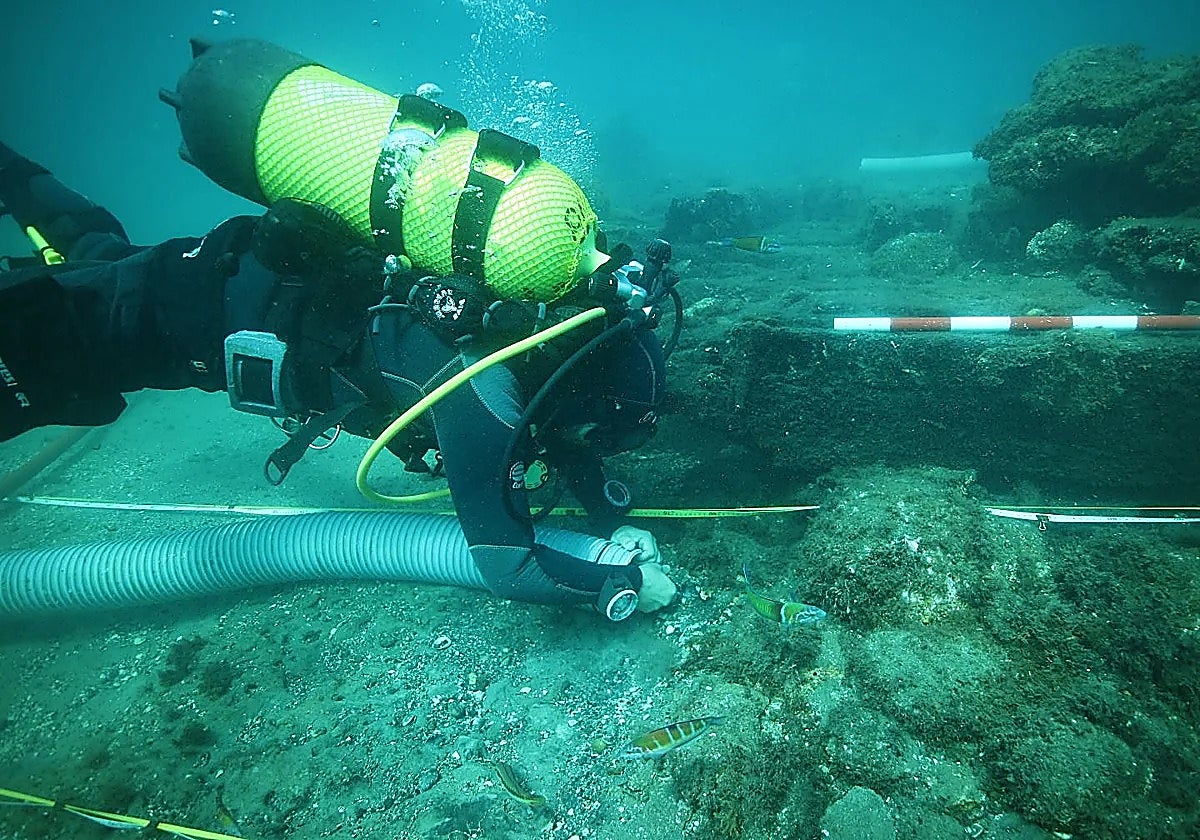
The centre for underwater archaeology (CAS) of Andalucía has confirmed, "with a high degree of probability", that the shipwreck off the coast of San Pedro Alcántara is the Fernando: a Spanish Royal Navy vessel built at the Esteiro shipyard in Ferrol between 1750 and 1751.
According to experts, the ship sank in 1760 near the Placer de las Bóvedas (the name of the spectacular underwater mountain in the area, located just eight kilometres from the coast).
Previous hypotheses pointed to the remains having belonged to the French ships lost in 1705 during the Battle of Cabrita Point, but the results of the investigation initiated in 2023 have determined the Spanish origin of the ship.
The Fernando was popularly known among recreational divers as the San Pedro Alcántara galleon. They discovered a leather cartridge case for storing ammunition bearing the emblem of the Royal Spanish Navy, but the piece was used for such a long period (from 1537 to 1931) that the clue was of little use.
Research has now cleared up any doubts. The identification of the Fernando is based on the convergence of evidence related to the location of the site and its dimensions, the large size and characteristics of the preserved structure, the chronology of the artillery and its correspondence with historical sources, as the regional ministry of culture stated.
The study of the wreck's naval architecture points to the Spanish Navy of the mid-18th century, as it exhibits significant features such as a robust frame, a high density of closely spaced frames, a combination of wooden pegs and iron fixings and assembly with intermediate pieces.
The morphological study of the artillery confirms that these are Spanish pieces predating 1765 artillery regulations.
The stern area provides another key clue: researchers identified the sternpost and iron components linked to the rudder system. Historical documents about the Fernando describe serious damage to its rudder during a storm before it ran aground, which matches the evidence found at the site.
The ship reflects an English-influenced design developed during the reign of Ferdinand VI as part of naval reforms. The Fernando formed part of a group of experimental warships built in the 18th century under the Bourbon monarchy. The ship likely took its name from King Ferdinand VI, who ruled from 1746 until 1759, just one year before the ship sank.
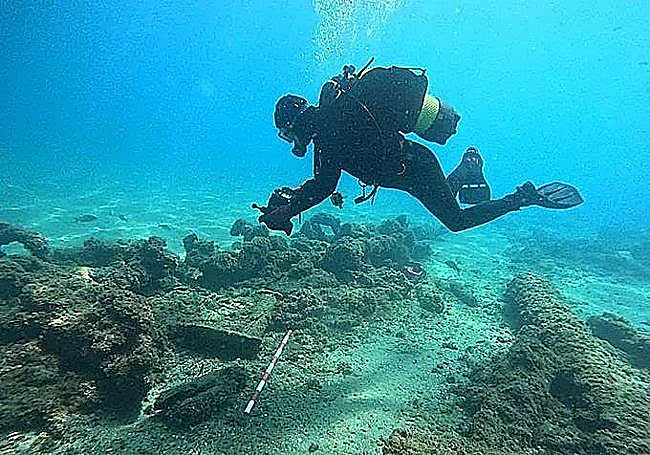
The design links to reforms promoted by the Marquis of Ensenada with the scientist Jorge Juan. Researchers also identified gun ports of significant size, consistent with a large warship, along with fittings linked to gun decks and structural reinforcement elements.
3D reconstruction and research
Photogrammetry played a central role in the investigation. Researchers used more than 3,000 images to build a detailed 3D model and orthophotograph of the wreck. This model helped them map the distribution of remains, determine orientation, identify key areas, and plan excavation work. The digital record will also support future monitoring, since erosion, sediment movement and human activity continue to affect the site.
Further studies, including dendroarchaeological and isotopic analysis, will refine the identification. Wood samples taken from different parts of the wreck will help determine tree species, felling dates and the origin of materials used in the ship's construction and repairs.
The research team also reviewed earlier technical inspections from 2009, when the site first became formally known to archaeologists, as well as a 2015 underwater LIBS spectroscopy campaign led by the University of Malaga to analyse submerged materials using laser technology.
Researchers also examined documents from the General Archive of Simancas, which include inventories of recovered materials such as artillery, small arms, shipbuilding components, rigging, sails, masts, clothing and personal items from the crew. Some records also mention the ships Asia and Astuto, which authorities used to transport survivors from the Fernando from Malaga to the Arsenal of Cartagena.
View up-to-date local news for Marbella and San Pedro
![[]](http://static.vocstatic.com/voc26/latest/assets/images/favicon/surinenglish/apple-touch-icon-57x57.png)