
Innovation
Malaga engineer heads Nasa's future permanent moon base
Spanish specialist Carlos García-Galán leads Donald Trump’s 'moon base' initiative as Nasa pauses Gateway station to focus on lunar colonisation

Málaga
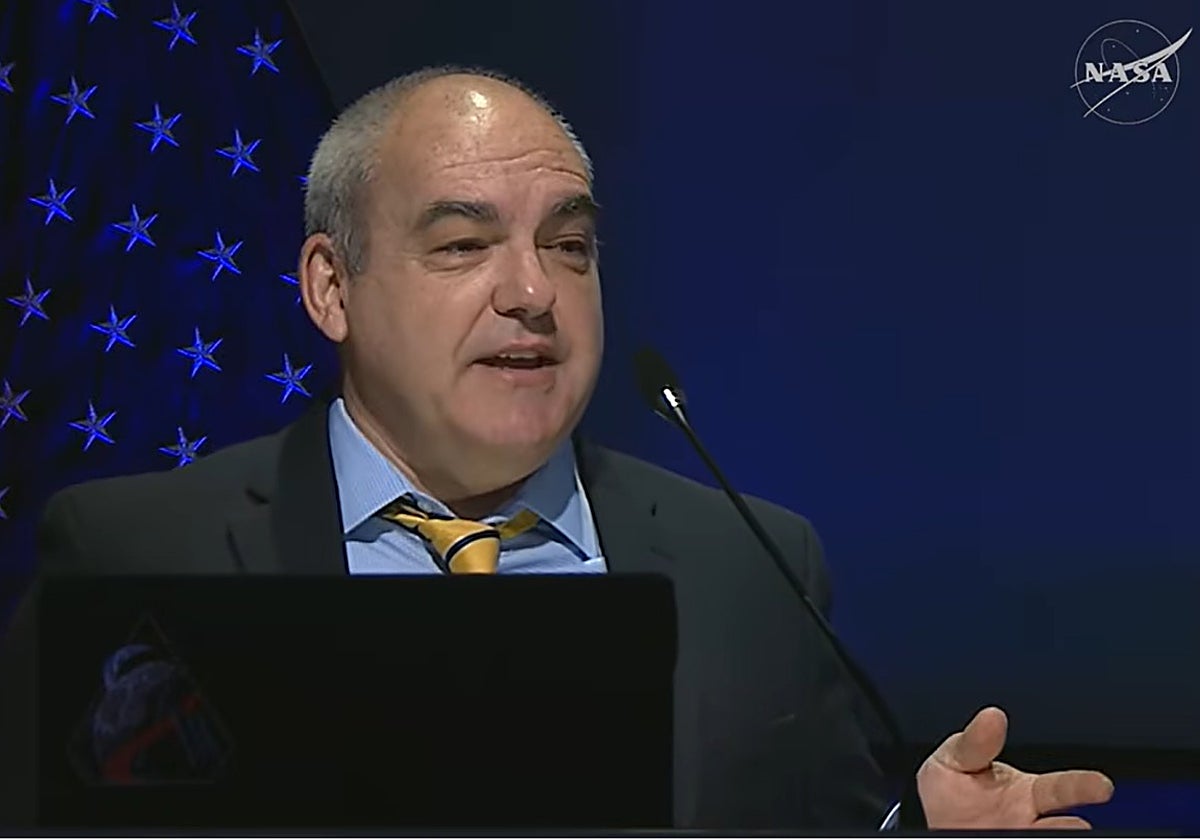
"I'm your moon guy," engineer Carlos García-Galán from Malaga said at the Nasa presentation of the radical programme that will build a permanent base on the moon.
The plan is part of Donald Trump's ambition to ensure US space dominance and the Spanish engineer is going to spearhead the initiative.
"It seems impossible, but we are Nasa: that's what we do," García-Galán said during the event. The timeline for this goal is seven years and the cost is 20 billion dollars.
As Nasa Administrator Jared Isaacman explained during the presentation of the Artemis programme, Trump's policy involves putting on hold the building of the Gateway space station and "shifting the focus to infrastructure that will allow sustained operations on the surface".
García-Galán's appointment comes just over a year after he was appointed Deputy Director of the Gateway programme, which aimed to create an intermediate space station to facilitate lunar exploration.
He will now lead Trump's ambition to build a US colony on the Earth's satellite - one of the most important initiatives of the next decade. The symbolic launch will take place on 1 April with the launch of the first manned mission in more than 50 years: Artemis II.
In December last year, García-Galán received the Malagueños del Año prize, awarded by Diario SUR and Unicaja.
"Achieving the impossible"
"Nasa is committed to achieving the near-impossible once again: returning to the moon before the end of President Trump's term, building a lunar base, establishing a lasting presence and doing what is necessary to secure American leadership in space," Isaacman said.
"If we focus Nasa's extraordinary resources on the goals of the National Space Policy, remove unnecessary obstacles to progres and unleash the workforce and industrial power of our nation and our partners, then returning to the moon and building a base will seem small in comparison to what we will be able to achieve in the years to come," he stated.
Nasa Associate Administrator Amit Kshatriya said: "On the moon, we are shifting to a focused, phased architecture that builds landing capability incrementally, one landing after another, in alignment with our industry and international partners."
Moon landings every six months
Among Nasa's recent updates are the standardised rocket configuration, adding one more mission in 2027 and performing at least one surface landing each year thereafter. Nasa's goal is to establish moon landings every six months.
To achieve an "enduring human presence", Nasa announced a phased approach to building a lunar base. Despite challenges with some of the existing hardware, the agency will reuse applicable equipment and leverage commitments from international partners.
García-Galán explained that Nasa's plan to create a permanent base on the moon will unfold in three phases. Phase one is 'Build, Test, Learn' and involves Nasa moving from isolated missions to a modular, repeatable approach.
Phase two aims to "establish early infrastructure": progress is made towards semi-habitable infrastructure and regular logistics.
Phase three aims to "enable long-term human presence" and heavy infrastructure for permanent settlement.
Nasa is introducing an additional strategy for low Earth orbit (Leo) that avoids any disruption to the US human presence. To stimulate the orbital economy, Nasa will expand industrial opportunities, including private astronaut missions and commander seat sales.
Nuclear power in space
Nasa also announced another historic step: the launch of Space Reactor-1 Freedom, the first nuclear-powered interplanetary spacecraft, which will travel to Mars before the end of 2028.
This mission "will demonstrate nuclear electric propulsion in deep space, a much more efficient technology for transporting large masses beyond Jupiter, where solar panels are ineffective". Upon arrival at Mars, the spacecraft will deploy the Skyfall payload, a fleet of helicopters.
![[]](http://static.vocstatic.com/voc26/latest/assets/images/favicon/surinenglish/apple-touch-icon-57x57.png)