
Energy
Malaga province's solar revolution gathers pace as photovoltaic capacity rises 16 times in one decade
Rapid growth now faces threats from overstretched substations and grid connection points, while hydroelectric power has reached the ceiling due to a lack of new projects
Chus Heredia
Malaga finds itself in a paradoxical situation: renewable energy production continues to surge, yet more and more sectors (particularly businesses) warn that the province's electricity nodes and substations have reached their limits.
This saturation threatens around 22,000 planned new homes. The problem also impacts investment projects, infrastructure developments and technology initiatives. Renewable energy schemes face the same obstacle. Electricity generated by solar farms and wind parks must travel through evacuation infrastructure to substations (almost all of which already operate at full capacity), where the current converts into alternating current.
"More than a year ago we warned publicly that Malaga stood on the verge of saturating its electricity nodes. Andalucía has now become Spain's second-largest producer of renewable energy, yet it lacks evacuation capacity because the nodes are saturated," head of the confederation of Andalusian business owners Javier González de Lara said last week. He urged Red Eléctrica to address the issue.
Related story
-
Infrastructure
Héctor Barbotta
Photovoltaic technology is emerging as the driving force behind the transition to decarbonisation. Renewable generation capacity in Malaga now stands at 1,646.8 MW, according to the latest report from the Andalusian energy agency. That represents 9.5 per cent of Andalucía's total renewable capacity and equates to the average electricity demand of 737,505 households.
As a general benchmark, one megawatt of renewable energy can supply electricity to between 200 and more than 600 homes each year, depending on the technology (solar or wind), as well as location and household demand.
The solar boom
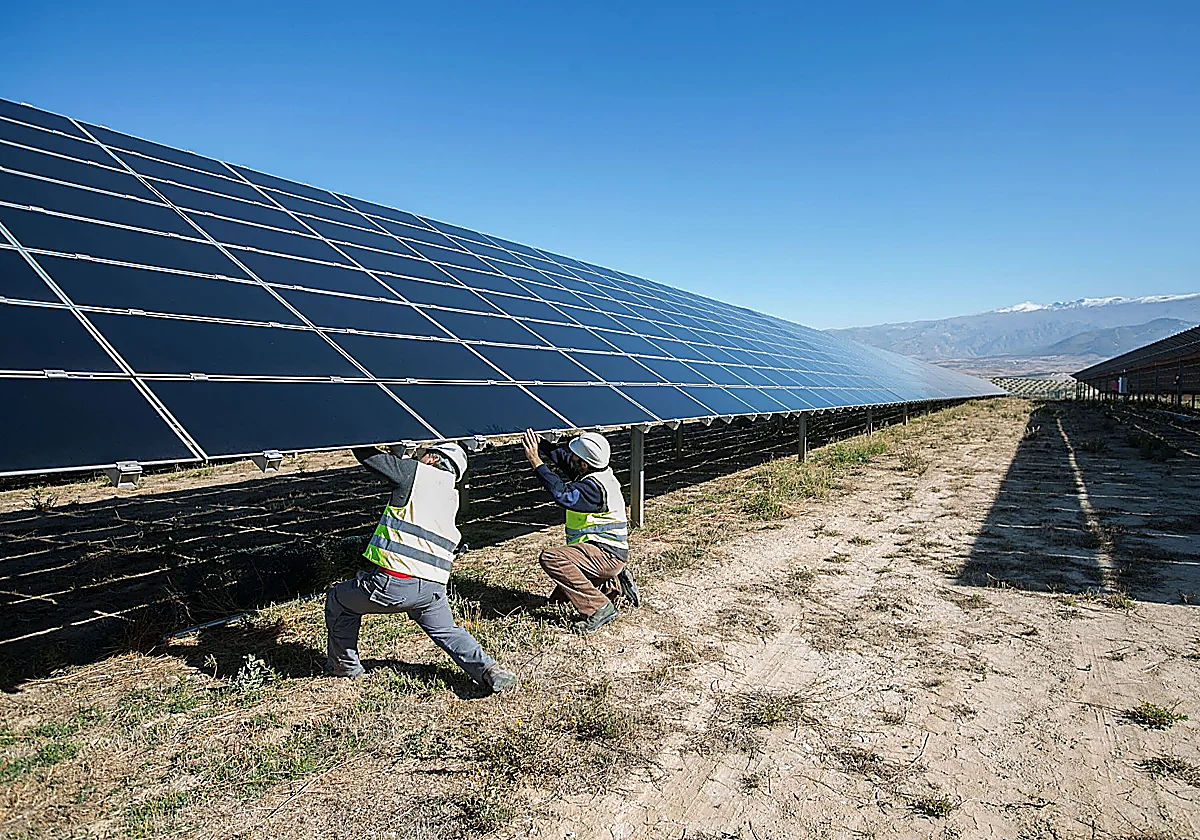
Solar photovoltaic energy has multiplied its installed capacity by 16 in just ten years, while historically dominant technologies such as wind and hydroelectric power show clear signs of stagnation.
The figures behind the solar boom are striking: capacity has risen from 52.9 MW in 2015 to 853.1 MW today, an increase of 1,512 per cent. Solar now accounts for 51.8 per cent of all renewable energy capacity in the province.
Large-scale power plants do not alone explain this rapid growth. Self-consumption systems have also played a major role. Malaga now has more than 32,700 self-consumption installations connected to the grid, with a combined capacity of 285.6 MW. Strong private-sector demand and simplified administrative procedures have both driven this expansion.
The report highlights a growing list of plants exceeding ten megawatts in capacity, including projects such as Archo I and Archo II in Antequera, each with 49.8 MW, as well as the La Herrera plant, also located in the Antequera district.
Traditional renewable sources are stagnating
In contrast with the solar surge, other traditional renewable technologies show flat or even declining growth.
Wind power, which led the renewable mix for years, has increased from 569.7 MW in 2015 to 645.4 MW today. Although Malaga remains Andalucía's second-largest province for wind generation capacity, accounting for 17.4 per cent of the regional total, growth over the last decade has remained modest compared with solar and installed capacity has not changed since 2022. The province currently hosts 24 wind farms.
Hydroelectric power presents an even clearer example of stagnation. Malaga operates eleven hydroelectric plants that make use of the province's reservoirs and mountainous terrain, representing 19.3 per cent of Andalucía's hydroelectric capacity.
However, total output capacity has slipped slightly, falling from 126.7 MW in 2015 to 123.7 MW today. The absence of new hydraulic projects confirms that hydroelectric generation has effectively reached its operational ceiling in the province.
Green hydrogen and cogeneration
The report also points to major developments in renewable gases. Malaga has entered Andalucía's green hydrogen map with two of the region's eight existing plants: the Icarialand Cuevas Bajas and Icarialand Antequera projects.
At the same time, cogeneration continues to play an important role within Malaga's industrial sector. The province operates seven cogeneration plants with a combined capacity of 50.4 MW. All use natural gas and generate significant efficiency savings by producing electricity and heat simultaneously for industrial processes.
Storage and grid infrastructure
To manage increasing volumes of intermittent renewable energy, Malaga relies on key storage and transmission infrastructure. One of the most important facilities is the Tajo de la Encantada storage power station, which provides 360 MW of capacity and acts as a crucial balancing system for integrating renewables and stabilising the grid.
The province has also started deploying battery storage technology. A plant in Casabermeja currently contributes 0.6 MW using electrochemical battery systems.
Transmission infrastructure has also undergone upgrades to cope with rising renewable generation. In 2025, engineers expanded the Cártama substation (220 kV) specifically to connect renewable projects, while partial refurbishment works took place in 2024 at the Tajo de la Encantada substation (400 kV), a strategic node linking Malaga with the Cadiz, Cordoba and Granada transmission corridors.
Thermal solar energy and biogas
Beyond electricity generation, the report underlines Malaga's leading role in solar thermal energy. The province now has 209,460 square metres of installed solar thermal surface area, representing 19.2 per cent of Andalucía's total.
Thermal biomass also continues to grow, with more than 2,400 installations providing a combined thermal capacity of 148.4 MW, particularly across residential and industrial sectors.
Biogas has also gained ground through seven thermal-use installations, including the boiler system at the San Miguel factory in Malaga city and five wastewater treatment plants (EDARs), which reuse their own waste products during the purification process.
For more environment news click here
![[]](http://static.vocstatic.com/voc26/latest/assets/images/favicon/surinenglish/apple-touch-icon-57x57.png)