
Interview
Malaga entrepreneur says exorbitant rents are hurdle for business owners
María del Mar Solís Martín advocates for regulation of housing and setting price limits, according to the rental ranges suggested by the ministry
Cristina Vallejo
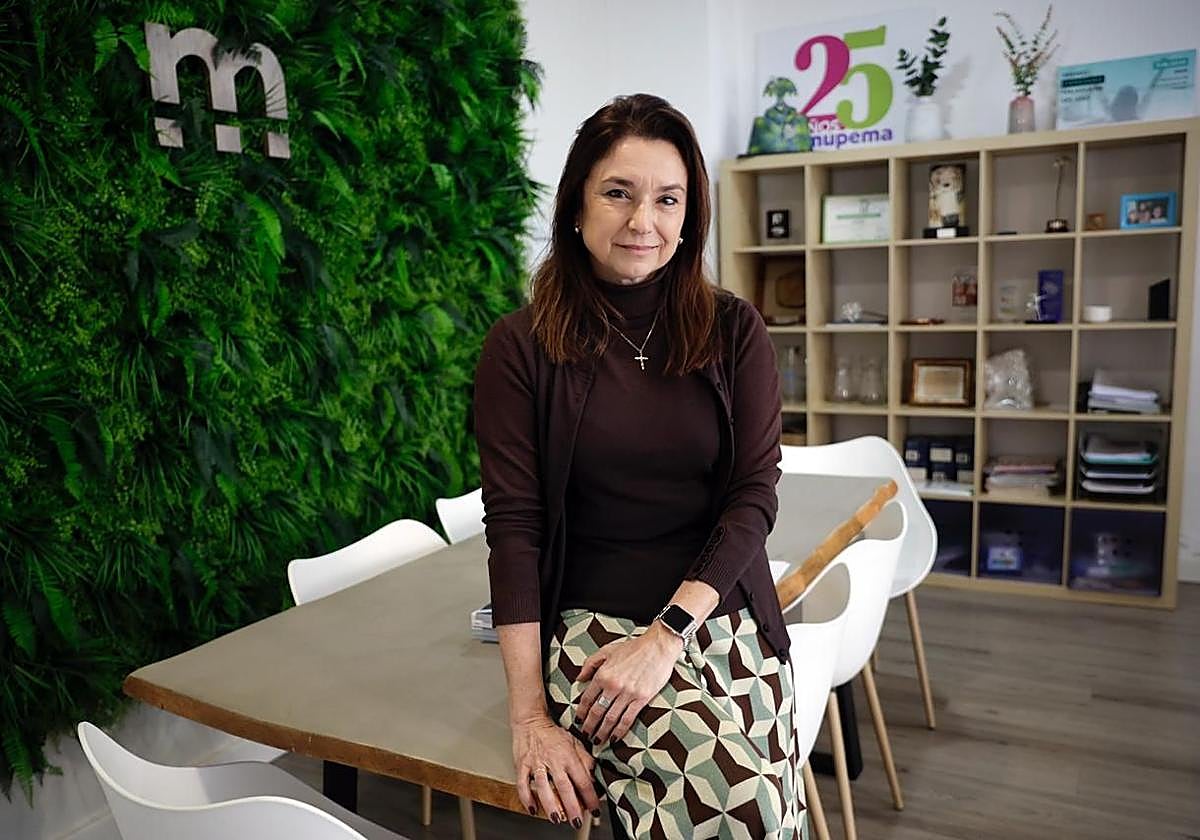
María del Mar Solís Martín is the new head of the women's association of professionals and business owners in Malaga (Amupema). She was elected by by her colleagues after her predecessor, Rocío García Díaz, resigned for personal reasons.
Solís is a construction engineer. Her company - Velasco y Solís Ingeniería, Tecnología y Servicios - specialises in both mining engineering and construction engineering, although its main focus is building renovation. Among its most emblematic projects is the Asilo de las Hermanitas de los Pobres in the Explanada de la Estación area.
Does Malaga need a lot of building rehabilitation? Some say that would encourage more housing supply.
- The building stock in Malaga needs significant renovation because it is very old. In fact, the application period for building renovation grants has just opened.
You have just been elected to head Amupema. Why are women entrepreneurs' organisations still necessary?
- They are necessary, at the national, local and regional levels, as are associations of all types of business owners. But women are less visible, which shouldn't be the case, because the Spanish Constitution states that we are all equal, without distinction of gender, sex, opinion, religion or birth. Our association promotes greater visibility for women.
Don't you feel represented in the CEOE, Cepyme, ATA?
- In these organisations, there is no gender distinction. Women seeking representation as business owners are driven by a desire to boost their businesses and raise their profile. Ultimately, we want the entire business fabric of our group to be visible.
But men don't seem to need to create specific business associations?
- Amupema has a 25-year history. It was created to give visibility to women entrepreneurs, business owners and professionals. Back then, things weren't like they are today. But the organisation has endured because it works well, still promoting that same network of female entrepreneurs.
Do you feel disadvantaged for being a woman?
- Well, no. It often surprises me, because I work in a very male-dominated sector - construction. The truth is, I've had the opportunity to access the jobs I've been offered and take part in tenders without any problems. Perhaps there are a few anecdotes about having to arrive at a construction site and put on my helmet to show that I'm the one in charge. But in reality, I haven't experienced any kind of rejection for being a woman in the sector I work in.
There is this understanding that women are often excluded because of the way business owners related to each other.
- Besides being a member of Amupema, I'm also on the governing board of the association of technical architecture. Gender parity there is now a requirement. It wasn't always the case because women sometimes didn't want to take on those positions. It's true there are still those male circles - they go out for lunch together and can be quite closed-off. But then there's the woman who stands up and says: well, I'm coming too. The president of the association is a woman and she leads and represents the entire group, which is now more balanced in terms of male and female representation. Being at the helm means asserting yourself a bit and saying: "Here I am."
In photos of authorities and from social events, there are rarely women, aside from political figures like Carolina España or Patricia Navarro. Do they not want to be featured or are they not being called upon?
- Often, it's us who hold back. By nature, we're the ones who have children, so we tend to take on that responsibility ourselves. That can make you slow down, feel that you've done enough and not want to take on more. But there's a bit of everything - we have great business owners who are women both locally and nationally. We're increasingly present, there are more self-employed women and technical university degrees are starting to establish a gender balance.
What do you want to do during your term? Where do you think women need more support?
- We want to continue promoting initiatives that strengthen the business fabric and the entire association. One of the problems that anyone wanting to start a business might encounter is the exorbitant cost of renting premises. Simply opening a shop every day involves expenses without guaranteed earnings. The other day we learned that the city council is offering small premises, six or 12 square metres, at reasonable prices. That helps. Things like that are what we're going to promote.
In terms of sectors, are women well represented or is there still a bias towards traditionally 'female' roles?
- We're very diverse. Even within our board we have tax advisers, lawyers, people working in training, IT, holiday rentals, signage companies, architecture… But we also have the typical small retail business owner.
How do you see Malaga? There are warnings it could become a victim of its own success.
- I like that it's successful and I say that because I feel fortunate to have been able to contribute to making Malaga what it is today through my work. I was involved in the construction of the airport 35 years ago. I personally oversaw the demolition of the port silo - without this we wouldn't have the promenade today. I like that we're a cosmopolitan city. I hope it doesn't become a victim of its own success.
How can it keep growing?
- It must maintain a consistent approach, with an implementation plan that expands, but also with regulations.
You mentioned high commercial rents. For most people, housing is the real problem.
- Malaga is very expensive. There could be regulation and perhaps landlords could set prices within reasonable limits. I believe the Spanish government has a website where you enter details about a property and it suggests a reasonable rental price. Maybe responsible landlords could use that as a guide. If everyone followed a similar benchmark, prices wouldn't spiral like this.
Saying that within the employers' association sounds quite radical.
- What's happening in Malaga is happening in any city that's taking off. You could say rents should be capped, but that's difficult, because where do you draw the line? We want Malaga to be attractive nationally and internationally, but at some point even city-centre property owners may find it unviable to live there. It's very hard to define the limit.
Some argue that the market should determine it.
- It wouldn't be about strict controls, but about setting some limits depending on the area. I think that sense of balance has been lost and some regulation is needed.
![[]](http://static.vocstatic.com/voc26/latest/assets/images/favicon/surinenglish/apple-touch-icon-57x57.png)