
Housing
Rising housing prices hit Malaga's western districts particularly hard
Prices in the Campanillas district have grown by more than 20%, while in Cruz del Humilladero and Carretera de Cádiz the increase is over 17%
-Rb4J4aXRejUEGkYegtmEqaN-1200x840Diario%20Sur-R4igPkZj9rX4eN8MzRHblON-1200x840@Diario%20Sur.jpg)
Cristina Vallejo
The price of new and second-hand housing in Malaga rose by 14.9% from June 2025 to June 2026. This increase is roughly in line with the national average for Spain (15.2%), according to a report by valuations company Tinsa.
Several provincial capitals have seen faster price increases than Malaga, such as Albacete (23.5%), Soria (23.4%), Pontevedra (19.3%), Santander (18.1%) and Santa Cruz de Tenerife (18%).
Nevertheless, Malaga remains the third city where housing prices have risen the most since the post-crisis drops, after Valencia (where the increase is 152%) and Madrid (143%).
Related story
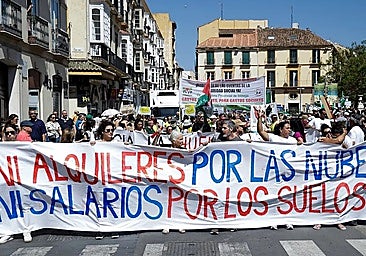
In Malaga, flat prices have more than doubled in just over a decade, rising by 135%. The city is also among the most expensive in Spain, with an average price of almost 3,000 euros per square metres. It is only surpassed by San Sebastián (5,154 euros per square metre), Madrid (4,683), Barcelona (4,463), Palma de Mallorca (3,472) and Bilbao (3,240).
A new trend has emerged in real estate prices in Malaga over the past year. Now, price increases are hitting the western districts of the city particularly hard.
Campanillas has seen the most significant price hike in the last 12 months, with a 21.7% increase to 2,100 euros per square metre. At this same time last year, prices there were rising at an annual rate of just 6.1%.
Puerto de la Torre is the second district in Malaga where prices have risen the most in the last year, with an increase of 19.6%, reaching an average of 2,920 euros per square metre, practically matching the average for the city of Malaga. This means that the rate of increase in home prices in this area of the city has doubled compared to the same period last year (8.6%).
Third is a district in the eastern part of the city: Ciudad Jardín, where the year-on-year increase is 19.2%, reaching an average of 2,227 euros per square metre. This area is also accelerating its rate of increase, although less so, as last year it registered year-on-year increases of over 16%.
Next are Cruz del Humilladero and Carretera de Cádiz, with increases of 17.6% and 17.3%, respectively, reaching 2,659 and 2,980 euros per square metre, in that same order. A year ago, both areas registered increases of around 11%.
Teatinos-Universidad is now the second most expensive district
Teatinos-Universidad also stands out among the areas with the fastest rising prices, with a 14.7% increase, although this represents a moderation from the 18% rise last year.
The price per square metre in this district now exceeds 3,500 euros, making it the second most expensive in Malaga, far surpassing the average of just under 3,000 euros for the city as a whole.
In Bailén-Miraflores, the rise in housing prices is not accelerating compared to the previous year, but it remains above 14% year-on-year, approaching 2,500 euros per square metre.
So, in all these districts, housing prices are rising faster than in Malaga Este (the most expensive area of the city). The average there is almost 4,000 euros per square metre, following another 9.8% year-on-year jump.
Meanwhile, in the city centre district, the price increase over the last 12 months was 8.4% (a year ago it was increasing at a rate of 11.6%), reaching 3,358 euros per square metre.
Churriana is the district where prices have risen the least in the last year, with a year-on-year increase of 6.1%, reaching 2,368 euros.
Meanwhile, in Palma-Palmilla, the year-on-year increase fell from 17.5% in 2025 to 6.9% in 2026. The price per square metre is currently 2,603 euros, mostly because of the impact of the Martiricos towers high prices.
As Tinsa summarises in its report, the districts with the highest year-on-year variations, above 20%, are in Valencia, Madrid and Malaga. In half of the districts of the six major provincial capitals of Spain prices increase by more than 15% year-on-year.
Housing prices in Malaga have also seen an increase in the rate at which they are rising. While the year-on-year increase was 10.8% in the middle of last year, in 2026 it has reached nearly 15%. This parallels the trend at the national level.
"The strong population growth in recent years has coincided with housing shortages that fuel rising housing prices," director of research at Tinsa Cristina Arias says.
"Demand remains robust, despite experiencing a slowdown in its growth, which is consistent with the reduced affordability for an increasingly significant segment of households," she says.
Spanish households have to allocate, on average, 35.7% of their disposable income to pay the first year of their mortgage. In the main employment centres and tourist hotspots, however, this exceeds 50% in some cases, as is the case in Malaga (53%), Madrid (64%) and Barcelona (62%).
Track the Andalusian property and real estate market
![[]](http://static.vocstatic.com/voc26/latest/assets/images/favicon/surinenglish/apple-touch-icon-57x57.png)