
Infrastructure
Malaga Port breaks its freight traffic record with over three million tonnes
The area experiencing the strongest growth is container exports, with an increase of more than 200% compared with the first half of 2025

Málaga
The Port of Malaga is sailing at full speed, according to the figures for the first six months of this year that show a record ... level of logistics activity. This marks the third year running that the facility has broken its own record, reflecting the boom it is currently experiencing.
During the first half of 2026, Malaga Port exceeded the three-million-tonne mark (3,082,890 tonnes), representing a 13.2% increase compared with the same period in 2025, according to the Port Authority's accounts.
The logistics activity that delivers the best results is container operations. Between January and June, more than 2.2 million tonnes (2,241,686, to be precise) were handled via this channel. This represents a 16% increase.
Related story
In this area, exports stand out in particular, having risen by no less than 226%, following a net volume of 215,859 tonnes. Meanwhile, imports of goods in containers rose by 41% (78,361 tonnes).
Three record-breaking years
"For the third year running, we remain the fastest-growing port in the entire Spanish port system. You might have one good year, but two or three in a row is something worth highlighting," Port Authority chairman Carlos Rubio said.
He highlighted the strong growth in container traffic, particularly for exports and imports via this channel. "This shows that we are a very useful asset for the entire business community in Malaga."
Rubio said that the export of bulk dolomite from the Coín quarries has been one of the main commodities. Added to this are containerised exports of olive oil, machinery and automotive components, among many others.
"MSC's Dragon route, which began in June, has been the biggest milestone, as it has made Malaga the first European port of call from China."
After two stopovers in Italy, the ship continued its journey to the US. This has generated significant import traffic from the Asian country and export traffic to North America. The volume of traffic generated each week by this route alone amounts to more than 2,000 containers, including imports, exports and transit.
Bulk goods
Liquid bulk cargo also made a significant contribution to the overall figures. This type of cargo saw a 29% increase to 54,089 tonnes, driven mainly by the strong performance of oil shipments (primarily olive oil).
By contrast, solid bulk cargoes showed a moderate decline of 3.8% (481,939 tonnes). This slight fall was offset by the favourable performance of other cargo categories, particularly the transport of cereals and flour.
Another key driver of the half-yearly increase in activity was the provision of supplies to vessels. This activity almost doubled (up 97.4%) compared with the first half of the previous year. Within this category, the supply of fuel to vessels rose by 175%.
"This performance highlights the gradual establishment of Malaga's infrastructure as a key service hub for fleets sailing the Mediterranean," the Port Authority said.
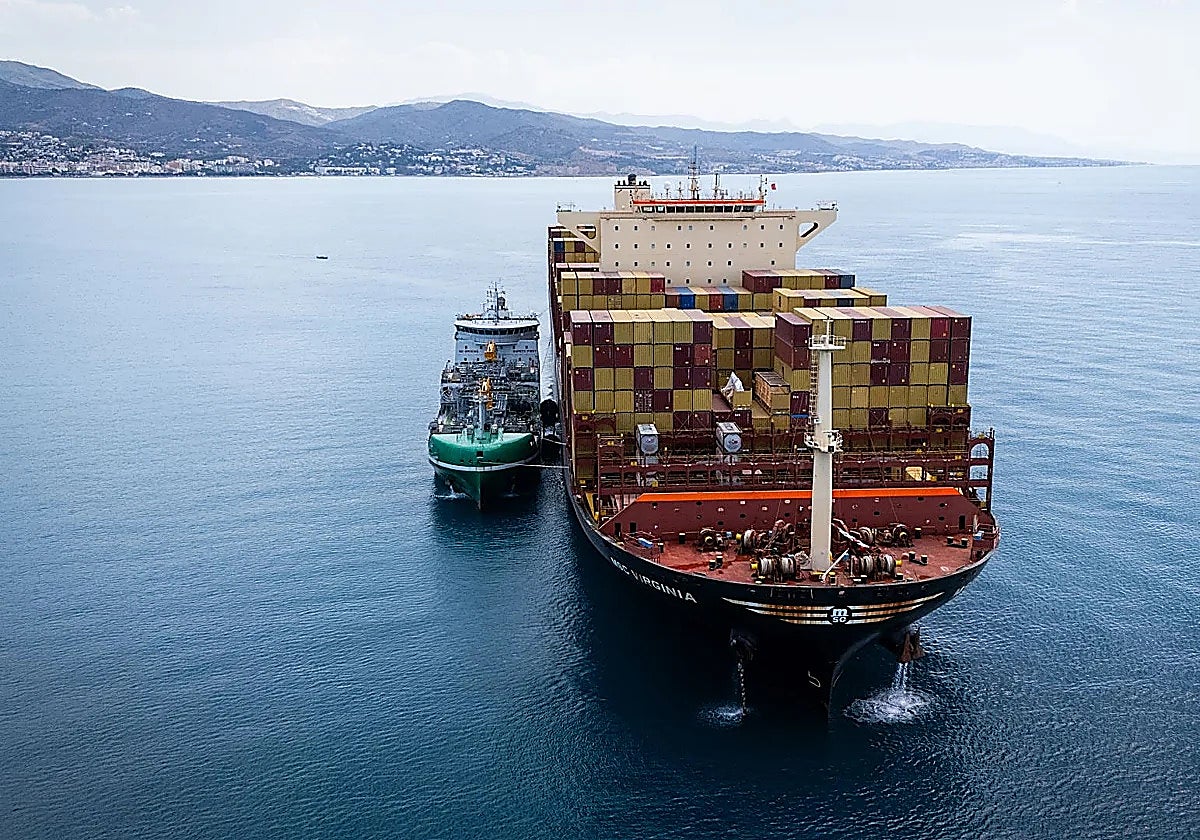
The port achieved an operational milestone in June when it carried out its first-ever liquefied natural gas (LNG) supply operation whilst at anchor. This "ship-to-ship" refuelling manoeuvre involved two container ships operated by MSC, which happened to be in the area at the same time.
This operation is in addition to the regular LNG supply services the port has been providing to various types of vessels at the quays during their port calls.
Passengers
With regard to passenger transport, the port recorded a total of 346,703 passengers during the first six months of the year, just 1% more than in the same period of 2025.
The regular ferry service to Melilla continued its positive trend, carrying 147,174 passengers (+6.9%), along with 34,425 vehicles on passenger fares (up 12%).
Meanwhile, cruise traffic totalled 199,529 passengers, down 3.2% on the first half of 2025. However, the Port Authority expects to exceed last year's figure during the second half of the year with the start of the autumn peak season.
Finally, the average size of the vessels calling at the Port of Malaga during the first half of 2026 reached 45,248 GT (gross tonnage), placing the port among the leading ports in Spain and confirming the technical capacity of its facilities to handle large vessels within Mediterranean and global maritime traffic.
Meanwhile, the governing board of Puertos del Estado approved on Monday the budget for the state port system for 2027, which includes public investment totalling 1.567 billion euros.
Among the most significant port infrastructure investment projects due to begin next year is the conversion of the former fishing harbour into the new pier 8.
This major project involves reclaiming this area to create new berths for cargo ships and a platform for the storage of goods. In addition to this, Puertos will push ahead with expansion projects in Valencia, La Coruña, Almeria, Barcelona, Bilbao, Cartagena, Castellón, Huelva, Las Palmas, Tenerife, Tarragona, Santander and Vigo.
![[]](http://static.vocstatic.com/voc26/latest/assets/images/favicon/surinenglish/apple-touch-icon-57x57.png)