
Employment
Malaga metro workers complain of 25 per cent lower salaries than in Seville
A new negotiations meeting on Monday will try to prevent further strikes, which have threatened to include tougher partial stoppages on Thursday
Ignacio Lillo
Malaga
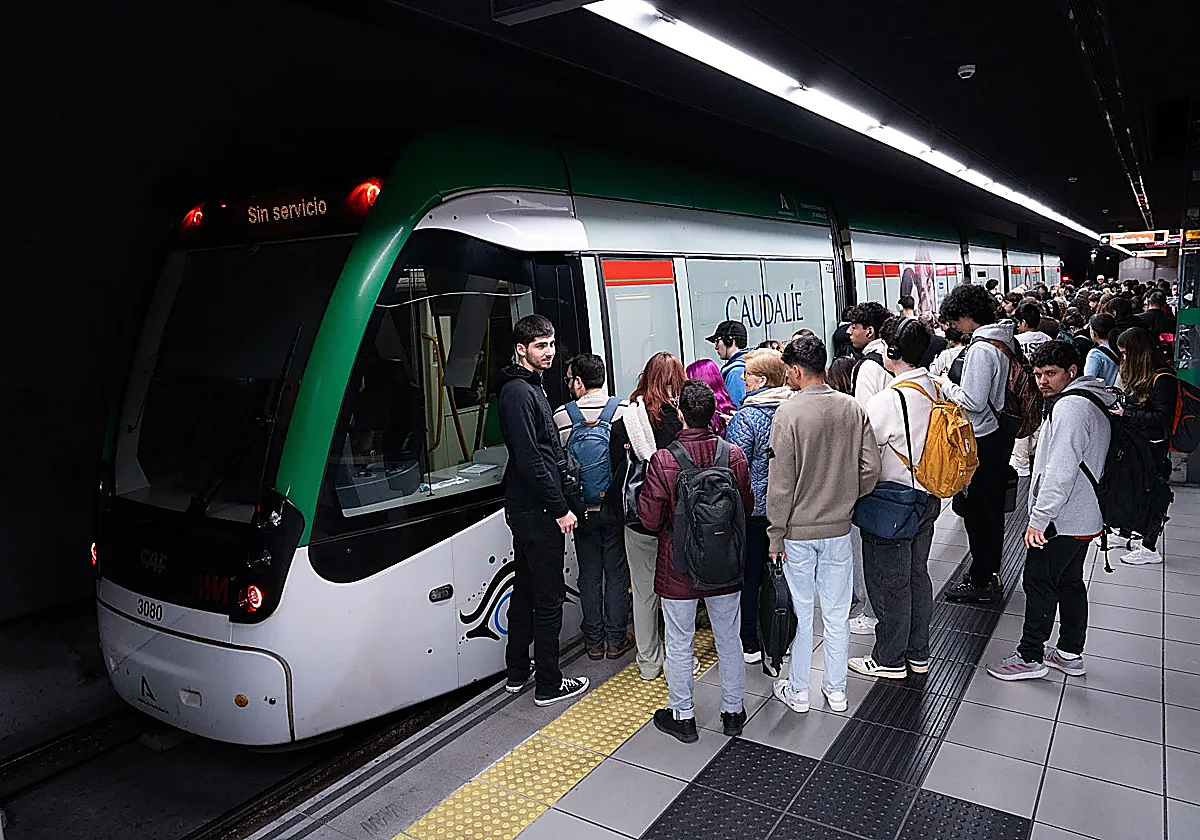
The labour dispute at concessionary company Metro de Málaga has led to another negotiations meeting on Monday. The aim is to redirect the strike on Thursday, 16 April, which threatens to schedule harsher stoppages during peak hours.
Shortly before the meeting, the workers' representatives released a statement denying the company's recent report on the alleged salary equalisation with the Seville metro, calling it a "partial and misleading account" that distorts the reality of Malaga's workforce.
According to union representatives, the document is not based on current salary scales, but on future projections extending to 2028 and 2029. These estimates are contingent on a proposed agreement that was overwhelmingly rejected, with over 70 per cent of the workforce voting against it, so the unions says that it is not a realistic base for comparison.
Malaga metro workers earn 25 per cent less than Seville metro workers
The workers' representatives have provided the real payslip of a line operator. The document reveals that this worker's net monthly salary is 1,617.14 euros, which is 25 per ent less than what workers in Seville earn.
This gap, according to the committee, is attributable to the absence of bonuses that do exist in Seville. These include the route allowance, the length-of-service allowance and the allowance for unplanned special services that are part of the fixed monthly salary in Seville.
Record profits but no share
Staff discontent is exacerbated by the concessionaire's financial results. The concessionaire, Metro de Málaga, closed the last financial year with record profits of over 47 million euros, a figure that dwarfs the 22.4 million recorded by Metro de Sevilla. Since operations began, the Malaga metro has accumulated profits of 307 million euros.
However, the works council claims that the workers do not benefit from this financial success. Of these profits, 245 million euros have been allocated to the distribution of dividends among shareholders. According to the unions' calculations, the company's proposed pay rise for the next four years would amount to barely one per cent per year of these profits. Furthermore, unions denounce the fact that 76 per cent of these profits end up outside Malaga and Spain, due to the majority stake held by an international investment fund among the shareholders.
Harsher strike conditions on Thursday
In light of the deadlock in negotiations, which also affects regulations on driving times, night-time rest periods and inflation-proofing clauses, the works council has called for the active involvement of the Andalusian regional government. They point out that the regional body is not only the competent authority for this public service, but also holds a 24 per cent stake in the company.
The resolution of the dispute now hinges on any progress that may be made on Monday. If the deadlock is not broken, the workers warn that they will take more far-reaching industrial action in the coming days to defend their working conditions.
The works council has announced new partial strikes on Thursday. Unlike previous protests, when the strikes affected a single time slot, this time there will be two strikes, coinciding with peak demand hours: the first from 7am to 10am (the morning rush hour) and the second from 12.30pm to 3.30pm (also peak hours). The regional government has already established minimum service levels of 50 per cent during these periods.
![[]](http://static.vocstatic.com/voc26/latest/assets/images/favicon/surinenglish/apple-touch-icon-57x57.png)