
Solar eclipse 2026
Malaga looks up to the sky to witness a historic blackout
Thousands of people gathered at various locations across the province to watch the eclipse
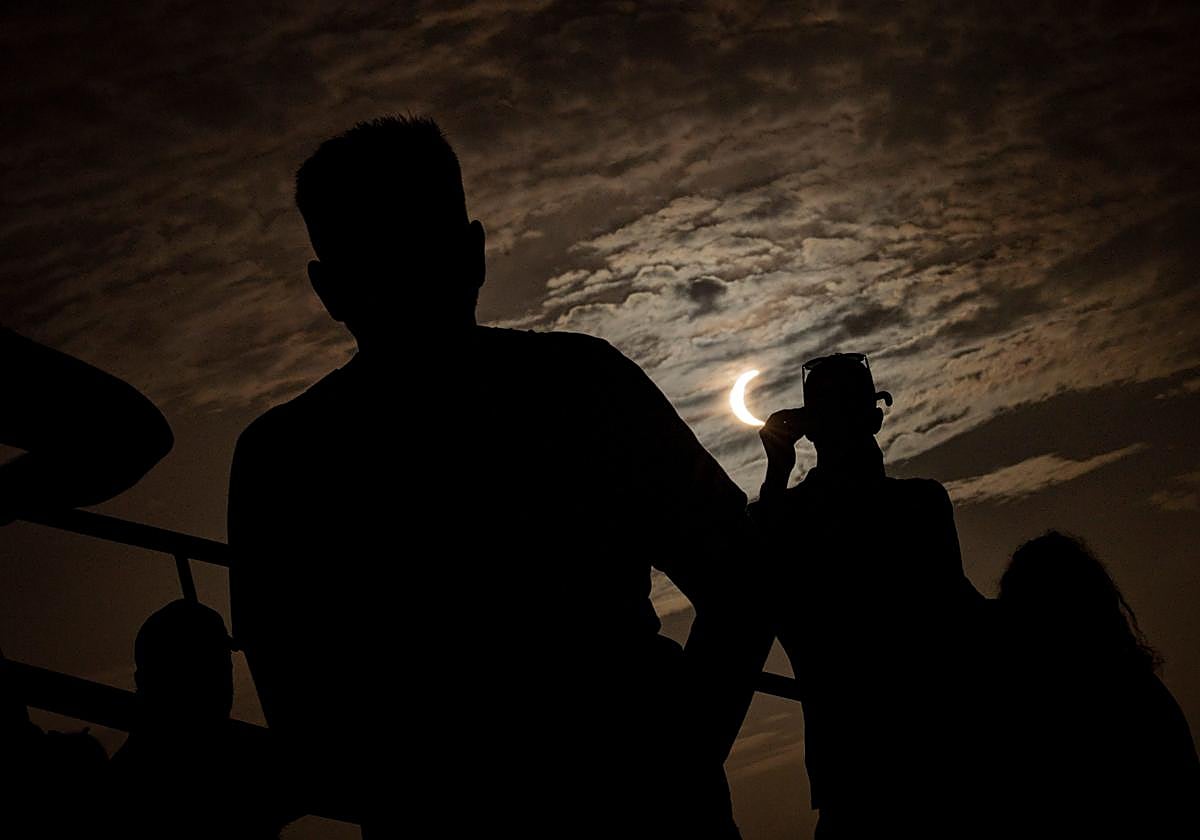

Málaga
Almost everyone in Malaga province, from entire families and groups of friends to tourists, had their eyes fixed on the sky on Wednesday, 12 August.
The funny glasses they had on their faces were a sign that they had learnt the most important lesson of the day: to look at the sun during the eclipse, one needs special protection.
On the horizon was the Mediterranean; above, the moon determined to block out the sunlight for a while. A few centuries ago, people would have rushed to take shelter during such an event. The sun going dark in broad daylight was considered a sign of divine wrath, an omen of global catastrophes, a threat to life and even a disruption of the balance of the universe.
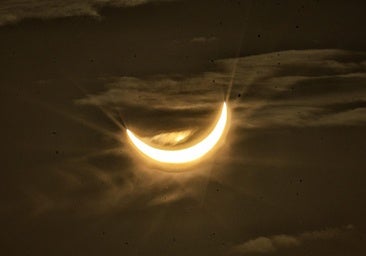
Now, however, we celebrate it, as if it were the World Cup. With good reason: it was the first total eclipse of the century visible from Spain, although the people in Malaga could only see a partial eclipse.
From El Palo to Sacaba, from the west coast to the east coast and also further inland, dozens of spots across the province were packed with people who didn't want to miss this unique kiss between the moon and the sun. There were towels, chairs, tables, cool boxes, mobile phones and, above all, certified sunglasses passing from hand to hand as the moment drew nearer.
For a few hours, balconies and terraces transformed into open-air observatories. Thousands of locals and tourists flocked to key vantage points across the province to witness a phenomenon that Spain had not witnessed since 1912.
The large crowds of onlookers also caused the odd traffic jam on Malaga's main roads, as people rushed to reach the beach, a viewpoint or any other unobstructed spot in time to ensure they didn't miss the spectacle.
Estrella and her family watched the eclipse from the beach in Malaga city's Huelin district. "We'd been considering other options, including the roof of our block of flats, but in the end we decided to come here."
They weren't the only ones who chose the beach. The Malaga coastline, with its open horizon and the sea stretching out before it, offered multiple spots from which to follow the moon's movement unobstructed.
Others preferred to move away from the shore and seek higher ground: viewpoints, terraces and balconies became perfect spots from which to look up.
The wait also had its charm: children asking how long it would be, parents trying to explain to them what was about to happen, friends debating which sunglasses might blind you and whether the view would be better from one spot than another and couples who had turned the phenomenon into an unusual date.
Like Lucia, who chose to watch it with Carlos. "There are loads of people here, but even so, such a special moment seemed like one to share together and who better than your partner?"
While some had experienced previous eclipses, for others it was their first time holding special glasses in their hands. There were also those who'd turned up simply out of curiosity, drawn by the eclipse's unique ability to bring thousands of strangers together, all doing exactly the same thing at the same time.
The phenomenon progressed slowly and, for a few minutes, the sky became the talk of the city, the subject of photographs and videos, live streams on social media and even a reason to raise a glass. The eclipse wasn't even over yetand some people were already starting to talk about when they'd have another chance like this.
There were also those who were, unfortunately, disappointed. "I was hoping it would get completely dark, but you can see perfectly well here," Yeray said, as he packed up his camp on the beach before the eclipse had even finished.
![[]](http://static.vocstatic.com/voc26/latest/assets/images/favicon/surinenglish/apple-touch-icon-57x57.png)