
Traffic
Malaga fines almost 12,000 drivers in first two months of the Low Emission Zone
Social groups and unions demand a moratorium on this restriction for vehicles from outside Malaga until park-and-ride facilities are available and public transport improves
Pilar R. Quirós
Malaga
The Low Emission Zone (ZBE) has become a lucrative source of municipal funds. In the two months since its implementation (December 2025 and January 2026), the Local Police have issued 11,712 fines to vehicles without the required environmental sticker.
For now, ZBE fines only concern drivers who come to Malaga city but reside elsewhere. Local residents can, for now, use their cars until they dispose of them.
The problem is that not everyone living outside Malaga is from outside the city, as many residents have moved to the wider area, either of their own volition or driven by the city's housing crisis and rising property prices. Others simply work in the city and commute from other parts of the province.
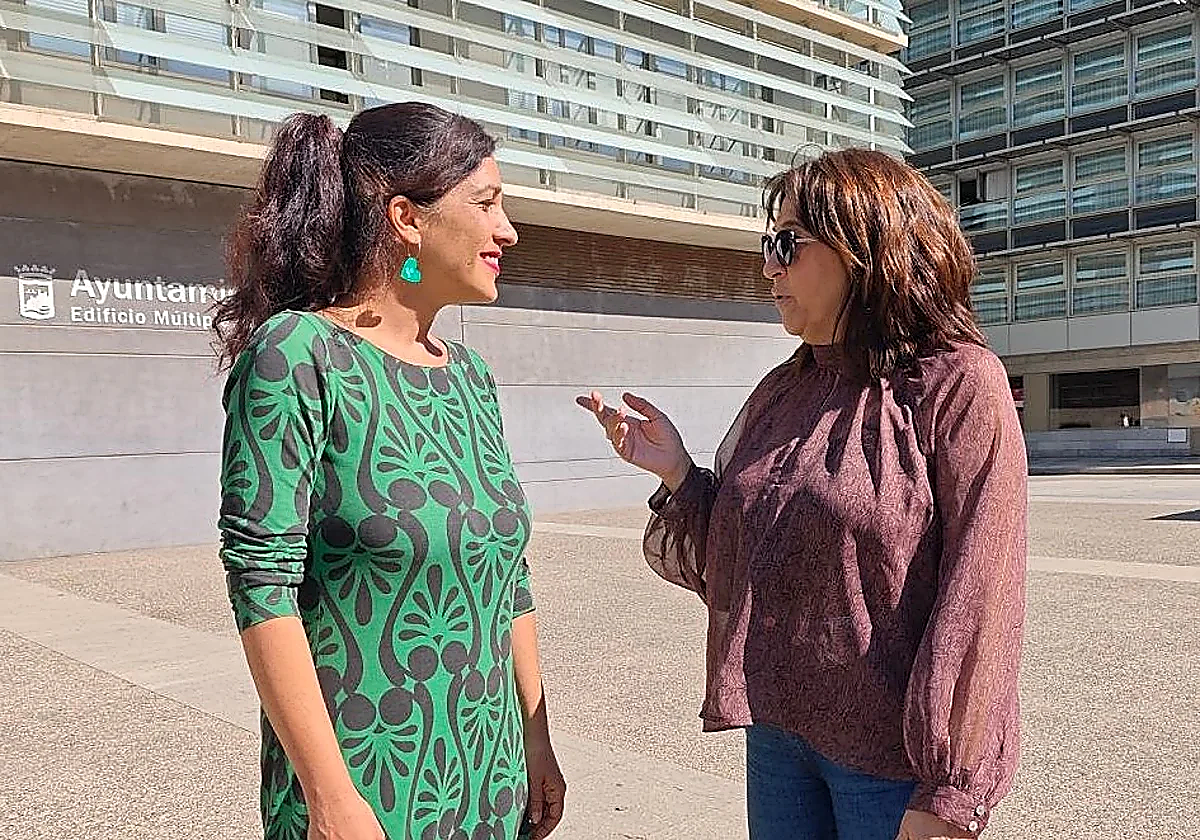
This is precisely what both deputy spokesperson for Con Málaga Toni Morillas and head of social policy of the CCOO union Trinidad Salcedo highlighted on Thursday.
CCOO and Con Málaga are demanding a moratorium on the ZBE regulation. At the next urban planning and transport committee meeting, they will present a ten-point plan for tackling the ZBE without causing hardship to the public.
Morillas said that the Local Police have sent the municipal tax agency 11,712 reports related to violations of the Low Emission Zone: 6,212 reports in December and 5,499 in January. "This data confirms what we've already indicated: that the ruling team is more concerned with the penalty system and revenue collection than with sustainable transport in the city and implementing a ZBE that has real and effective tools so that workers can get to their jobs, use park-and-ride facilities or access public transport if they come from other parts of the province," she stated on Thursday.
All cars fined so far are not registered in Malaga and do not have a sticker (petrol passenger cars registered before January 2000 and diesel cars registered before 2006). The plan is for the Low Emission Zone in Malaga city centre to further restrict the number of non-local vehicles allowed to enter. By 30 November 2026, cars from outside Malaga with a B sticker (low-emission internal combustion vehicles, registered from January 2001 for petrol or January 2006 for diesel) will not be allowed to enter a 437-hectare zone in the city centre.
For these reasons, both Morillas and Salcedo said that the Low Emission Zone suffers from a series of shortcomings in sustainable transport measures, "which cause serious harm, even discrimination against different social groups".
According to Morillas, the local ruling team "has failed to fulfill its commitment regarding park-and-ride facilities", given that "there isn't a single such facility in Malaga city". Another condition she criticised was that the El Ejido campus is located within the ZBE, when "no other European city includes a university campus within its Low Emission Zone". The Con Málaga spokesperson also pointed out that this discriminates against people with reduced mobility.
Morillas supports the need for a substantial change in the transport bylaw to address major challenges and problems of sustainable transport in Malaga. According to her, the city council should put a moratorium on the ZBE until it has secured park-and-ride facilities and improved public transport.
She also proposed extending the transitional period for the Low-Emission Zone by pushing the legal limits to ensure that these measures are implemented within that timeframe, as well as removing the university campus in Ejido from the ZBE so that "students, lecturers and staff do not face serious access difficulties, given that there is no effective public transport service to serve as an alternative to private vehicles".
This amendment would also include a new framework for authorised vehicles, such as those belonging to people with reduced mobility and other groups, which are subject to labels and certifications such as the B sticker, as well as vehicles not registered in the city of Malaga that "generally belong to people with lower purchasing power".
Salcedo stated they would support Con Málaga during the next meeting, "for the sake of social justice". "Malaga is also struggling because of the housing crisis. People have been forced out of Malaga in recent years," she stated.
According to Salcedo, people who come to the city to work or study make 193,000 daily trips. Of them, 31% come in vehicles with a B sticker, which could represent 64,000 vehicles or more.
Salcedo hit the nail on the head when she said that, by the end of the year, vehicles with a B sticker from outside Malaga will no longer be allowed into the Low Emission Zone, but "most of these people cannot afford to switch to a vehicle with an eco sticker".
The CCOO representative criticised the city council for receiving EU subsidies to implement the Low Emission Zone, while prioritising the enforcement system over park-and-ride facilities and improved public transport.
"Ultimately, it's the most vulnerable people who are paying the price: students, workers, simply those with the fewest resources. It's unacceptable that decisions are made without consulting the majority of residents, both from the city and outside," Salcedo stated.
![[]](http://static.vocstatic.com/voc26/latest/assets/images/favicon/surinenglish/apple-touch-icon-57x57.png)