
Infrastructure
Malaga definitively approves TechPark's second expansion
The city council has given final approval following a seven-year administrative process, which required repeating the environmental assessment
Jesús Hinojosa and Chus Heredia
After seven years of urban planning and environmental procedures, the second expansion of the TechPark received final approval from Malaga city council on Thursday.
All political groups unanimously endorsed the project's development plan. This brings to a close a lengthy bureaucratic process that required a second environmental authorisation by the regional government (Junta) in 2020.
The city council gave its initial project approval in November 2021. However, in 2024 it had to put it out for public comment again after all the changes it had undergone, following several reports from the municipal urban planning department and energy company Endesa.
In recent years, the PTA (Parque Tecnológico de Andalucía) and the urban planning department have been analysing various aspects of the project related to land use planning, the amount of funding the park must contribute to urban infrastructure and the inclusion of a planning bylaw to ensure that this future expansion of the technology park is not solely dedicated to research and technology offices, but also to the manufacturing of products.
The possibility of burying a high-voltage power line has also been under consideration. All of this has delayed the progress of the project.
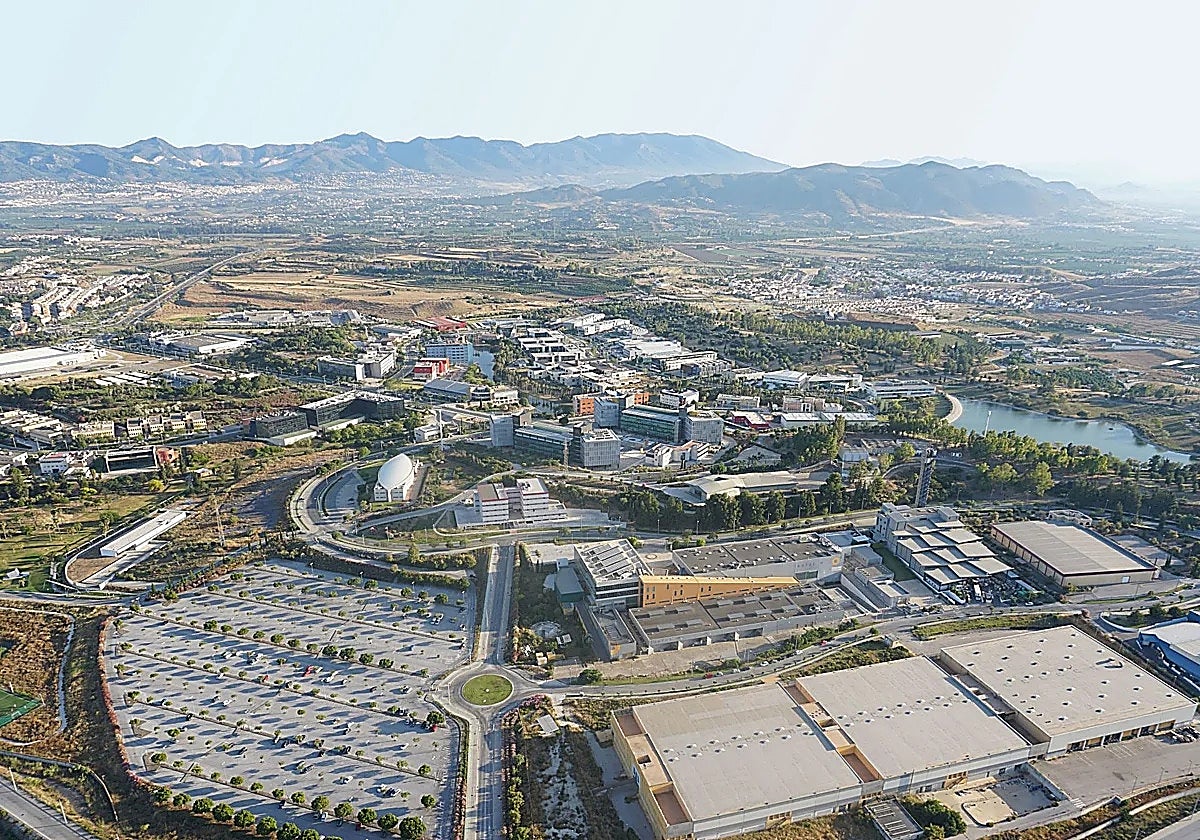
The project envisions developing a new business sector on land that forms an arc around the first expansion of the technology park, which has several buildings under construction, totalling approximately 57 hectares.
Architects Salvador Moreno Peralta, Adolfo Ramírez Baeza and José Jiménez Paz have designed the second expansion, anticipating the future needs of the technology park. Their aim was to avoid repeating the mistakes of its current urban design.
This urban development plan attempts to address the high demand for parking by establishing seven surface car parks next to the office building plots, with a capacity of 1,726 spaces.
The submitted documentation highlights that private vehicles currently account for 80.5 per cent of traffic during peak hours, while public transport represents only 19.5 per cent. Therefore, it acknowledges that the current parking capacity the technology park offers is "clearly insufficient".
Director of the PTA Felipe Romera shared his joy over Thursday's milestone with SUR. There are, however, still years to go before the works can begin. As he explained, the first step is to hire a technical team through a public tender to draft the land development plan, process its approval and then put the site preparation work out to tender.
"We are already working to contract the project. We are not going to stop," Romera stated.
While the PTA is undergoing its second expansion, it still has buildings in its first expansion zone to occupy. The technology park has halted the construction of new buildings until three of the currently vacant ones are occupied.
Nevertheless, the director of the PTA is confident that the upcoming arrival of IMEC, a leading centre for microchip research and manufacturing, will boost the expansion.
The second expansion will include 24 plots for company buildings, nine of which can be subdivided into two separate properties to facilitate their sale. Furthermore, it will offer the possibility of constructing a minimum floor area of 5,000 square metres to meet demand primarily from technology, research and advanced services companies.
The project is also unique in that it includes two plots of land that could house training centres and a 30,818-square-metre plot that could accommodate a hotel, shops and even housing.
The general urban development plan allows up to 15 per cent of the buildable area to be designated for residential uses related to the activities of the companies located there.
Regarding access, the plan stipulates that future transport infrastructure entrances to the PTA should be located on its eastern side, to avoid further congestion on the Guadalhorce motorway.
Therefore, it includes a large roundabout in the area of this second expansion closest to the district of Campanillas, which could serve the same entrance function as the roundabout currently connected to the area's main road.
The plan also includes two plots of land that could house stations or terminal points for future road or rail services that would expand the park's existing connections.
Access the broad Malaga and Costa del Sol news index
![[]](http://static.vocstatic.com/voc26/latest/assets/images/favicon/surinenglish/apple-touch-icon-57x57.png)