
Tourism
Malaga approves construction of five new buildings for tourist flats
The city council has authorised construction in the areas of Capuchinos, Huelin, the historic centre and the John Paul II bridge
Jesús Hinojosa
Malaga
New tourist flat projects keep emerging in Malaga city, not only in the historic centre but also in locations as far as the Huelin market area. In the last two months, the municipal planning department has authorised five new buildings for this type of accommodation.
Such projects have doubled in the last year, without the city council implementing any measures to regulate them, beyond a modification of the general urban development plan (PGOU) that it is still processing.
Between March and April, the city council approved the change of use of a four-unit building to house a complex of five flats on Calle Beatas, where several similar businesses already exist.
It also authorised similar projects in the Capuchinos area, where a significant number of tourist accommodations of all types are already under construction or in the planning stages. The urban planning department approved the demolition of the building on Calle Capuchinos 38 to make way for a new building with nine flats. Additionally, on Calle Regimiento, it authorised a new building of four flats.
Meanwhile, on Calle Emilio de la Cerda 22, next to the Huelin market, it has approved a building with six tourist flats.
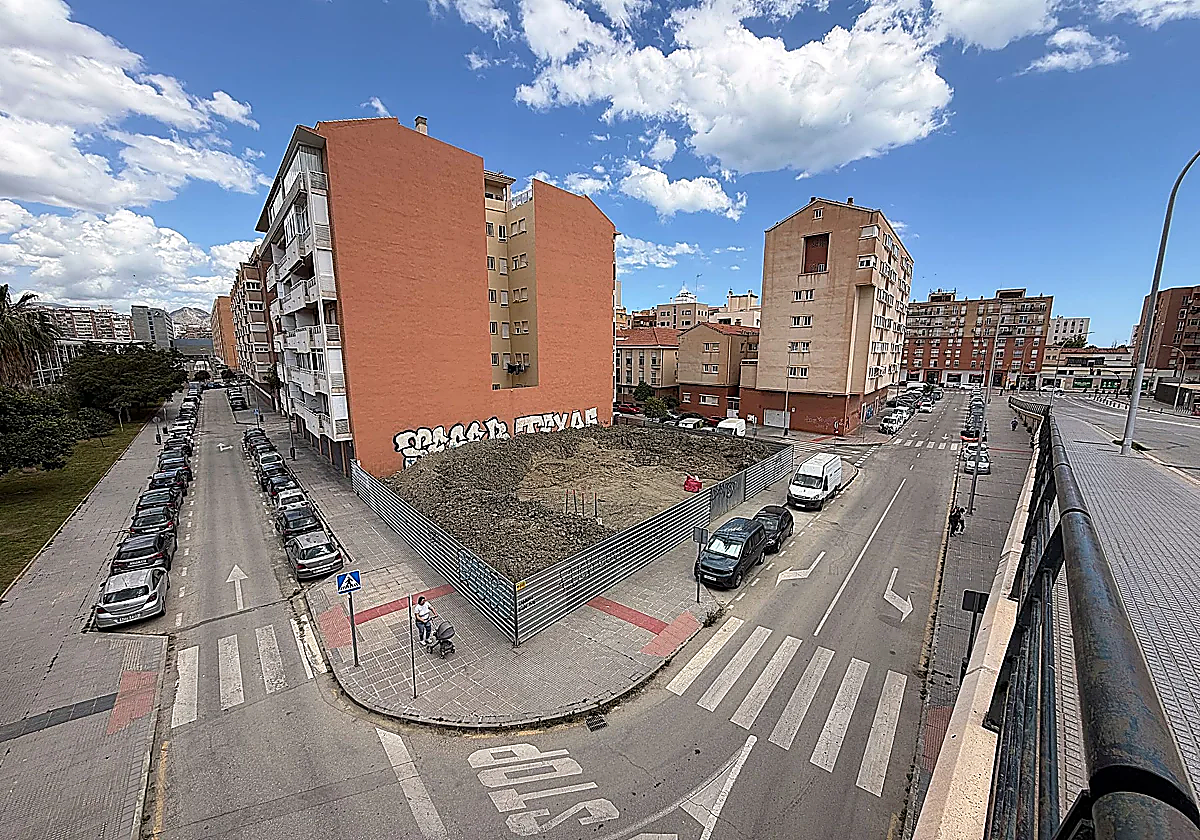
The most striking project, however, is a complex of 81 flats (with a maximum capacity of 162 beds) that will occupy a plot on Calle Paul Dukas 7, next to the John Paul II bridge. It will be a six-storey building with a ground floor, 20 parking spaces in the basement and a rooftop swimming pool. It has a budget of ten million euros.
The design is by the Madrid-based architecture firm Ortiz León, the one behind the new office building that has begun construction next to the Antonio Machado promenade.
Mayor Francisco de la Torre has expressed his intention to adopt some measures to regulate the proliferation of such tourist complexes. However, the city council has not yet activated the mechanism that would allow for such limitations.
For opposition councillor Mariano Ruiz, the trend "is becoming outrageous". "We're not talking about isolated cases, but five new projects in just two months in areas like Capuchinos, Huelin and Carretera de Cádiz. Paco de la Torre has been caught off-guard again. He's incredibly late in curbing tourist flats. He's been turning a blind eye for years, while the opposition groups have been warning him," Ruiz Araujo stated.
"For too long, everything has been allowed and we are seeing the result: residents evicted, rents skyrocketing, entire buildings converted into tourist businesses and neighborhoods losing their traditional character. This isn't about being against tourism. It's about deciding whether Malaga wants to be a livable city or become a showcase where every home is valued more as a tourist flat than as a home. It will be very difficult to reverse the damage that De la Torre is doing," the councillor said.
Deputy spokesperson for the Con Málaga municipal group Toni Morillas has also denounced the proliferation of flats. According to her, it "has direct consequences on access to housing, local businesses and community life".
Morillas warns that Malaga is at a critical juncture, where "the institutional priority seems to be attracting speculative investment instead of guaranteeing the right to housing for the majority of the population".
In the last two months, the urban planning department has also authorised nearly 50 projects to convert commercial premises into housing. According to Morillas, this phenomenon "impoverishes neighborhood life, eliminates traditional businesses and disrupts the urban balance".
She criticises the "inaction and permissiveness" of both the Andalusian regional government and the local government. "Not only are they not curbing this trend, but they are facilitating it with continuous authorisations, changes of use and a lack of inspections," she stated.
![[]](http://static.vocstatic.com/voc26/latest/assets/images/favicon/surinenglish/apple-touch-icon-57x57.png)