
Housing
Malaga housing construction accelerates to six-year high as social housing returns to city
Architects' association approves over 8,437 homes in first nine months of year, but professional body warns volume remains insufficient to ease regional crisis

Málaga
Although the construction of new homes remains well below the demand for new dwellings in Malaga province, exacerbating and prolonging the current housing crisis, the ... figures the association of architects released on Tuesday welcome cautious optimism.
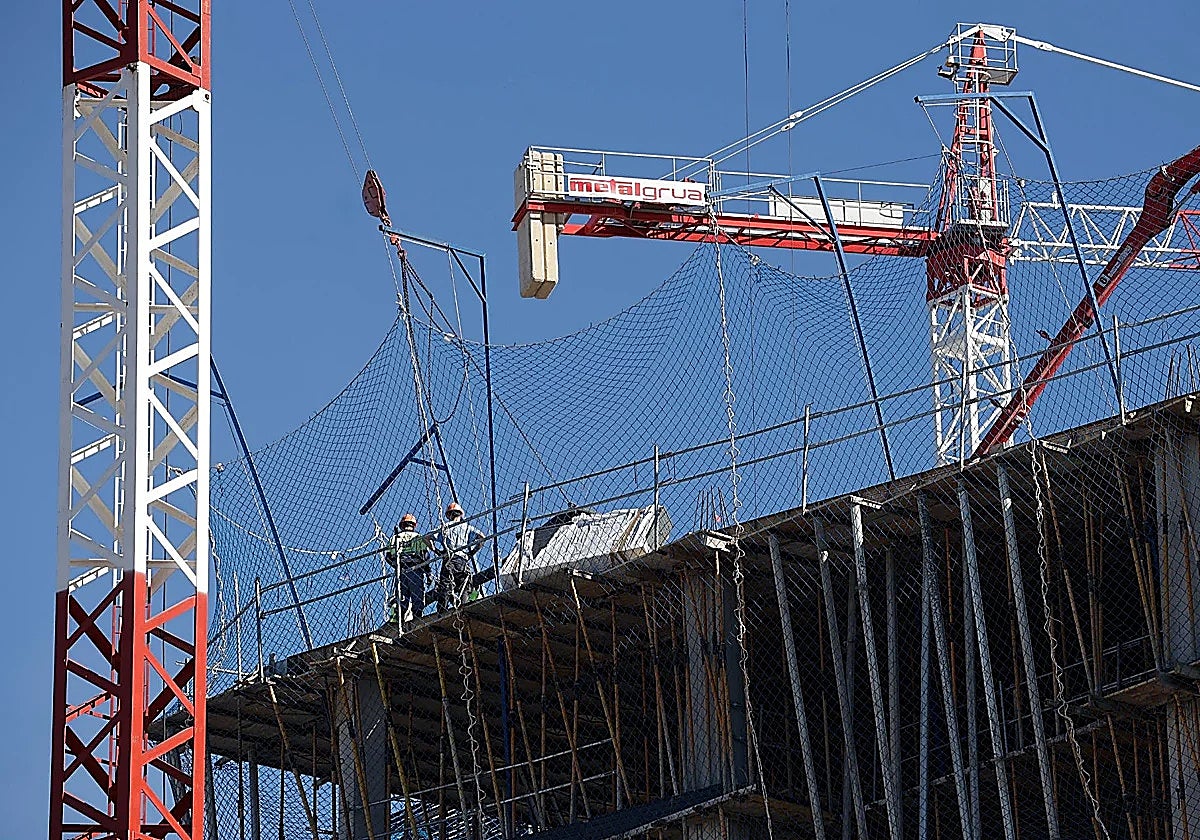
From January to September, this body has given the green light to housing developments totalling 8,437 units, which is 28 per cent more than during the same period in 2025 and the best figure in the last six years, doubling that recorded in 2021.
Furthermore, the statistics on approved housing projects show a resurgence of social housing. In the third quarter of the year, the city council approved five social housing projects, totalling 499 flats. Also in the province, Algarrobo approved another project fo 49 units, making a total of 548 affordable homes in the province approved in a single quarter, significantly higher than the 335 social housing units approved throughout 2025.
The architects' association has clarified that these are developments by private companies, as social housing projects carried out directly by public authorities do not require planning permission.
In the case of Malaga, the city council has for several years been implementing a scheme to transfer municipally-owned plots to companies interested in building and managing social housing, mainly on a rental basis. It has done so with land for more than 1,000 social housing flats in the new housing developments of Distrito Zeta and Cortijo Merino and for a similar number on public land that was lying unused, thanks to a special permit from the regional government.
However, president of the association of architects Susana Gómez de Lara believes that the volume of construction remains insufficient and that it does not, on its own, solve the problem of access to housing, "as the majority of developments in the province are on the open market and are of a high standard".
She advocates the need to promote affordable housing and calls for "greater involvement from public authorities in promoting these forms of access, rather than leaving the solution exclusively in the hands of third parties".
Gómez de Lara also stresses the need to speed up the granting of planning permission. She states that "expert bodies are making their expertise available to the authorities to put an end to these delays, both in the granting of planning permission and in the processing of urban planning applications".
Gómez de Lara points out that, "without planning, there is no land and, logically, there can be no new housing either" and calls for "greater coordination between public authorities and the establishment of mechanisms for cooperation and joint working, as there is no single solution to the housing problem".
During the third quarter of this year, the association of architects approved 190 single-family housing projects, totalling 386 units, with a budget of over 111 million euros. In this category, the municipalities of Malaga, with 94 homes; Mijas, with 43; and Estepona, with 42, stand out.
As for private multi-family housing, 63 projects were registered during the last quarter, comprising a total of 1,945 homes, with a budget of over 231 million euros. The municipalities with the highest number of planned units are Mijas (601), Malaga (328), Estepona (262), Torrox (186) and Fuengirola (150).
