
Population
The many faces of homelessness in Malaga in summer
People living in homelessness share their stories and experts analyse a social problem which, according to some sources, has increased by just over 50 per cent in the city of Malaga
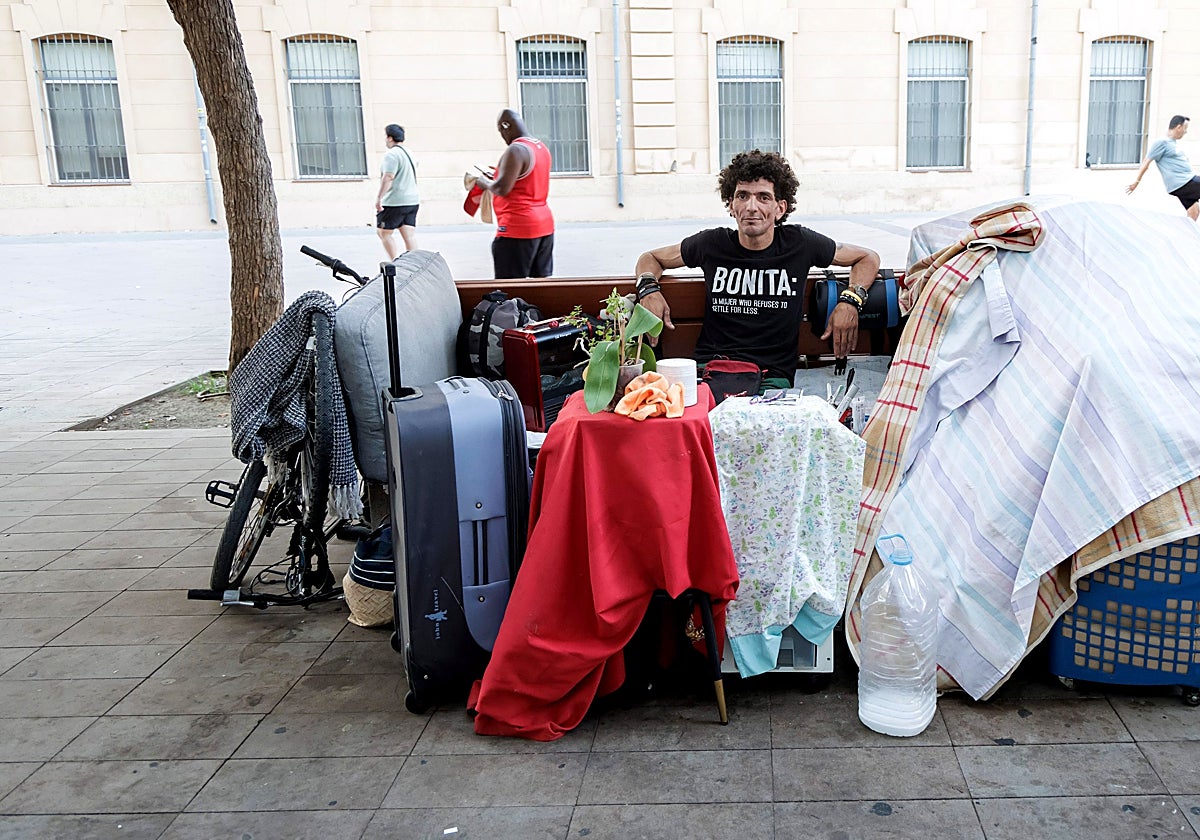

Nina, Abdel, José Antonio, Juan Manuel, Gonzalo, Hafid... you can find them in a radius of 350 metres from Plaza de Félix Sáenz in Malaga. ... They are all homeless, with no roof over their heads, living on a bench that's been turned into a home or in very precarious conditions, lying directly on the ground.
On any given morning, every bench at the Teatro Echegaray is occupied by someone who has spent the night there. It's plain to see that in Malaga there is a growing social problem that reaches its peak in summer.
Yesenia Cortés, a social worker at the San Juan de Dios shelter, says that, although support for homeless people is centralised through the Puerta Única municipal service, they are receiving an increasing number of phone calls, emails or visits directly from people in need of shelter.
Not only Malaga residents seek help. People also come from surrounding villages and even other provinces. Puerta Única confirms that there has been "a slight increase in the number of homeless people on the streets", in addition to the "usual trend driven by the weather and the flow of people in large cities such as Malaga".
In 2024, there were 185 people living on the streets, according to the study on homelessness in the city carried by Malaga University (UMA).
Diario SUR has learnt that this figure may have risen by more than 50 per cent since then, bringing the total to around 280. Other sources suggest the figure may have doubled, with a further 200 people joining the ranks of the homeless. This figure refers only to those who sleep rough. To this must be added those staying in shelters, who numbered 327 as early as 2024.
People join the list every day. Just this week, 50-year-old Guillermo Piñatel's name appeared. He carries a small suitcase containing all his belongings. He is not within that small radius of the city centre, because he has set up camp in one of the passageways of Cruz del Humilladero, known for the draughts that are a welcome relief in summer.
Guillermo served in the army, worked as a cook and when his parents died, he began working for some relatives, travelling around the fairs of Andalucía and Alicante.
That was until this Monday. He says he's had enough of being exploited at work and would rather live in peace, even if that means sleeping on the street rather than in the motorhome he used to stay in for work. He has neither an income nor any savings.
Meeting one homeless person is not enough to paint a picture of all those that live in precarious conditions. Although the majority are men in their 50s, the reality is far more complex.
The 350-metre radius within which SUR carries out its fieldwork highlights the diversity: there are men and women, Spaniards and foreigners (including other Europeans), older and younger people, those with addictions and those who are sober, those who are ill and those who are healthy.
-U10730361581xsR-680x476@Diario%20Sur.jpg)
Nina is sitting on the steps of the church of San Juan, taking a rest. She is 60 years old, but she looks quite a bit older. The street has aged her. She is Finnish. Although she speaks Spanish, she explains in English how she heard about a job offer to be the personal assistant to an 82-year-old British woman 12 years ago.
That's how she came to Malaga. Four years later, the woman died. Nina found herself out of work and that's when the problems began. "I tried to find a job, but it's very difficult for a foreigner. I had to go to a shelter and I couldn't afford the rent," she says.
That was when her alcohol addiction began; an addiction which, Nina explains, has led to her being punished by the organisation that was providing her with shelter. They found a little wine in her rucksack and expelled her for a month.
She has now spent three weeks sleeping rough "in a secret spot that nobody knows about" (which makes her feel safe). She also says that her son, who is of Estonian-Finnish descent, is in Malaga and living on the streets.
"I tell him not to come near me, because I can see in his eyes that he's doing things I'd never do." After resting her legs a little (they're bandaged due to an infection caused by spider bites) she says she's going to the shelter to collect her dog, Blue. "As blue as the sky in Malaga," she smiles.
Nina's story helps us understand that, while living on the streets (sleeping rough) and homelessness (staying in a shelter, for example) are different realities, in practice they often overlap.
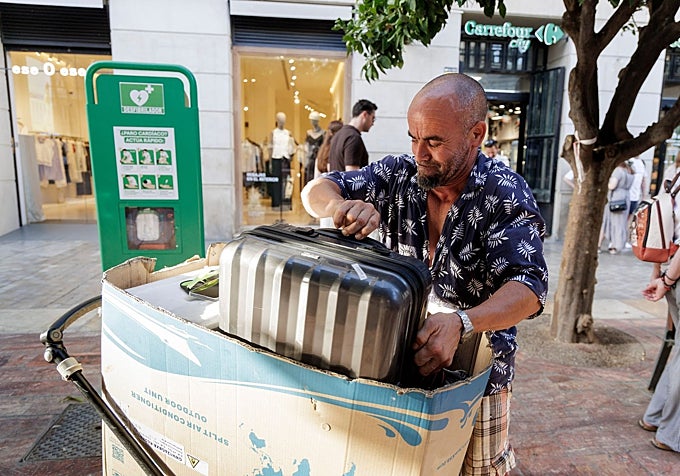
Abdel Hadi is 46 years old and is watching a Chinese TV series on his mobile, while sitting on a bench in Plaza de la Constitución. He takes off his cap to show respect to the two women who approach him and interrupt him. He says he doesn't trust anyone, that he likes being on his own, but he opens up about his life to these two strangers who are listening to him simply because they're doing their job.
Next to him is a huge trolley. He's waiting for a friend who's in trouble and that's why he's brought it along. He shows the two women the food he's going to give her, such as a bottle of olive oil.
The trolley also includes a small cool box with ice. He wants to make it clear that he doesn't live on the streets, that he pays 400 euros for a room in San Andrés. He shares the flat with eight people.
He pays his share by working in the scrap yard, searching for old items and selling them at street markets, or helping with house removals. He has no papers: he lost them while travelling back and forth between Melilla, Morocco and the mainland.
Abdel has spent time in prison. He also knows what it's like to be on the streets. If asked how he felt sleeping rough, he replies that, ultimately, men can sleep anywhere, but that it's the women he truly feels sorry for. "They're the ones who really need help and to be taken to a shelter," Abdel says.
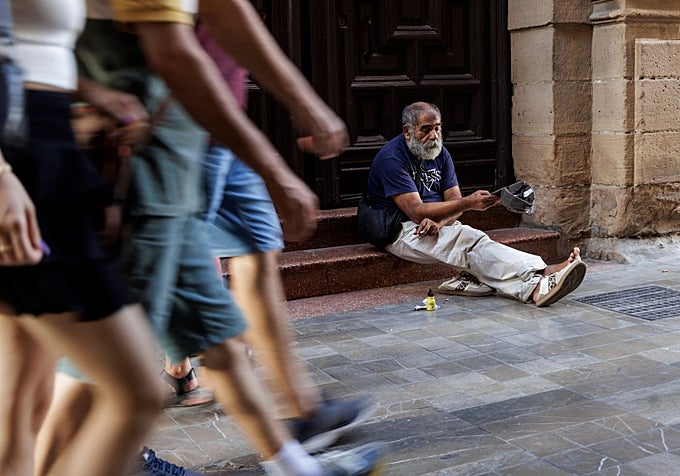
A little further on, José Antonio sits near the Ateneo de Málaga, almost as though this were his workplace, before heading home, where his wife is dealing with an illness.
The man admits that he sleeps rough on many nights. "I'm always looking out for her," he explains, referring to his wife, and points out the shop where he charges his mobile phone.
Almost beside him, stretched out on the ground, is Juan Manuel, who tells anyone passing by a sordid story from his life. It soon becomes clear, however, that the story is a fiction that is causing him great harm, because he is convinced that the drama making his life miserable is real rather than a product of his troubled mind.
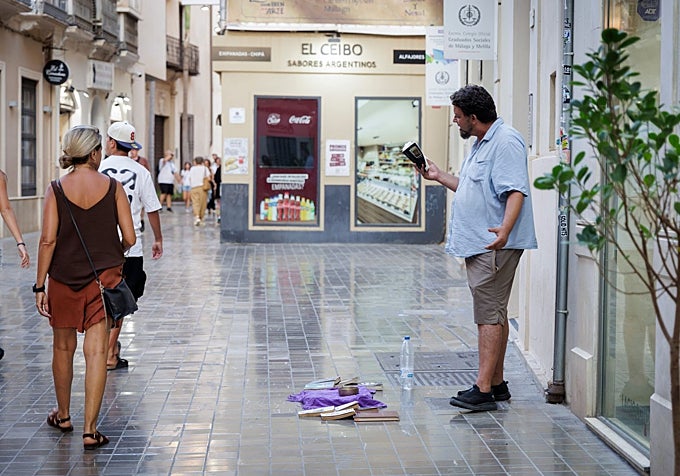
A few metres further on, past the Thyssen Museum, Gonzalo G. G., 46, recites poems in a powerful voice purely out of a love of literature "and to earn a bit of money". He lives in a shelter.
"I know I'm in this situation because of a number of family and social circumstances, and because of my disability. I'm deaf in one ear." He explains that his family lost their home 30 years ago. They managed to stick it out together for a while, until each went their separate ways to make a life for themselves.
Gonzalo ended up in an institution that sorted out his paperwork so he could receive a pension and have a roof over his head, though this hasn't prevented him from spending some time on the street, during which he has suffered "stress, a lack of understanding, indifference and coldness".
"We aren't taught how to cope with a situation like this or to know what resources are available to get by, because you have to be humble and let people help you. There are people who, out of pride, won't let themselves be helped," he says.
"Rather than asking just for the sake of it, I offer these verses that lie locked away in books," he says, as he takes his leave. Although he has worked as a waiter, a factory labourer, a warehouse assistant and as a private tutor, reciting is his passion and words are his medicine. He would like to give recitals, including in schools.
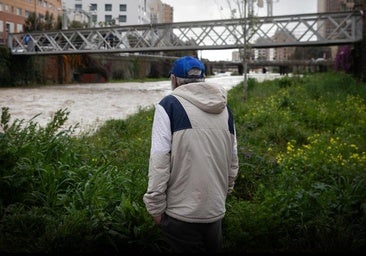
We cross the Guadalmedina in search of more testimonies.
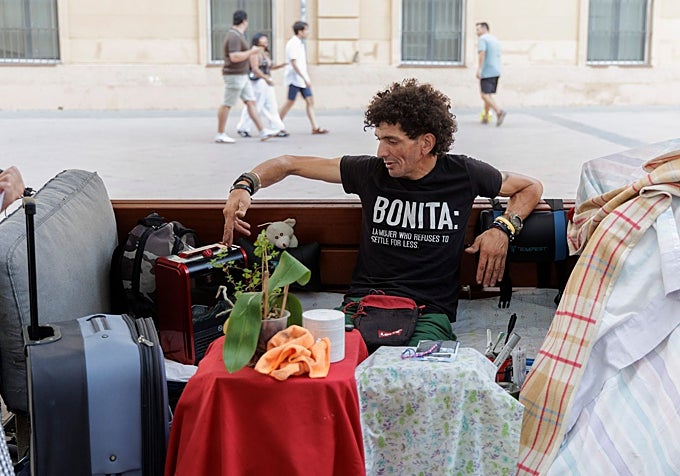
"They say I give a bad image, but the people who really give a bad image are the prime minister, his wife and the former king," Hafid, 46, says. "I don't hide myself. I'm at home, just without a home," he says with a friendly smile.
The bench in Plaza de Santo Domingo that he has turned into his home has flower pots and even a broom and dustpan to keep his patch of pavement clean. "I try to live as well as I can," he says.
Hafid has been there for three months now. He takes responsibility for his situation rather than blaming anyone else. He worked as a chef in Melilla for 18 years.
"I've tried to run away from my problems instead of facing them. I wanted to take on the world and the world has swallowed me up. With addictions, you think you're in control, but before you realise it, the demon has taken over. I've been reckless and now I'm paying the price. If only I used the intelligence I have for good..."
Related story
-
Population
María José Díaz Alcalá
He is sceptical about the services available to help people living in homelessness: "I've signed up, but it's a vicious circle. If they are interested, they let you in. If they're not, they fob you off and send you back and forth for two weeks." So he lives from hand to mouth, selling whatever he can find.
Rafael Arredondo, a senior lecturer in social work and social services at the UMA, sums up all the circumstances that can leave someone without a home, putting into theory what the testimonies show in practice.
"Losing your job, a family conflict or financial problems," he says. As for addiction and mental illness, he believes that homelessness itself can sometimes trigger them.
"It is not the norm for people to have substance-use problems and mental illness. What does happen is that once someone is living on the street, they face a risk of substance use. Sleeping with light and noise can eventually affect their mental health. Perhaps mental illness is more prevalent among people experiencing homelessness, but because of the circumstances in which they live," Arredondo says.
The people affected are mainly men, as SUR's chance encounters in the city centre show, and half of those living on the street are alone. Women, in fact, are considered more capable of building support networks, which is why fewer of them experience homelessness.
Some of the people quoted here say they do not trust others and prefer their own company. Hafid says his best friend is himself and that this protects him from loneliness because he is never alone.
But they all want to talk. Deep down, they like being around people. In every conversation, you have to force yourself to say goodbye.
Lourdes Navarro, head of Cáritas Malaga's street outreach unit, also points out that most people living on the street are Spanish and that, among foreign nationals, people from northern Europe are particularly common.
Housing is the key
If the causes have not changed and remain the same, why are homelessness and the number of people living on the street increasing?
Alejandro Cortina, director of Málaga Acoge, believes the answer lies in Malaga's "huge housing problem" and the "lack of support services". "Some people are living on the street even though they are working," he says, a point also confirmed by San Juan de Dios and Cáritas.
"The number of employed people experiencing homelessness is increasing. Even people on average, ordinary wages. These are people who cannot access housing despite having a job. Since the minimum living income was introduced, we have also seen an increase in the number of people living on the street who receive benefits, because the 680 euros available to a single person is barely enough to cover the cost of renting a room. We try to mediate so that several people can rent a flat together, but it is very difficult," Yesenia Cortés says.
Lourdes Navarro adds that people receiving the minimum living income or non-contributory pensions find it extremely difficult to find a landlord willing to rent them a home. Housing, therefore, can push people onto the street and make it harder for them to rebuild their lives.
Housing matters so much that Arredondo recalls how social intervention for homelessness is changing: the trend is no longer to address a person's circumstances first and then solve their housing problem. Instead, experts now see it as more effective to resolve the housing issue first, so that the individual feels they have their own space, their own territory, and then tackle their personal problems.
"Being able to provide an address is very important," the lecturer explains. Navarro believes that, although Malaga has good services where people living on the street can sleep, eat and shower, it lacks "pathways towards independence" that allow people to "get back on their feet". "We get stuck when it comes to helping people move on," she concludes.
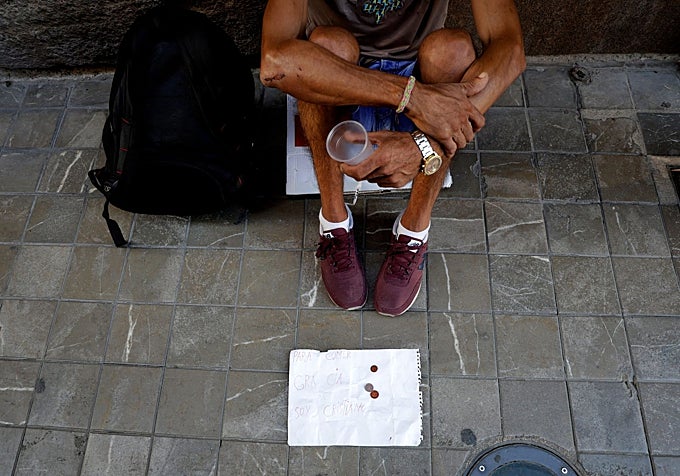
In any case, as Cortina adds, homelessness is becoming "more complex: it now includes people who have been homeless for many years, people who work and residents who struggle to access housing.
"So there is no single answer. There is a combination of different profiles that is very difficult to address. What is true is that life on the street causes people to deteriorate very quickly. At first, people may look for somewhere to sleep in cars, garages, friends' homes, on the beach, but those solutions gradually run out and people deteriorate further and further," Cortina explains.
"No one ends up on the street for a single reason. It happens after a chain of events. But the lack of housing is common to all these people," Navarro adds.
The rise in homelessness is probably structural in Malaga, but at the moment it is also seasonal, because of the summer. In recent months, makeshift camps have appeared on beaches and in some industrial areas.
Mercedes Martín, the provincial head of the Red Cross's programme for people in situations of extreme vulnerability in Malaga, says there is always a summer peak in the number of people sleeping rough because some come to work, drawn by the Costa del Sol's tourism industry, "and housing is increasingly becoming a problem".
During these months, many people are just passing through Malaga, often carrying little more than a rucksack, having come from other provinces in search of the opportunities this area appears to offer, only to find that their expectations are often disappointed.
Others end up moving to places where housing is more affordable. Hafid, for example, has no plans for the future. "Maybe tomorrow I'll throw all this in the bin and go somewhere else. I live one day at a time."
![[]](http://static.vocstatic.com/voc26/latest/assets/images/favicon/surinenglish/apple-touch-icon-57x57.png)