
Health
Malaga hospital saves 20 patients per year from profound hearing loss
Hospital El Clínico is one of the three Andalusian centres that perform a very complex surgery involving cochlear implants
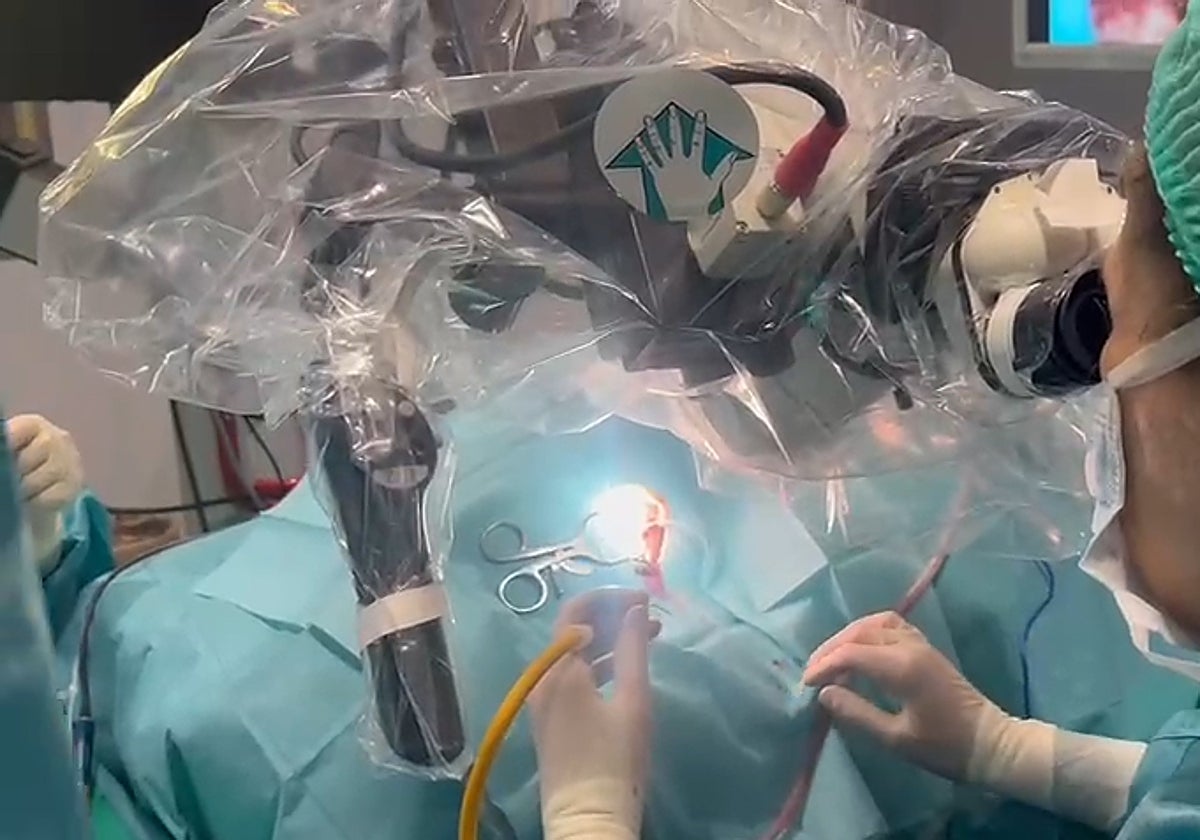

Malaga's Hospital El Clínico is one of the three hospitals in Andalucía that perform the highly complex surgery that involves placing a cochlear implant. The centre in Malaga saves around 20 people from profound hearing loss every year.
The number of people who benefit from the surgery has doubled over the past five years. These are patients for whom hearing aids are no longer enough.
Profound sensorineural hearing loss implies severe hearing loss due to damage to the inner ear, especially the cochlea, where the cells that convert sound vibrations into nerve signals are located. When these cells deteriorate or disappear, often with age due to exposure to noise or certain diseases, sound cannot be properly converted into electrical impulses that travel to the brain via the auditory nerve.
Patients
Those affected by this condition not only hear less, but they often don't understand words even when the sound is loud: they perceive sounds, but the message arrives distorted or incomplete. When the hearing loss is very severe, hearing aids are no longer useful. Therefore, a cochlear implant is necessary - a device that transforms sound into electrical signals and directly stimulates the auditory nerve so that the brain can interpret it.
Related story

Profound sensorineural hearing loss affects two per cent of people over the age of 65 in Malaga province, i.e. around 6,700 people. Of these, between 1,000 and 1,600 may at some point need a cochlear implant.
Profound sensorineural hearing loss affects two per cent of people over the age of 65 in Malaga province, around 6,700 people. Of these, between 1,000 and 1,600 may at some point need a cochlear implant.
Head of El Clínico's otorhinolaryngology department Eva Flores Carmona explains how the implant works: "It has two parts: one we place in the subcutaneous intervention. The external part is the sound receiver that makes this device work."
Patients from all over the province go to the hospital in Malaga city. To be referred, they need to undergo "a series of tests" that "determine whether they are eligible for the implant". If they are, they enter a waiting list. Rehabilitation begins after the implant is surgically placed and, later, activated.
Surgeries
Now, thanks to management support, the number of these surgeries has increased. "This takes into account the population increase and aging. We review the number each year and increase it according to demand." It is a complex and costly procedure because the surgery is difficult and many different professionals are involved: nurses, ENT specialists, radiologists, etc.
"It is essential that the patient is motivated, that they collaborate and have family support, because we might do the whole diagnostic process, but rehabilitation is a very important part that depends a lot on the effort that the patient puts into it," Dr Flores says.
El Clínico has been performing this complex surgery for more than 20 years. "The increase in the number of inhabitants in our province and its progressive ageing means that profound hearing loss will become more and more frequent and, therefore, treatment with cochlear implants will become highly requested," Dr Flores states.
"The increase in the number of inhabitants of our province and its progressive ageing means that profound hearing loss will become more and more frequent."
Dr Flores
"Our commitment is to continue and improve this care for patients with hearing loss," Dr Flores says, adding that the Malaga hospital is undergoing planned renovation to double rooms and improve technical resources in the ENT area.
The benefits of cochlear implants are numerous: improved face-to-face and telephone conversations, better spatial orientation and reduced auditory effort. All of this leads to reduced social isolation, improved career continuity and easier reintegration into the workforce for patients.
![[]](http://static.vocstatic.com/voc26/latest/assets/images/favicon/surinenglish/apple-touch-icon-57x57.png)