
Health
Malaga province's doctors launch five-day strike to demand better working conditions
In addition to the 16-20 March strike in Malaga, Seville is holding a large rally Wednesday to demand changes in the new 'statute framework' from the Ministry of Health
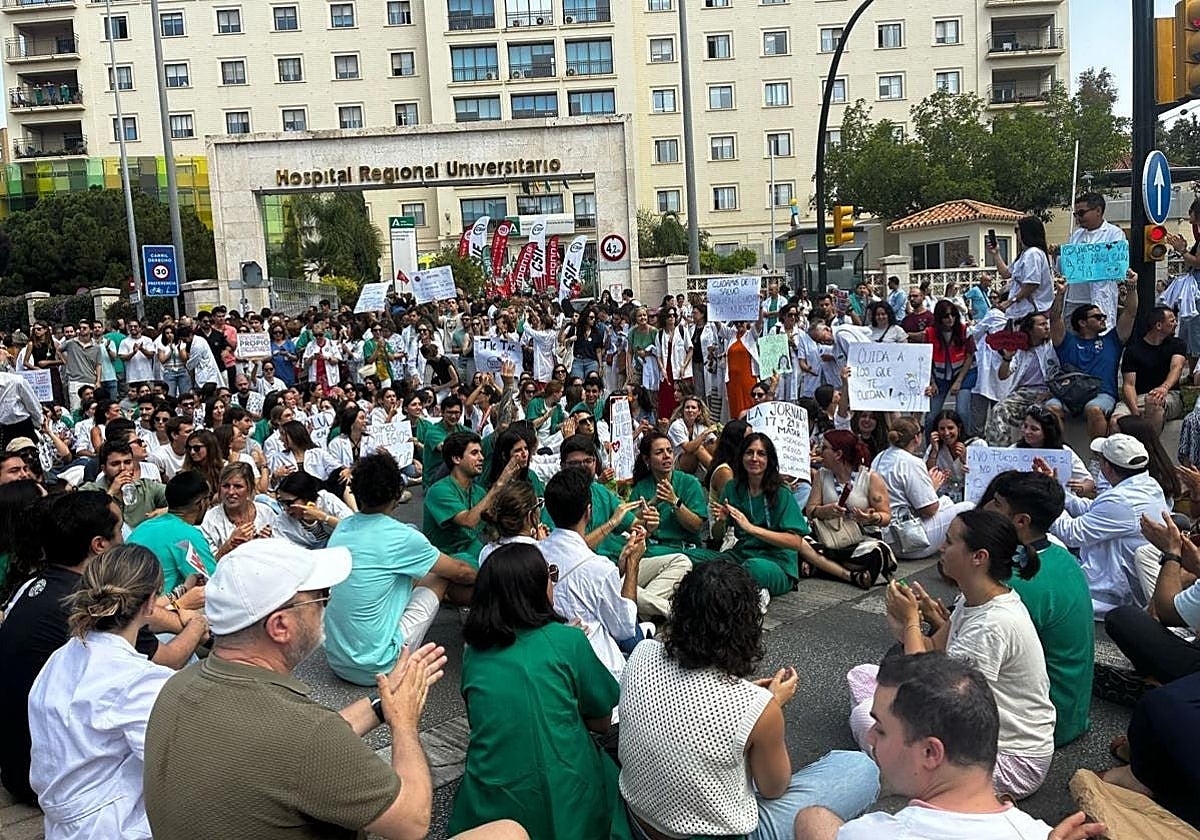

A total of 5,700 healthcare workers in Malaga province are set to participate in yet another strike against the 'statute framework' this week. The demonstration will run from 16 to 20 March, impacting thousands of consultations, tests, appointments and scheduled surgeries.
The Satse, FSS-CCOO, UGT and CSIF unions have already signed an agreement with the Ministry of Health, but the major doctors' unions in Andalucía and Malaga (SMA and SMM) are against the statute framework and its conditions. Many doctors feel like the negotiations have taken place without their representatives.
In addition to the five-day strike in Malaga, Seville is organising a large demonstration on 18 March to demand "a statute framework of their own". After this, the unions will keep organising rallies (27 to 30 April; 18 to 22 May; 15 to 19 June), until the Ministry of Health gives in.
As the president of the SMM union told SUR during the last strike, "on-call hours that don't count towards social security contributions add between five and seven years of extra working life" for doctors. In other words, if a normal working life is 38 years, they can reach 45 without that on-call time counting towards their pension. This calculation applies as long as those on-call hours are converted to regular working hours.
Doctors share feeling of "neglect"
"We are united in the fight against the neglect shown by politicians and the Ministry of Health when it comes to improving the conditions and addressing the demands of doctors," the head of the SMM said, describing the treatment by the government as despicable.
He criticised other unions for holding negotiations on their behalf with the government and highlighted that, of the 20,000 doctors in the public sector in Andalucía, the unions organising the strike represent 15,000.
Another key issue for doctors is 24-hour on-call shifts. "On top of that, they are paid less than a normal working day. I won't even get into on-call duty from home - it's a disgrace. You're paid at half rate and if you are called in to work you are then paid as if you were physically present, but the next day you still have to carry on with your normal schedule. It's exploitation, the system cannot keep running on the exploitation of doctors," he said.
Doctors demand their own statute framework, an end to 24-hour shifts and that overtime count towards retirement.
"Other professional groups work shifts and they have rest periods and complete their normal working day, but doctors end up spending five or six years of their working lives on on-call duty," he said.
According to the regional government, about a quarter of doctors in the Andalusian public health service took part in the indefinite strike in February. However, the SMM says participation reached 50 per cent in primary care and more than 80 per cent in public hospitals in the province.
Demands
President of the Malaga union of physicians Pedro Navarro said at the latest demonstration that the dispute is not about privileges but about creating a specific statute to regulate the medical profession.
Dr Navarro demanded "professional classification". "Our profession requires six years of university training, one year of residency and four or five years of specialisation, yet we are on the same level as other healthcare workers that do not require the same level of training, responsibility or time," he said.
He also described the pay system as outdated, noting that the most significant supplement comes from on-call shifts. "That means that when a colleague is on sick leave or holiday, their salary drops because they are not doing on-call duty."
Dr Navarro also said that 24-hour shifts are "inhumane", stating that a doctor "cannot operate at 4am as they can at 8am or 10am".
![[]](http://static.vocstatic.com/voc26/latest/assets/images/favicon/surinenglish/apple-touch-icon-57x57.png)