
Housing
Malaga sees demand for rental properties growing, supply stagnating and prices increasing
The capital of the Costa del Sol is among the six most expensive places in Spain for shared accommodation
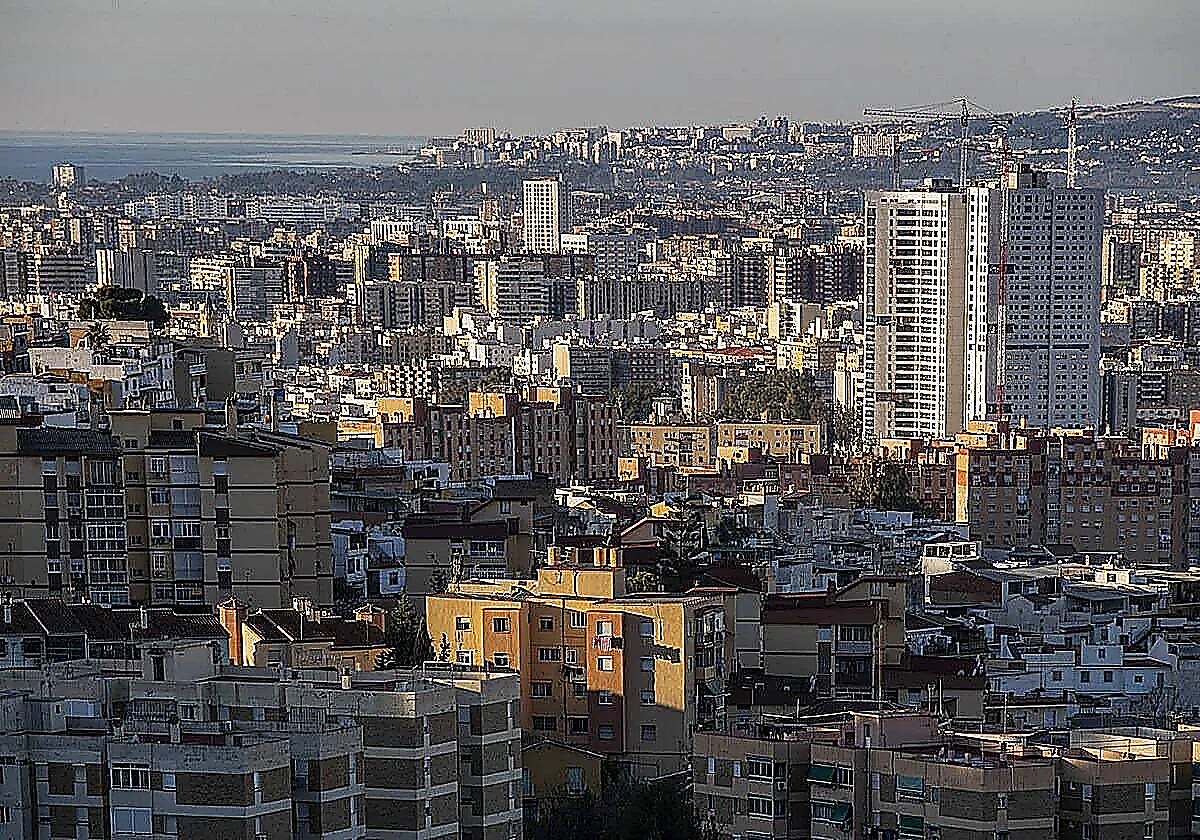

With the new academic year about to begin, university students are starting to look for accommodation. However, the profile of people sharing flats has actually ... become more complex over the years as house prices, and particularly rents, have risen, meaning that those looking for a room now include working people as well.
According to a study property portal Idealista published on Monday, demand for rooms keeps rising across Spain in general and in Malaga in particular. The number of people interested in a room has grown by 12% over the last 12 months across the country as a whole. In Malaga, the growth is even higher, at 17%.
However, there are provinces where the increase in demand has been much higher: in Girona and Zaragoza it has doubled, while in Soria and Huelva it has risen by 89% and 80%, respectively. In Cuenca, Teruel, Salamanca, Tarragona, Lleida and Huesca, the increase in demand stands at over 50%.
There are also cities where the number of people interested in sharing a flat has fallen, such as in Granada (-17%), Madrid and Ourense (-9%), as well as in Seville, Cáceres and Alicante.
As demand rises, how is supply faring? At national level, the 12% increase in available rooms theoretically offsets the identical rise in demand. But when you look at individual provincial capitals, the situation varies greatly.
For a start, in Malaga, the 17% rise in the number of people looking for a shared flat is having to contend with a stagnant supply. At least, this is not the case in Bilbao, where the 32% rise in demand coincides with a 23% fall in the number of available rooms; or as in Palma, where the 15% rise in the number of potential tenants is met by a 22% reduction in the number of rooms on offer.
There are also places where the opposite is true, such as in Ourense, where, although demand has fallen by 9%, the number of available rooms has risen by more than 50%.
Price trends
What impact do these trends in supply and demand have on prices? Across Spain as a whole, the fact that both have risen equally has resulted in a 1% increase, bringing the average monthly rent per room to 425 euros.
Meanwhile, in Malaga, stagnant supply and demand that has risen by 17% have led to a 6% rise in the average price of rooms, up to 450 euros per month on average. This is a far cry from the 22% rise recorded in Palma, where prices have reached 550 euros. Other provincial capitals with double-digit increases include Teruel, Palencia, Castellón de la Plana and Pontevedra.
Malaga, with an average rent of 425 euros per month, is among the six Spanish provincial capital cities where flat-sharing is most expensive, alongside Barcelona (600 euros), Madrid and Palma (550 euros), San Sebastián (500 euros) and Bilbao (450). Next come Pamplona, Santa Cruz de Tenerife, Vitoria and Girona, which are also above the 400-euro mark.
In Andalucía, behind Malaga, come Cadiz, at 375 euros, and Seville, at 370 euros, on average per room. The city of Seville is one of the few where prices have fallen, albeit only slightly, by 1%.
Valencia is the city where room rents have fallen the most, by 5%, to 380 euros. Prices have remained static in Ávila, Murcia, Ourense, Salamanca, Cuenca and Badajoz.
The cities where it is cheapest to rent a room are Badajoz and Jaén, at 250 euros a month.
![[]](http://static.vocstatic.com/voc26/latest/assets/images/favicon/surinenglish/apple-touch-icon-57x57.png)