
Crime
Around 30 defendants escape justice as Malaga hashish case becomes time-barred
The public prosecutor’s office had initially sought four-year sentences for the gang, which was allegedly involved in smuggling goods hidden in false bottoms of vehicles
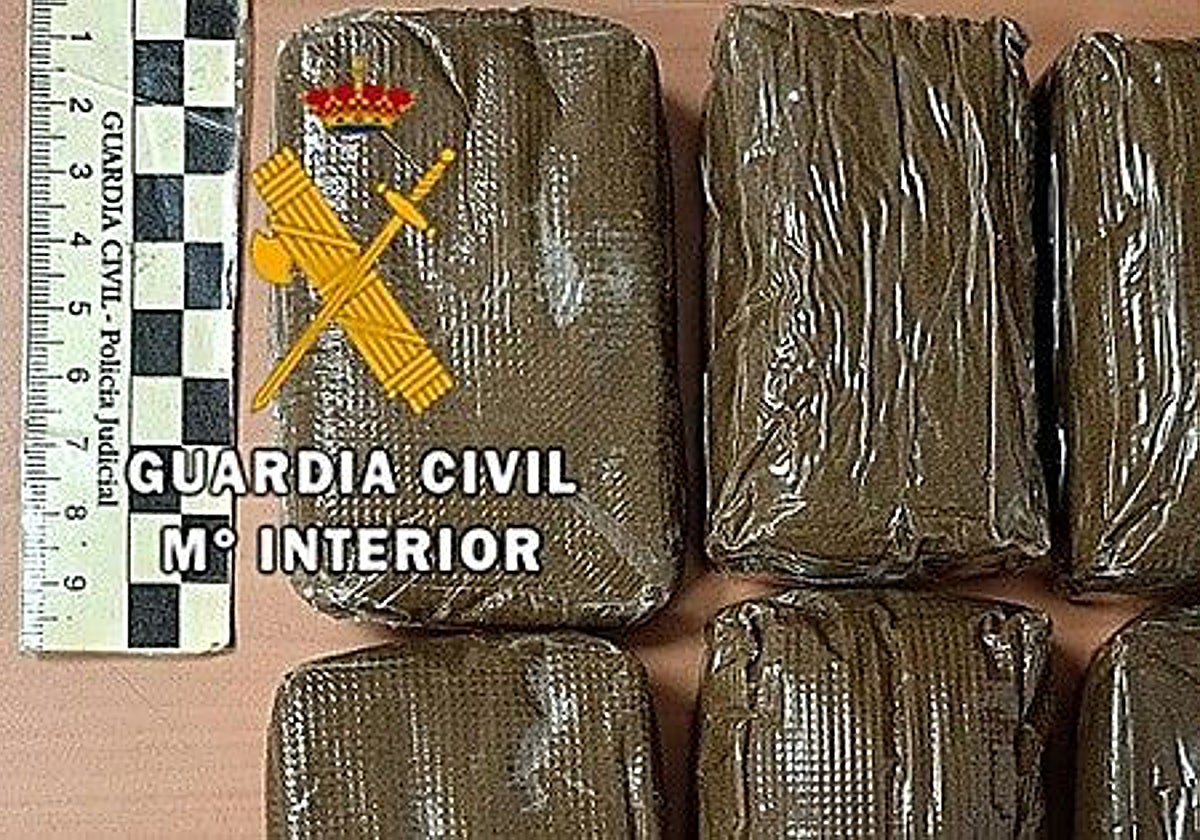

Twelve years without progress, four adjournments of the trial and a persistent backlog in the courts have been enough for around 30 people accused of ... being part of a hashish trafficking network to go unpunished, as the statute of limitations has expired.
The case, which has been dismissed by the Cadiz magistrates’ court, was brought against an alleged network accused of transporting nearly 200 kilos of hashish, of which more than 150 kilos were reportedly distributed from the Costa del Sol.
The court has ordered the definitive closure of the proceedings and declared the offences time-barred, having established that the statutory five-year period had elapsed "by a considerable margin" without any investigative steps being taken that were capable of effectively interrupting the limitation period.
This ruling, to which SUR has had access, grants a full acquittal to nearly 30 suspects against whom the public prosecutor’s office had sought sentences of four years and three months’ imprisonment and individual fines of up to half a million euros.
The case has been dismissed following a request made by the Malaga-based lawyer Inés Barba, who was representing one of the individuals arrested in connection with a consignment intercepted in Villanueva del Trabuco.
Her application for the case to be dismissed on the grounds that the statute of limitations had expired was ultimately accepted by the public prosecutor’s office itself and subsequently extended to the other suspects under investigation.
The origins of the investigation date back to the summer of 2012, when the Royal Moroccan national security and law enforcement force alerted the Guardia Civil to the interception of a vessel on the high seas, during which a cache of drugs was seized and several Spanish nationals were arrested. The investigation uncovered the operations of a network allegedly run from France by one suspect and coordinated on Spanish territory by another man based in Fuengirola.
According to the public prosecution, it was the latter who orchestrated the smuggling of drugs via the Cadiz coast, where they were subsequently concealed in false bottoms of vehicles and distributed to various locations on the Iberian Peninsula and in the neighbouring country. The investigations revealed a network of continuous drug trafficking linking the Costa del Sol with provinces such as Madrid, Navarre and Pontevedra.
Between March and June 2013, the security forces uncovered consignments ranging from 20 to 54 kilos of hashish, some of which were seized in places such as Linares - with one consignment valued at over 41,000 euros - and at the Portuguese border itself.
One of the key operations took place on 8 March 2013 in the municipality of Villanueva del Trabuco, where police officers intercepted a car after noticing that it had a broken rear light. Inside the car, concealed in the air-conditioning duct and in the boot, they found 220 tablets totalling 21 kilograms of drugs, valued at 33,900 euros. The estimated total value of the drugs that the organisation had trafficked exceeded 343,000 euros.
Case suspended
Although the public prosecutor’s office formally filed the indictment in November 2014 for offences against public health and the unlawful possession of weapons, the case systematically stalled after it reached the criminal court. The first date set for the hearing, in November 2016, was adjourned as some of the defendants could not be located.
In November 2019, the trial was once again adjourned on the very day it was due to begin, as several defendants did not have appointed legal representation. Subsequent hearing dates, set for October 2021 and November 2023, met with the same fate due to the lack of summonses and the fact that several defendants were subject to arrest warrants.
The ruling by the Cadiz court states that offences against public health involving substances that do not cause serious harm to health, in quantities of significant magnitude, are subject to a five-year limitation period. In their reasoning, the judges refer to the legal principle established by the higher courts: trial dates that cannot be held due to procedural shortcomings lack real effect and, therefore, do not serve to interrupt the running of the limitation period.
As no appropriate proceedings were carried out following the order to commence the hearing, and given that the court was never actually in a position to hold the hearing, the ruling orders the complete discharge of the defendants’ criminal liability. This ruling brings to a close a case dating back to 2012, without the facts having ever been tried in court.
