
Society
Around 20 homeless people live in tents and makeshift shelters on Malaga's La Malagueta beach
Residents, workers and beachgoers report feeling increasingly unsafe in the area and the accumulation of belongings, rubbish and faeces
Ignacio Lillo
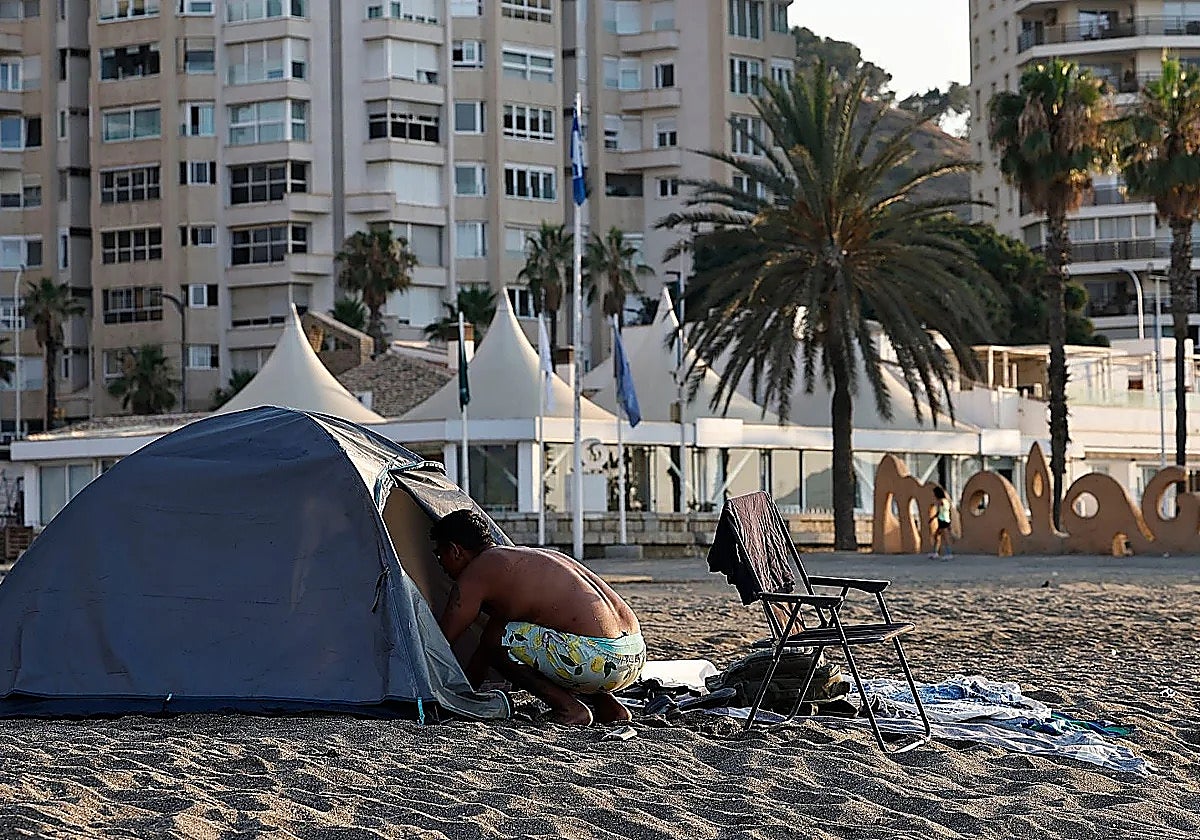
The most popular beach in Malaga city, La Malagueta, has become a shelter for homeless people, migrants and even some backpackers. Although local laws do not allow sleeping on the sand, the number of people camping there has clearly increased with the rise in temperatures.
At 8am on Tuesday morning, SUR counted around 20 tents and makeshift shelters, as well as people sleeping directly on mats on the sand, camouflaged among the beach furniture.
One tent was occupying the covered awning intended for assisting people with disabilities on their way to the toilets, while others had created improvised shelters using sheets, blankets, tarpaulins and cardboard.
Related story
-
Population
María José Díaz Alcalá
The most crowded area is located between Antonio Martín and the port's breakwater, opposite the military residence and the Club Mediterráneo.
In addition to the accumulation of belongings and rubbish, residents, workers and visitors complained that it's common to see people relieving themselves anywhere.
They also reported feeling increasingly unsafe in the area due to the thefts and muggings that occur almost daily. The main targets are unsuspecting tourists.
Daily thefts
"At 6am I go for a walk along the promenade and see them doing everything imaginable on the beach," Juan, who lives in the area, told SUR. "It's outrageous: the cleaning machines have to take a detour because they just won't leave and the area is becoming increasingly unsanitary, with waste lying around at all hours."
Juan described the makeshift shelters constructed from tarpaulins and umbrellas in the Antonio Martín area. He complained of "total neglect" that's "impacting Malaga's image for tourists".
"This doesn't happen in other coastal towns because it's more closely monitored," he said.
"You can tell there are a lot more people sleeping on the beach," a group of workers said. "The problem isn't just that they're sleeping, it's everything around them," they stated, referring to the trash, faeces and drugs.
Although the majority of the people sleeping on the beach are homeless people and migrants, there are also young travellers that use the opportunity to sleep for free as they pass through the city.
"There are a lot of thefts, particularly targeting the backpacks of tourists who come to the beach at night or in the early morning," another resident, Pedro, said. "The neighbourhood used to be very nice, but lately it's gone downhill a lot."
According to him, the Local Police frequently visit. "They tell them to leave, but they're back again within two days," he said.
"It's a shame the beach has turned into this," the doorman of one of the beachfront tower blocks said. According to him, many of those sleeping there are the so-called 'mojito vendors', who spend their days selling drinks to beachgoers without any health and safety controls.
"The police come around all the time, but they don't care. They need to take serious action and put a stop to this once and for all," he urged.
The authorities are aware of the situation
The central government's department in Malaga stated that the Local Police of each municipality is responsible for controlling overnight stays on the beaches and similar social issues linked to this activity.
Malaga city council's beach department is aware of the problem. "We're the only ones who clean it every day," councillor Teresa Porras said.
In Porras's opinion, the security and social rights departments should be in charge of this social concern. She also said that La Malagueta is not the only beach that hosts people who need a place to sleep. The same happens at the San Andrés beach in Huelin.
"They're even sleeping in children's play areas," Porras said.
Early in the afternoon, following inquiries from SUR, the city council said that the Local Police had dismantled six encampments that morning at various points along the city's coastline, "as part of the security operation during the summer months on seafront promenades and beaches".
Municipal cleaning company Limasam collaborated with the police to remove two of the encampments, while the occupants themselves removed the other four.
The social rights department also visited La Malagueta on Tuesday. They confirmed that the individuals present regularly sleep in the area. According to them, they had moved to the beach due to the high temperatures.
The social rights department coordinates assistance for homeless people arriving in the city, assesses their individual circumstances and offers them available resources (clothing, shelter, hygiene supplies, laundry, meals, etc.).
"This is work that we maintain throughout the year to guarantee the best possible care and meet their needs. Specifically, the street outreach unit provides support to individuals, informing them about and encouraging them to use municipal resources," the city council stated.
Read dedicated local reporting for Malaga city
![[]](http://static.vocstatic.com/voc26/latest/assets/images/favicon/surinenglish/apple-touch-icon-57x57.png)