
Infrastructure
Malaga province to house major energy storage facility in Álora
Engie will invest 80 million euros in the plant that will store and return electricity to the grid when needed
Julio J. Portabales
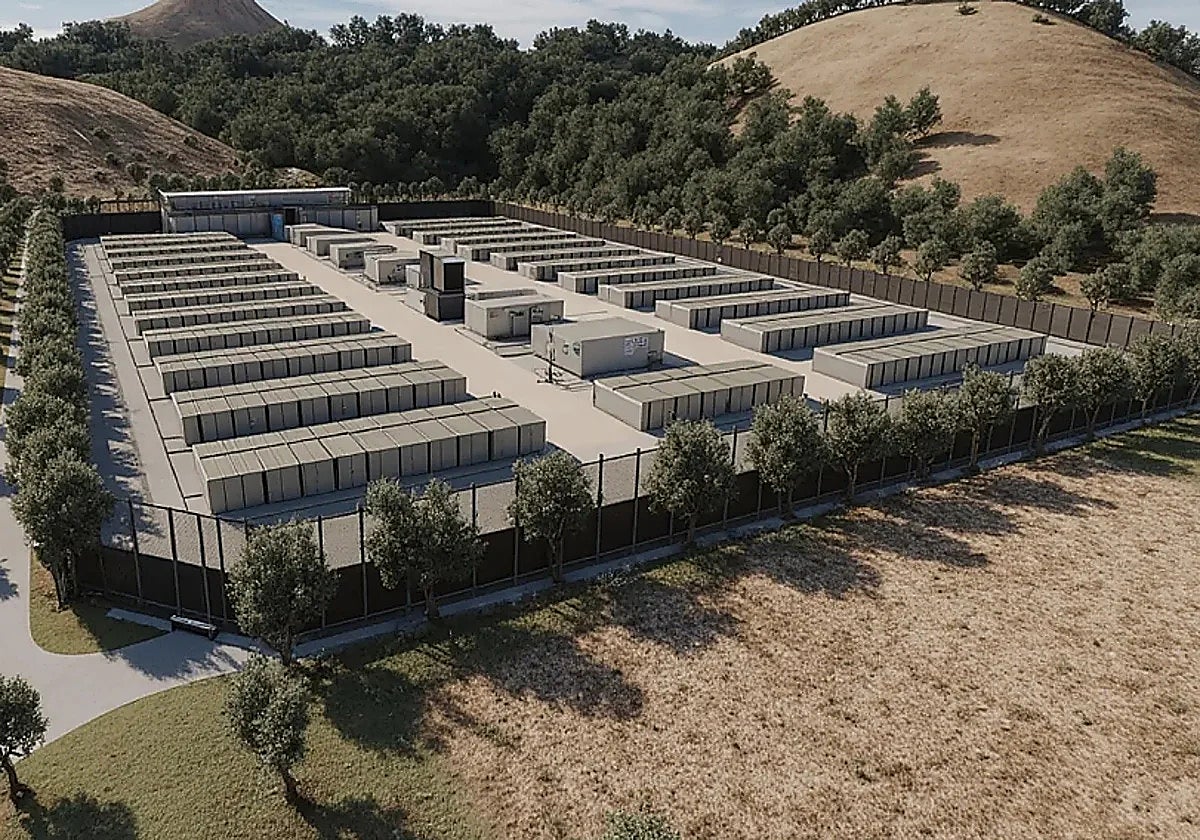
The town of Álora is preparing to host one of the major energy storage projects in Malaga province. The central government has authorised the construction of the ST Cerrillo facility: a plant that will function, in practice, as a large battery.
The facility will store electricity when energy is available and return it to the grid when the system needs it.
The cost of this project is likely to exceed 80 million euros. Located in the municipality of Álora, the facility will be connected to the Tajo de la Encantada substation, a key point in the electrical grid in the Guadalhorce area.
Related story
-

Employment
Nuria Triguero
The facility will have a capacity of 77.6 megawatts and a storage capacity of 340 megawatt-hours. Put more simply, it will be able to store electricity for four hours and then feed it back into the grid.
It will not be a power generation plant, like a solar or wind farm, but rather an infrastructure for energy storage.
Why build the plant?
The key lies in one of the major challenges of the current electricity system. Renewable energy, especially solar and wind, is becoming increasingly available, but it isn't always produced precisely when demand is highest.
There are times of day when a lot of electricity can be generated and others when demand increases, requiring more support to maintain grid balance.
This is where these types of installations come in. Batteries allow electricity to be stored when it is available and released later when needed. The aim is to make better use of renewable energy, reduce losses and strengthen the stability of the electrical grid.
In the case of ST Cerrillo, the plant will consist of 24 external storage units. The batteries will be lithium iron phosphate: a lithium-ion technology used in storage facilities due to its stability and large-scale operating capacity.
In addition to the batteries, the plant will include inverters, transformers, control systems and its own substation. These elements are necessary to transform the electricity, manage it and send it back to the grid under appropriate conditions.
The electricity stored at the plant will be transmitted through the Tajo de la Encantada substation, which Spain's energy operator Red Eléctrica owns.
Various institutions in charge of the environment, heritage, health, roads and land planning have given their authorisations for the project to move ahead.
Initially, Álora town hall raised objections, but ultimately gave its approval after the developer provided additional documentation. The government resolution also states that the authorisation is granted without prejudice to any other permits that may be required before construction can begin.
Favourable environmental reports
The project has received favourable environmental reports, although these are conditional upon compliance with various measures during construction and future operation of the facility. These measures include conducting wildlife surveys before work begins to avoid impacting protected species.
The construction schedule must also be adjusted to the biological cycles of the wildlife. In addition, the resolution requires archaeological monitoring of earthworks.
The process has been lengthy. The initial application was submitted in December 2023 and the project was modified in 2025. Current business projections indicate that construction could begin in 2027 and the facility would become operational in 2028.
![[]](http://static.vocstatic.com/voc26/latest/assets/images/favicon/surinenglish/apple-touch-icon-57x57.png)