
Infrastructure
Coín is preparing land for more than 5,000 homes with a view to the next twenty years
The town council has begun drafting a new development plan and has linked residential growth to Endesa’s future electricity substation
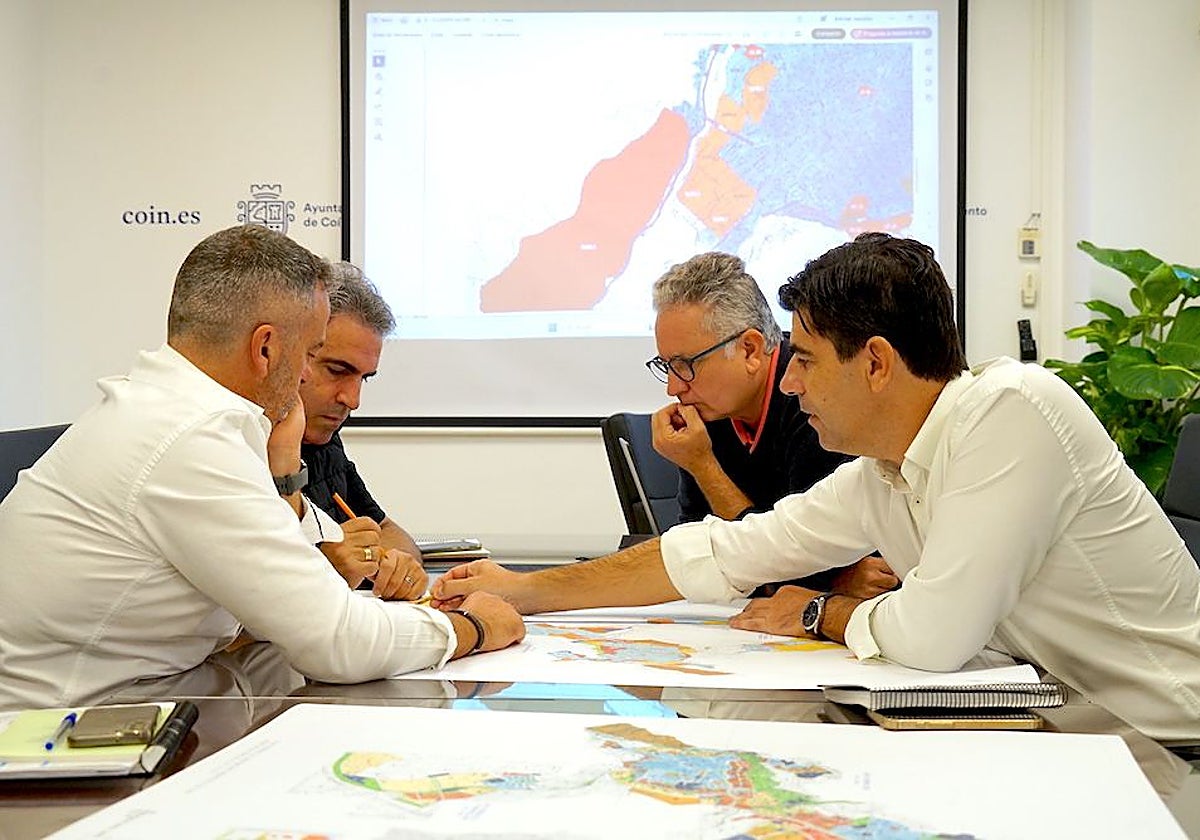

Coín is beginning to map out its growth path for the next two decades. The town council has begun work on drawing up a new ... town planning scheme that will allow for the construction of more than 5,000 homes, a development that aims to be concentrated in the municipality’s natural expansion zones and aligned with the availability of infrastructure and utilities. The proposal is still at a preliminary stage. Municipal planners and external experts are working on the draft, which will serve as the basis for subsequently opening up the process to local groups and organisations.
The announcement comes following a meeting between the mayor, Francisco Santos, and the specialists tasked with analysing growth prospects. On the table is the drafting of a preliminary version of the new general urban development plan (PGOU), through which the council aims to set out the conditions for expanding the housing supply. The figure for the number of homes reflects the potential that this document is intended to unlock, although its content has yet to be finalised.
5,000
Homes
This is the capability that the town council aims to allow through the new approach, which is still at the draft stage
“We have begun working meetings to draw up a preliminary draft of what will be Coín’s new general urban development plan (PGOU),” explained Santos, who plans to involve the various sectors of the municipality during its preparation. “This is a project for which we will be counting on all the stakeholders, groups and organisations in the municipality to get involved, play their part and contribute ideas,” he added. For the time being, the work is being carried out internally, before a draft proposal is drawn up on which to incorporate these contributions.
The council’s intention is that the increase in housing should be accompanied by the necessary services to cater for the population. The councillor insists that growth must be "planned" and "orderly", taking into account the infrastructure and utilities that will make it possible. This will be one of the criteria set out in the document, which is drawn up with a twenty-year timeframe in mind and is intended to guide the direction in which the town centre can expand.
“We are not talking about growth for growth’s sake; we are talking about having a valid document for Coín’s immediate future that will enable us to plan properly for where we are heading and what we need, without losing our identity or the unique character of Coín,” said the mayor. Drawing up the draft will be the first step towards translating this approach into a concrete town planning proposal.
Vegetable plots and the electricity supply
One of the limits the town council wishes to impose on this expansion is the preservation of the agricultural landscape surrounding the town centre. According to Santos, the more than 5,000 homes will be planned for areas of natural growth in Coín, "without harming the countryside and the market gardens near the town centre, which are an unmistakable hallmark of Coín". The announcement does not yet specify the plots or sectors to be included in the plan, nor how the planned residential capacity will be distributed amongst them.
Alongside the selection of plots of land, the electricity supply plays a central role in the council’s plans. The mayor links the possibility of pushing ahead with the new development plan to the substation that Endesa plans to install in the town, a piece of infrastructure he considers essential for both housing development and industrial activity. Its construction thus appears to be one of the key factors on which the council is basing its growth expectations.
“In Malaga and Andalucía in general, there is a serious problem with the electricity supply, and we are fortunate that, thanks to the collaboration between the town council and Endesa, we will have this facility, which will enable the creation of housing and the industrial development that is already underway,” said Santos. The councillor therefore cites the future electricity supply as one of the factors enabling the urban planning model to be reviewed at this stage.
The next step will be to finalise the draft and hold meetings with the relevant stakeholders and groups to ensure their involvement in the proposal. The location of the developments, their conditions and the timetable for processing the document still need to be finalised. The twenty-year timeframe defines the scope of the municipal planning; the construction of the homes will depend on the subsequent implementation of this plan and the accompanying infrastructure.
