
Fires
GPS-tracked goats to help fight fires: the Malaga village with its own innovative municipal herd
Around 30 animals are clearing 33 hectares within a 'virtual' fence controlled via a mobile phone in the small village of Benarrabá in the Serranía de Ronda
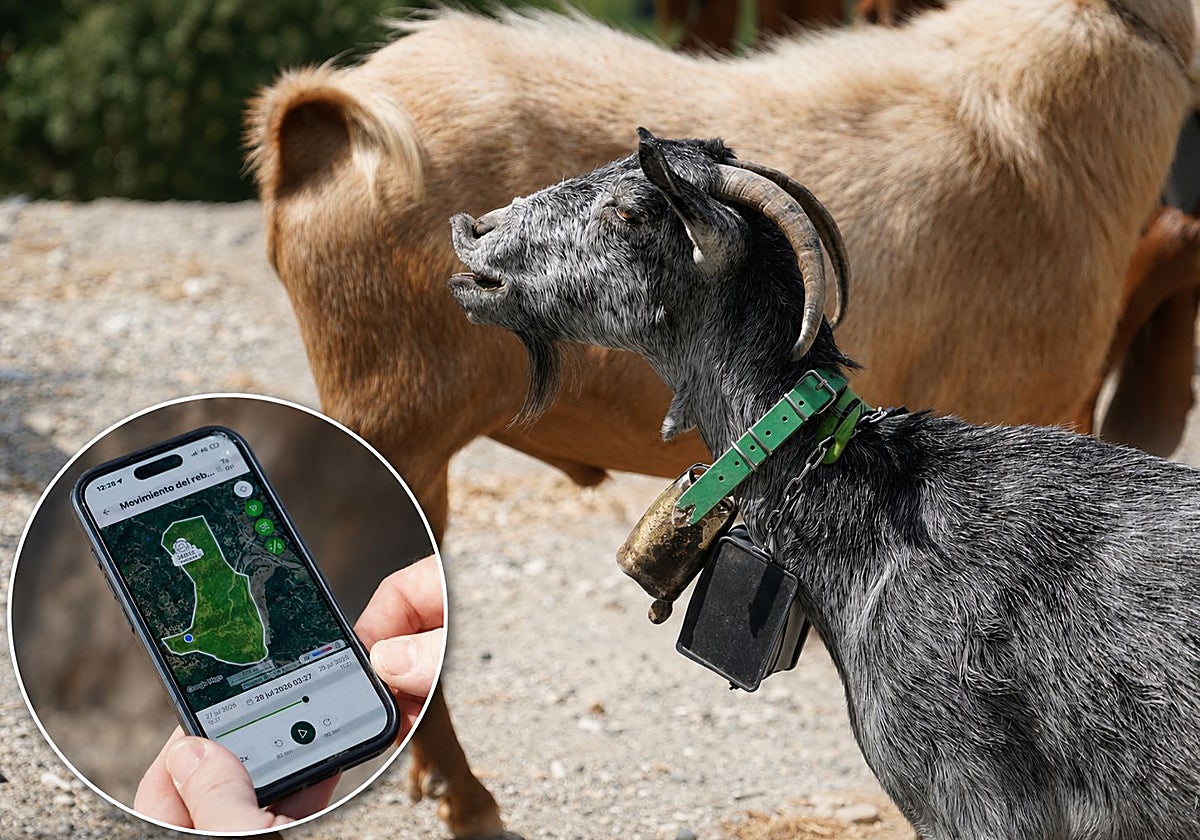

The goats in Benarrabá’s municipal herd no longer need a wire fence to know how far they can go.
Around 30 animals roam an ... area of public woodland fitted with GPS collars that allow their location to be tracked in real time, the grazing perimeter to be adjusted via a mobile phone, and alerts to be received in the event of any incidents. Technology and traditional livestock farming are being combined in this Malaga province village to reduce accumulated vegetation and strengthen forest fire prevention.
Several years ago, the village in the Serranía de Ronda took the step of establishing its own herd to clear the countryside through grazing. According to the town hall it was the first town hall in Spain to launch a such an initiative. It has now added a monitoring system and virtual fencing to the project, with the aim of directing the animals towards those areas where it is most necessary to clear vegetation.
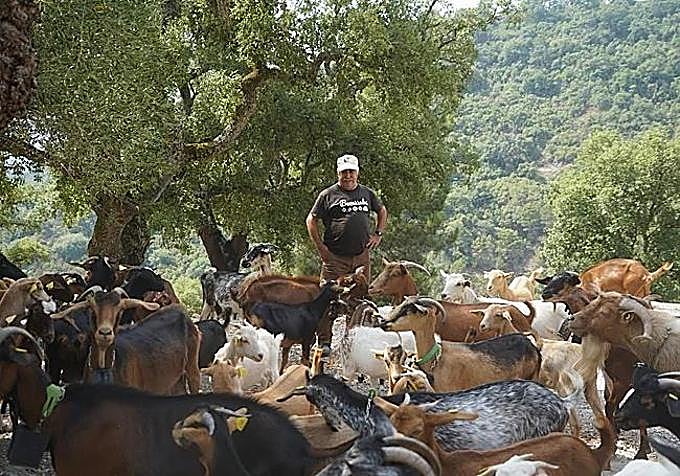
The first designated plot covers 33 hectares of the approximately 600 hectares that make up the Benarrabá public woodland. The goats graze in an area situated alongside rural tracks where the Infoca team had previously carried out operations, so their grazing helps to reinforce and maintain the clearing work carried out at those points.
“We’ve taken the project a step further,” explained the mayor, Silvestre Barroso. Using the app installed on a mobile phone, the virtual fence can be expanded, reduced or moved depending on the animals’ progress. The system also provides information on their location, making it easier to track a herd moving across a vast area with complex terrain.
Audio signal
The system does not rely on physical barriers. After a period of training, the goats learn to recognise an audio signal when they approach the set boundary. This warning tells them to change direction and remain within the designated area.
Only when an animal continues to move forward after the sound has been emitted will the collar deliver a mild electric pulse as a last resort. According to information provided by the town hall, its intensity is approximately half that used in a conventional electric fence, and virtually all interactions are resolved by the audible warning alone.
Goats learn to recognise an audio signal when they approach the set boundary; this warning tells them they must change direction
Francisco Herrera, the councillor for the environment and the person in charge of the herd, points out that the tool saves the shepherd time and effort by allowing him to know where the goats are at all times. However, the technology is no substitute for hands-on care. The goatherd must visit frequently to check on the animals, milk them and deal with any problems that may arise.
The main purpose remains environmental. By grazing on grass, shoots and scrub, livestock reduce the amount of plant matter that could fuel a fire. This clearing does not in itself prevent fires from occurring, but it can reduce the risk of them and help to slow their spread by creating areas with less fuel.
The town hall is pleased with the results so far and is already looking into an ambitious expansion. The council’s aim is to reach a total of 300 goats, distribute them across different virtual enclosures and build a new goat pen with greater capacity in the centre of the public woodland.
The town hall maintains that the model could be rolled out to other areas facing similar problems with the build-up of vegetation. Benarrabá, which forms part of the Intercontinental Mediterranean Biosphere Reserve, hopes in this way to transform a long-standing livestock farming practice into a technological tool for protecting the landscape against fire.
![[]](http://static.vocstatic.com/voc26/latest/assets/images/favicon/surinenglish/apple-touch-icon-57x57.png)