
Environment
How soil science is helping restore lost Spanish fir forests in the Sierra de las Nieves
University of Granada researchers use charcoal dating to reintroduce endangered pinsapo trees to their historical habitats with a 93% survival rate

Málaga
He still vividly remembers those drives from San Pedro Alcántara towards Ronda when he was a child. On that road, it was common to see ... people taking small Spanish firs (pinsapos) to use as Christmas trees.
Back then, no one could have imagined that the landscape would end up disappearing almost entirely. Decades later, José Gómez Zotano, a geographer and researcher at the University of Granada, is working to restore that forest to the very place from which it should never have vanished.
This work has been documented in a scientific study authored by University of Granada researchers Francisca Fernández Castaño, Rubén Pardo Martínez, and Gómez Zotano himself. The paper analyses both the recovery of this ancient Spanish fir forest and the effectiveness of a restoration methodology that achieved a high survival rate among the planted trees.
Related story
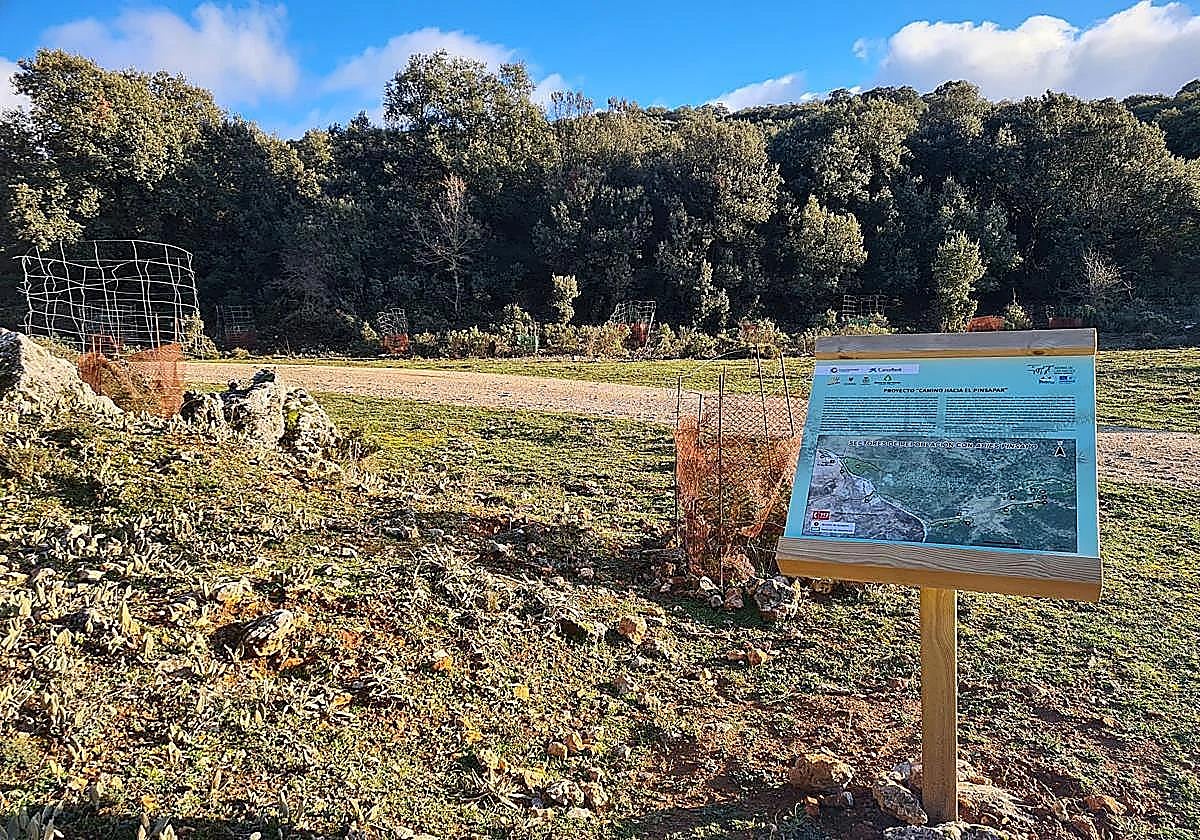
This is the real story behind the project under way in the Conejeras area, near the Parauta entrance to the Sierra de las Nieves National Park. It is not simply a matter of planting trees; it involves restoring a lost forest, precisely where science shows it once existed.
For decades, travellers heading into the mountains along this path passed through a small pine forest that served as a gateway to the vast woodland surviving at the heart of the park. However, these local stands gradually disappeared between the 1960s and 1980s due to forest fires, agricultural clearing, aggregate extraction, livestock grazing, and the felling of young trees for Christmas.
The question that sparked the project seems simple: how do you find out where Spanish firs grew decades or even centuries ago? The answer lies in a line of research the University of Granada team has pursued for years. Gómez Zotano explains that they analyse charcoal remains preserved in the soil to reconstruct ancient landscapes.
“We analyse charcoal found in the natural soil and, when we identify Spanish fir, we subject it to carbon-14 dating,” he says. “In this way, we are discovering places where Spanish firs once grew but no longer exist.”
This method makes it possible to distinguish between areas where the species was part of the original ecosystem and those where it was never present. “That distinction is vital because it allows us to reintroduce an endangered species to places where we know for certain it used to grow,” the researcher adds.
That is why he insists the goal has never been to plant Spanish firs wherever they can grow, but rather to reintroduce them to the exact locations they historically occupied.
Much more than just planting trees
The initiative alongside the Parauta track has three clear objectives: to restore a lost Spanish fir forest, to introduce visitors to the species without requiring them to navigate the core zone of the National Park, and to reduce pressure on the most sensitive ecological areas.
“The aim is to restore a lost pinsapar forest and make it accessible to the public,” summarises Gómez Zotano. “Not everyone can access the deep park area due to mobility issues or other circumstances. The idea is to bring the Spanish fir back to a recreational area where it naturally grew until a few decades ago.”
As a result, anyone visiting Conejeras can view this iconic species without having to trek several kilometres into the core reserve.
The project began taking shape on the ground on 4 November 2022 during its first planting day. Six additional sessions followed, running through 17 February 2023. Work has continued unabated ever since: over the following three years, researchers conducted continuous monitoring to assess tree development and the effectiveness of their methodology.
A different approach to reforestation
The project looks nothing like a conventional reforestation scheme. A total of 301 Spanish firs were planted, but the vast majority were not small nursery seedlings.
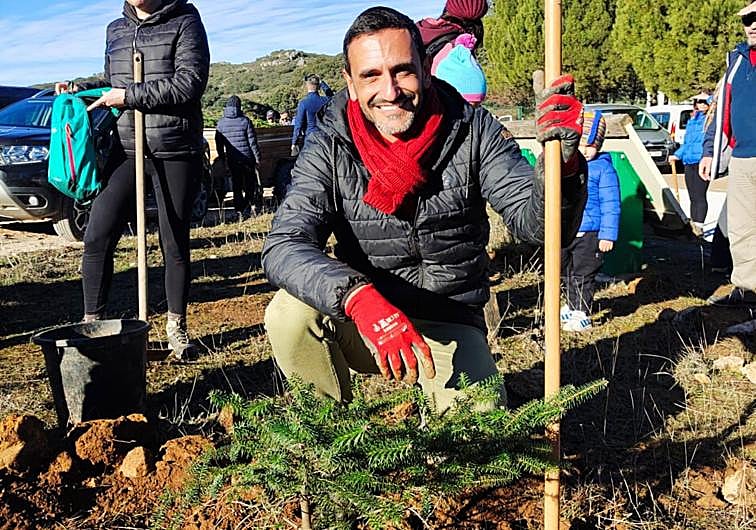
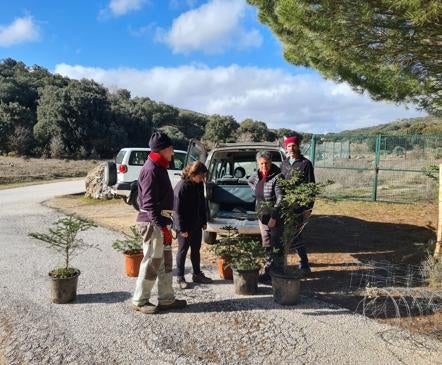
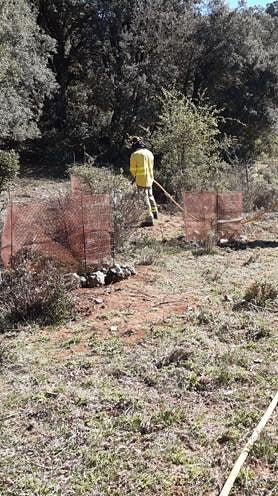
“Of the 301 trees, 251 had between seven and 15 shoots,” explains Gómez Zotano. In non-technical terms, these were established specimens around half a metre tall, transplanted with large root balls to maximize survival. Only 50 were younger plants.
Furthermore, all specimens came from the nearby La Nava Spanish fir forest, selected from overcrowded stands where trees were competing for resources. Before being moved, they were held in a nursery area to encourage root development and help them adapt to their new location. The study concludes that this preparatory procedure was key to the project's success.
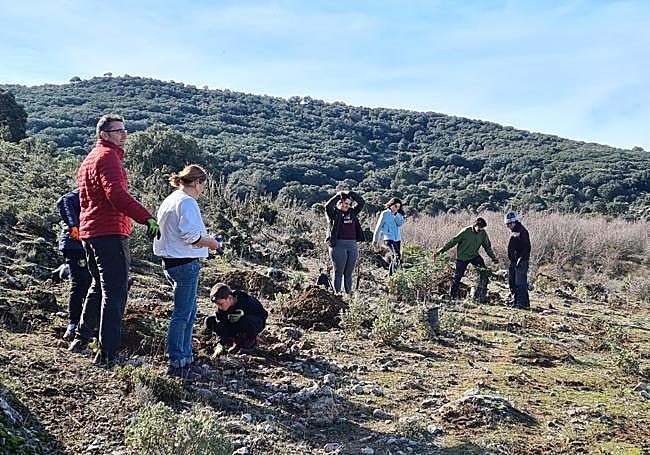
Gómez Zotano frequently emphasizes that planting is only the first step; the trees require years of ongoing care. The team dug hundreds of holes (many by hand), cleared brush to reduce fire risk, installed protective fencing against goats, sheep, mountain goats, and wild boar, organised regular watering during the first two summers, and tracked each tree individually.
“Many reforestation projects fail because they choose the wrong location or lack essential watering and maintenance during their early years,” he explains. “Until a tree establishes its root system and becomes self-sufficient, supplementary watering is required, though it should be gradually reduced so the tree learns to find water on its own.”
Each tree was logged in a database detailing its coordinates, age, aspect, soil type, watering schedule, and growth, allowing for precise scientific evaluation.
Hundreds of volunteers
While rooted in university research, the project could not have succeeded without community involvement - particularly the Association for Public Footpaths in the Serranía de Ronda, which championed the initiative from the start.
Around 300 volunteers participated across various stages alongside local authorities, landowners, community groups, and schools from across the Serranía de Ronda and the Costa del Sol.
“The public response exceeded our expectations,” recalls Gómez Zotano. “People came from across the region - from Marbella, San Pedro, Estepona, Fuengirola, and Malaga.”
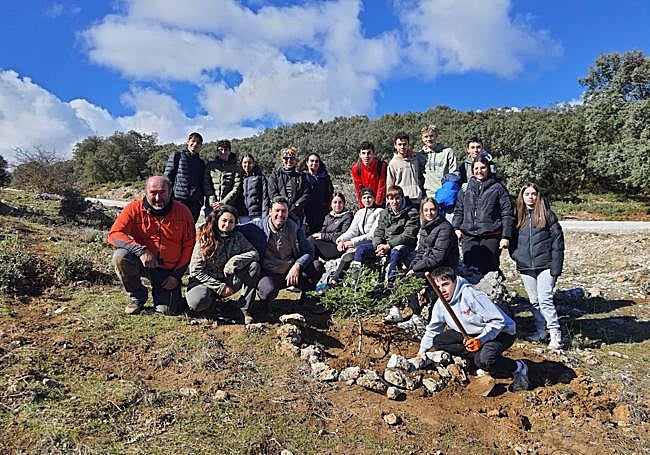
For the team, this community engagement is just as important as the ecological restoration itself. Conserving an iconic species requires ensuring the local population values it as part of their shared natural heritage.
According to the study's findings, the survival rate exceeds 93 per cent - a remarkably high figure for a restoration project in a drought-prone Mediterranean climate. The few lost trees were promptly replaced to maintain project continuity.
Even so, Gómez Zotano remains modest. “The Spanish fir grows very slowly,” he notes. “It may take another 15 or 20 years before we can truly call this a forest.”
Perhaps by then, visitors walking the path between Parauta and Conejeras will simply assume the trees have always been there. Paradoxically, that will be the project's greatest success: returning a piece of memory to the landscape so thoroughly that no one remembers it was ever lost.
![[]](http://static.vocstatic.com/voc26/latest/assets/images/favicon/surinenglish/apple-touch-icon-57x57.png)