
The Estepona orchid house will transform the biological activity of its plants into music
Under the title ‘listening to the invisible’, the venue is launching an innovative audiovisual and interactive installation on 25 October

Estepona
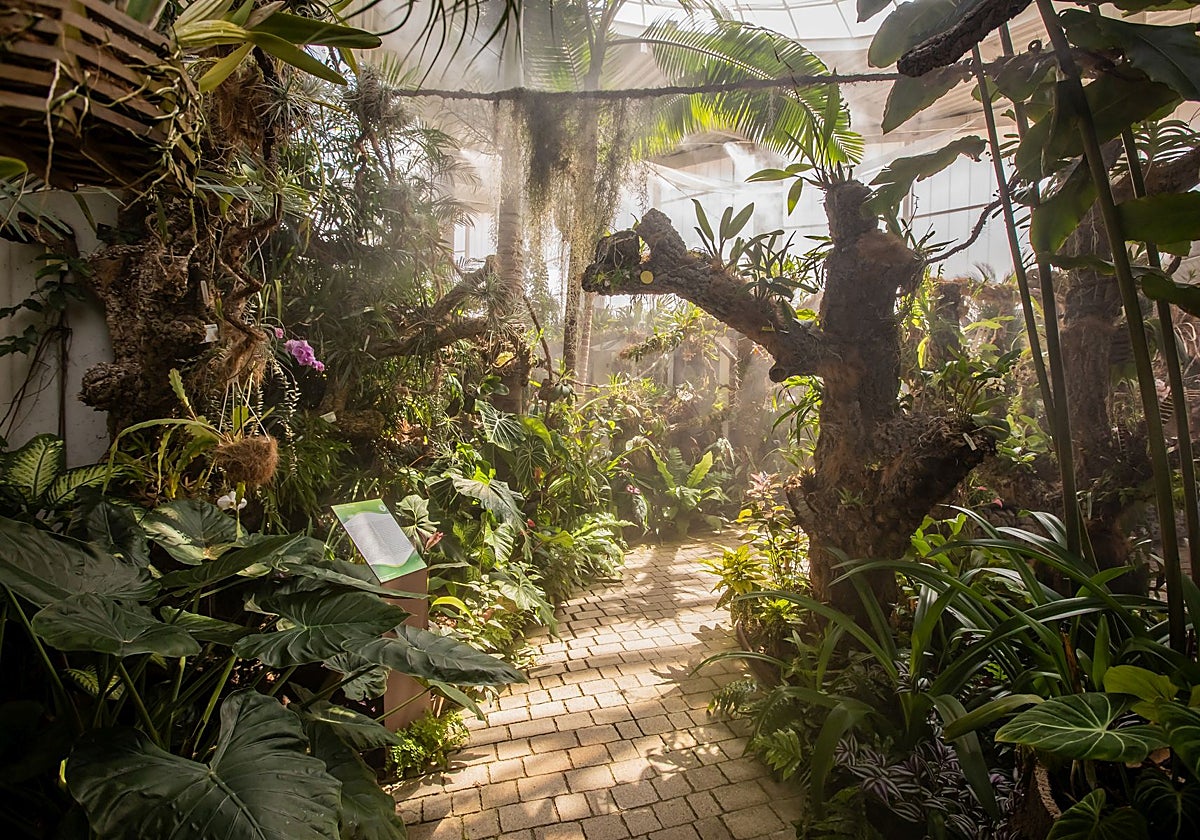
This Sunday, 25 October, at 10am, the Estepona botanical garden and orchid house will host a special event to mark the premiere of ‘listening to ... the invisible’. It is a “pioneering audiovisual and interactive installation in which live orchids will create music and images in real time”, as explained by the town hall. The event forms part of the programme for the 11th Estepona orchid and collectors’ plant fair, which runs throughout the weekend. The project will become a permanent feature of the venue, transforming it into “a unique creative space where the orchids will take centre stage in the composition”, the council said.
This scientific and artistic project has been developed by Alejandro Fernández, an artist and researcher, as part of Molino Lab - a space for artistic experimentation based in Salamanca - and is being driven forward under the ‘biotic symphony’ project. As Fernández explained, although plants do not emit notes in the traditional sense, they do generate detectable activity through "bioelectric impulses linked to their physiological processes and their reactions to their environment", such as light, humidity, temperature or the presence of visitors.
A bridge between biology and art
The mechanism behind the installation is based on a complex technological process. Firstly, specialised sensors are attached to individual orchids to continuously measure their bioelectrical variations (known as biodata). The sensors then transmit these signals to an audiovisual engine which interprets and maps each electrical variation into specific musical parameters, such as the tone, pitch, dynamics, rhythm, density and timbre of the sound.
In this way, each connected plant feeds its own virtual instrument, giving rise to distinct sound patterns that interact within the space. “These are neither fixed melodies nor background noises, but a generative composition that changes constantly and never repeats itself exactly,” explained representatives from the council. Furthermore, the biodata alters the behaviour, movement and density of digital particles and 3D models of different orchid species on a central screen.
In the words of its creator, this piece acts as "a bridge between biology and aesthetics, enabling visitors to perceive a dimension of plant life that usually remains invisible and inaudible".
