
Environment
Costa del Sol's water demand pushes network to its limit with call for urgent connection to Malaga
Public water company Acosol has acted swiftly following a 15 per cent rise in July compared with demand levels in previous summers

The "miracle" of water flowing from the taps relies on many things going right. It is not just a matter of water sources (reservoirs, river ... flows, wells, groundwater or desalination plants) having sufficient reserves or capacity. It also depends on the network and the processes involved in optimised transport and treatment.
In the case of the Costa del Sol, between Torremolinos and Manilva, the pressure in summer is extremely high. The infrastructure is half a century old and the El Verde water treatment plant acts as a bottleneck due to its limited capacity.
To support the needs of the coast, public water company Acosol has launched an ambitious plan at the cost of 349 million euros. It is to be financed over 30 years but implemented much sooner.
Related story
-
José Carlos García
Meanwhile, as the company's managing director, Matilde Mancha, told SUR, demand has soared this summer, which has literally forced the technicians to act quickly to prevent a shortage in the easternmost area, the one closest to Malaga city. Demand in the early part of the summer surged by 15 per cent year-on-year.
Acosol has agreed an emergency "connection" with Malaga's municipal water company, Emasa, to transfer water flows from the Rojas (Churriana) pumping station. This exchange point is a strategic component of the so-called "water highway".
There is another Malaga-Axarquía facility in the La Rosaleda area. This allows water to be sent and received depending on the water levels in each catchment area.
Malaga has been pumping around 150 litres per second to Acosol. This is roughly one-tenth of the city's average demand. For the Costa, this is a small but vital contribution, as it requires more than 3,000 litres per second during peak season.
The aforementioned 15 per cent increase in July, as Mancha explained, caused great concern at Acosol. It was essential to prevent severe drops in pressure and supply shortages.
Although the area went into the summer with great reserves and with the active wells and the desalination plant operating at full capacity with six out of eight lines in July, the water supply network was stretched to its limits.
The main point of strain was on the eastern branch of the system, the section running from the water treatment plant to Benalmádena and Torremolinos. In this area, high water extraction meant that the storage tanks were unable to fill properly.
As Mancha pointed out, the situation highlighted the "limits" of a high-level supply infrastructure designed 40 or 50 years ago.
To stabilise the network and maintain pressure at various points along the route, Acosol implemented two emergency measures. First, it reopened wells that had been kept in reserve as a strategic measure, thanks to the good rainfall recorded previously. Second, it installed a temporary connection with a smaller diameter within a week to supply water from Malaga city to Benalmádena.
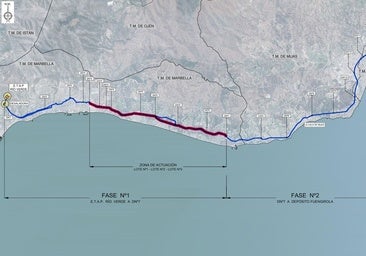
This made it possible to stabilise the system while work continues on the "water highway": an infrastructure project designed to provide a two-way link, in the first phase, Benalmádena with Torremolinos and Malaga, on which work is nearing completion. It is an ambitious project and its various sections constitute the most significant component of the plan. It will be the project that increases and guarantees the area's interconnection capacity.
Is the extra expenditure due to tourism or to a relaxation of habits following two years without drought alerts? Analyses show that the increase in demand is due to both factors: a rise in population and, therefore, in the volume of wastewater entering treatment plants and a clear upturn in irrigation.
Mancha said that, in view of the risk of water shortages, Acosol had launched an awareness campaign in the second half of July and the first half of August, focusing on the responsible use of water for irrigation.
Map of water resources
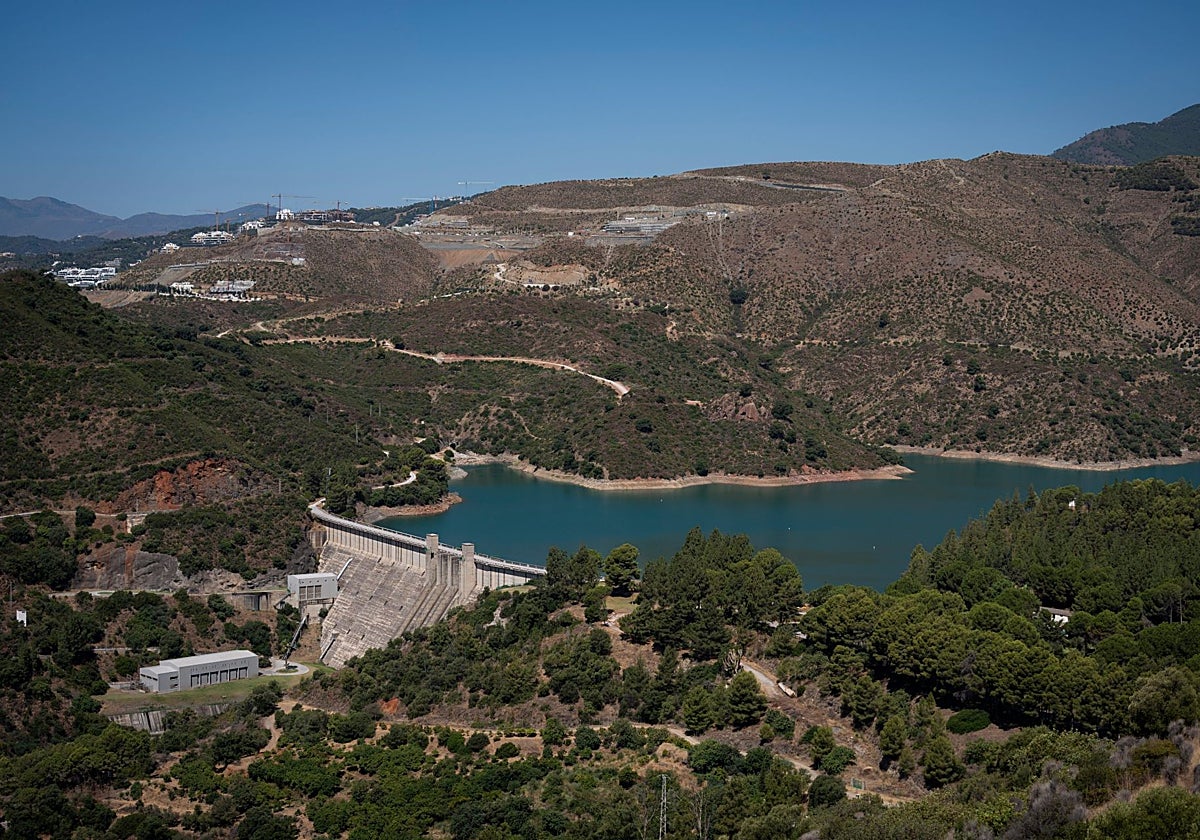
The Costa del Sol relies on the La Concepción reservoir as its main source of water supply. At present, it stands at 66 per cent of its capacity, holding 38 million cubic metres.
It is a pity that, over the last two hydrological years, the reservoir has had to release water on a recurring basis due to its limited capacity (57 million cubic metres). It would have filled to capacity twice if it had been possible.
Another key source is the Marbella desalination plant, which was modernised as part of the drought plan. It has a nominal production capacity of 20 million cubic metres per year and is currently in the process of upgrading its entire energy system to achieve much greater efficiency.
Furthermore, the Costa del Sol is usually supplied by the wells at Guadalmansa and Fuengirola (which provide around eleven million cubic metres a year) and by the local councils' own resources.
In the long term, there are plans for a second desalination plant, for which Acosol is currently carrying out a feasibility study, and the Gibralmedina dam, between Malaga and Cadiz. The regional government of Andalucía submitted the construction plans to the central government over a year ago. The estimated cost exceeds 700 million for the dam and the pipelines.
![[]](http://static.vocstatic.com/voc26/latest/assets/images/favicon/surinenglish/apple-touch-icon-57x57.png)