
112 incident
Benalmádena wedding food poisoning: waiter also admitted to hospital after 40 guests fell ill
Staff member at four-star Estival Torrequebrada hotel placed on intravenous drip at Hospital Clínico

Benalmádena
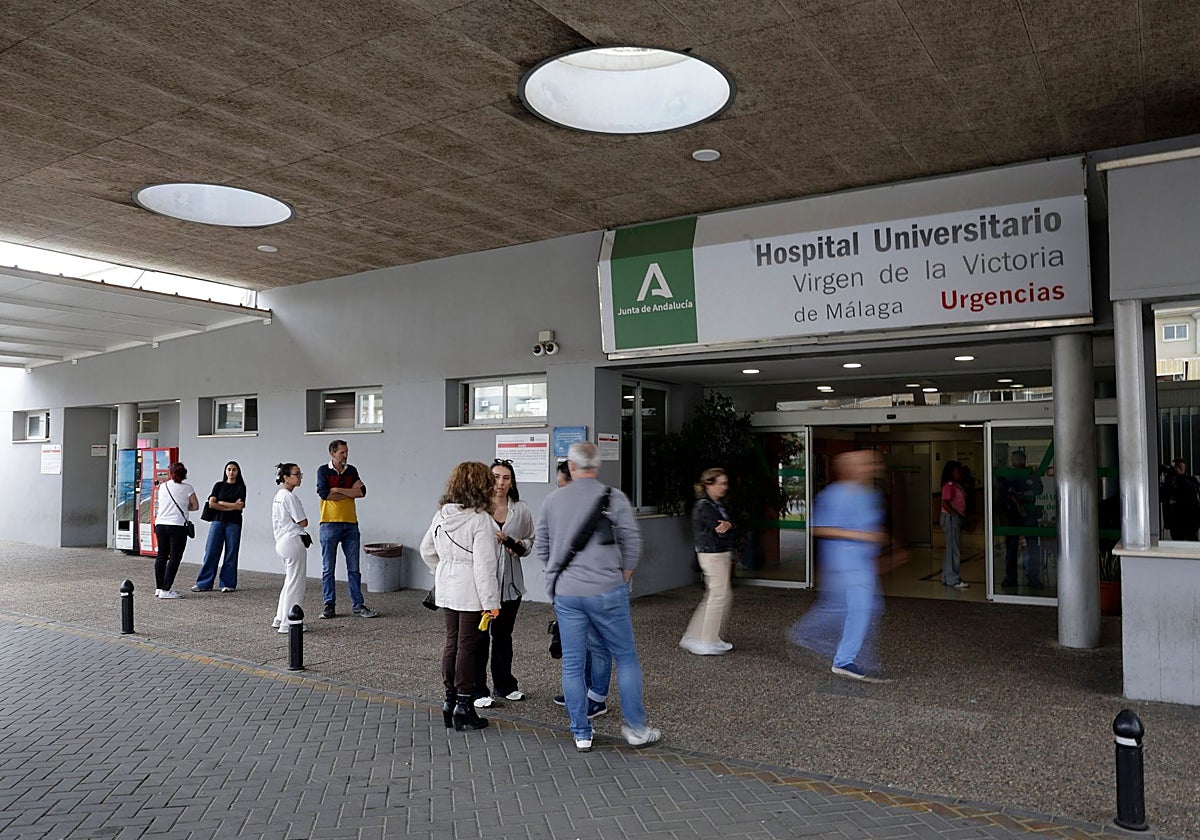
A waiter serving at a wedding reception where 40 of the 80 guests allegedly suffered severe food poisoning has himself been admitted to Hospital Clínico ... in Malaga city after experiencing severe dehydration and high fevers.
"I feel awful. I keep going to the toilet every 15 minutes and I haven't eaten since Saturday night. I'm scared of anything I haven't cooked myself," he said from the El Clínico hospital in Malaga city, where he has been since Monday.
The employee, who prefers to remain anonymous, began to feel unwell on Sunday morning just as he was about to leave home. This is what happened to "the vast majority" of the guests who got ill. Some of them felt unwell in the evening after the wedding or in the early hours on Sunday morning.
Related story

The waiter simply didn't feel well when he woke up, but he went to work. As he wasn't getting better, he first went to a health centre. Over the following hours and into the night, he began to feel worse. On Monday, he ended up going to the A&E department at the Clínico.
Doctors kept him under observation for 24 hours, until he was transferred to a ward on Tuesday to be admitted to hospital.
The food poisoning victims exhibited the typical clinical symptoms: diarrhoea, nausea, vomiting, abdominal pain, muscle fatigue and, occasionally, a fever. As is often the case in such situations, not everyone was affected in the same way.
In the waiter's case, his fever reached 39.5C and the vomiting and diarrhoea have hardly stopped since Sunday night. "He's still feeling unwell. It's unbelievable. He's been on a drip since he arrived at hospital on Monday because he was dehydrated," his mother told SUR.
Some of the guests had to call an ambulance to get to the A&E because, in the cases of couples for examples, both people might not have been feeling well enough to drive.
The wedding menu included appetisers, ranging from ham to salmorejo, and main courses: prawn risotto, meat with hollandaise sauce and, for dessert, mille-feuille. According to the waiter, the root of the food poisoning was the main course, because that's the only thing he ate.
In fact, hollandaise sauce is associated with what is surely the most famous case of food poisoning: that caused by Salmonella, a bacterium that lives in the intestines of animals and humans and causes a stomach infection (salmonellosis). It is made with egg yolks and clarified butter.
For the time being, the regional ministry of health has stated that there have been no new developments in the investigation. It has carried out "relevant inspection procedures", including the taking of samples. Legally, establishments are obliged to keep "sample meals" when serving set menus "on request for groups or events of more than 40 people".
Opened in 1998 as a five-star hotel, the Torrequebrada was one of the leading establishments for luxury tourism and high-spending guests on the Costa del Sol. Its origins date back to the casino of the same name, which opened in the 1970s. Today, it is a four-star hotel owned by Estival, a company with a total of 18 hotels, most of them in the Costa Dorada and Andorra, although it also has one in Barcelona and two in Huelva. The Estival Torrequebrada is its only hotel in the province.
What is food poisoning?
Food poisoning occurs when food containing toxins or toxic substances is ingested. These may originate from living organisms (bacteria, viruses, moulds, parasites, etc.), from substances naturally present in food (such as histamine) or from other "non-living" (additives, pesticides, environmental contaminants, heavy metals, etc.). Food poisoning occurs when a pathogenic microorganism present in food not only multiplies and invades the body but also produces a toxin within it.
The most common cause of food poisoning is the storage of food at inappropriate temperatures, such as inadequate refrigeration, partly due to preparing food in advance, or insufficient cooking and reheating temperatures.
![[]](http://static.vocstatic.com/voc26/latest/assets/images/favicon/surinenglish/apple-touch-icon-57x57.png)