
Architecture
Over 1.5 million euros to 'restore and revitalise' the Brutalist towers in Torremolinos
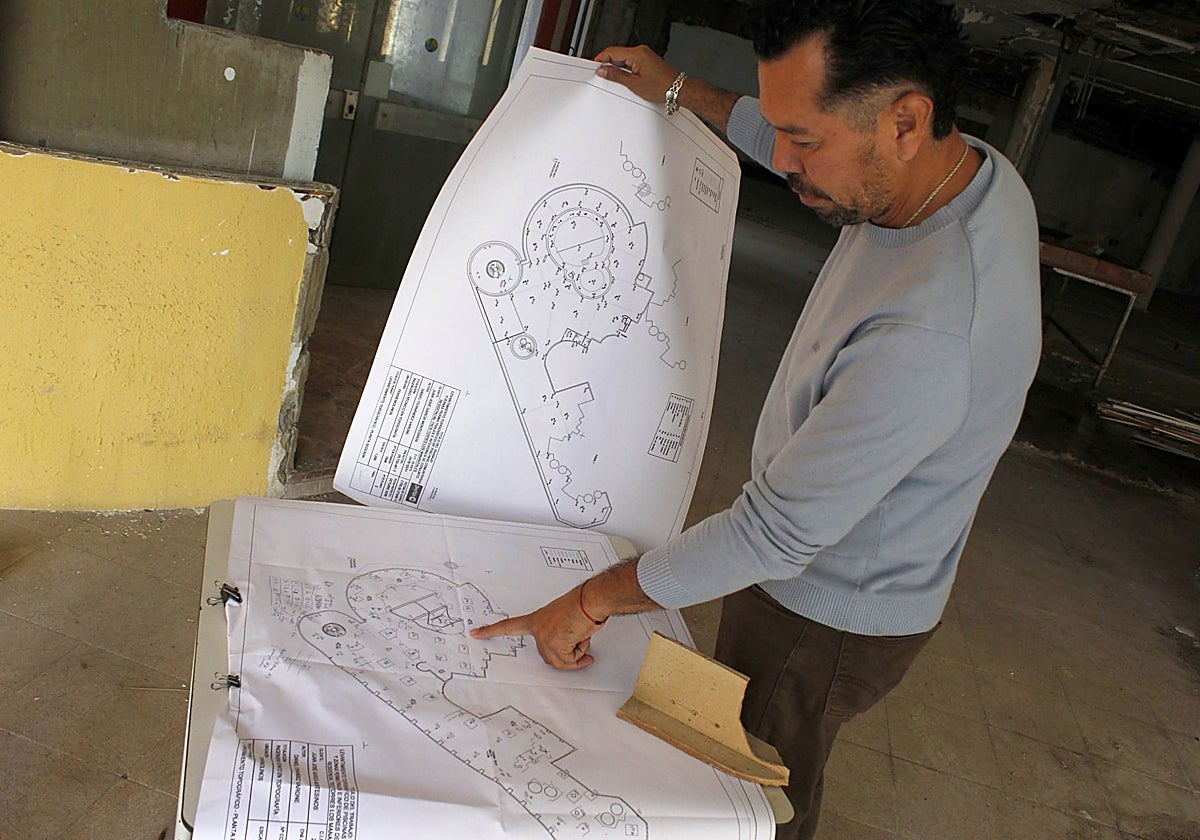
The owners' association is embarking on a project that aims to restore the essence of the residential complex, with the guidance of its architect, Luis Alfonso Pagán López de Munaín

Torremolinos
Beside a blue scaffold, a bricklayer carefully lays a distinctive Moorish-style brick, piece by piece. It is a detail that helps define the character ... of the Torres de Los Manantiales, the iconic complex in Torremolinos designed more than half a century ago by architect Luis Alfonso Pagán López de Munaín. The site is now a hive of activity - a welcome sight after years of relative inactivity.
It is a refurbishment project comprising three blocks that are unlike any others. Experts know that these buildings, which sprang up amidst the tourist boom on the Costa del Sol, meet all the criteria and are every bit as impressive as Sáenz de Oíza's famous Torres Blancas in Madrid.
Genuine parts
Alongside the materials that the builder handles with care in the communal areas - where the swimming pools and the charming gazebo are located - concrete is the star of the three towers, notes Antonio, one of the owners of these flats. His flat overlooks the Mediterranean from the 17th floor and, as he explained, "every time I open the door, I get a thrill". The concrete and bricks are combined with wood, said Luis Rojas, chairman of the owners' association, which, he said, brings together some 550 families.
Over time, these features have been partly lost and, recognising the need to prevent further deterioration, the owners have come together to cover the cost of a 1.5 million euro project which aims, in Rojas's words, to "restore dignity to" and "rehabilitate" the towers and treat them as the modern monument that they are. The budget is being funded by these private individuals, through special community charges.
The project not only restores - using original elements or others that are faithful to those used at the time - but also removes. Structures that should never have been erected in the first place, and which have even encroached upon public thoroughfares, have been demolished. In this task, legal advice is key, as is strictly applying the association's statutes - something that is not straightforward but is gradually being achieved "by the sweat of our brow".
Every step is taken in collaboration with Pagán: details such as finding out where he originally sourced, for example, the bespoke moulds for the bathtubs, or the one for the dome of the kiosk - one of the most exclusive corners of the former hotel that forms part of the complex.
"The hardest part is sourcing the original fibreglass - it's no longer manufactured. It came from a shipyard in Galicia that no longer exists," he explained. Despite everything, progress is being made by recycling window panels and other items that were, at times, almost beyond repair, such as lamps.
Three teams
The project, which according to the developers will last a year and a half, involves three teams: façade restoration, waterproofing and glazing. The workers have started on the part most visible to those walking along the avenue, where vinyl graphics and other salvaged historical material will be installed, Rojas explained.
Further inside, the work is evident in the fact that the floor which used to form part of the accommodation has now been cleared, although some repairs are still needed.
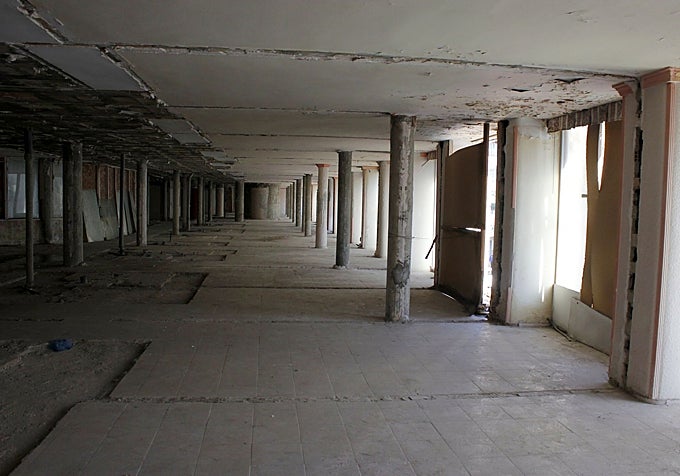
One of the achievements of the Brutalist towers is their steel and concrete structure, as Rojas pointed out, which requires advanced technical expertise for their conservation. This need, he said, has led to the appointment of a highly reputable professional: Juan José García Montesinos, who holds the gold medal from the Malaga college of architects.
Protection
Despite its value, the building is not protected "until the issue of the Torremolinos general urban development plan (PGOU) has been resolved", said Rojas. In this regard, the representative of the association of local authorities revealed that discussions are under way to achieve this, without compromising on the building's habitability.
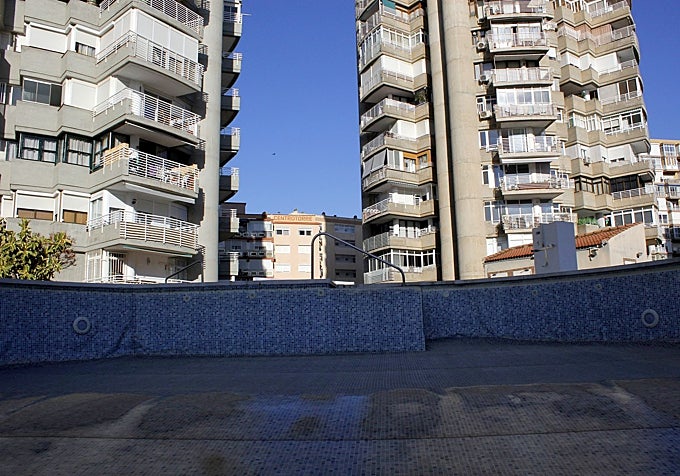
"We residents have realised what a privilege it is to have our homes within this Brutalist marvel, and we've decided to renovate it and restore its communal spaces to their former glory," he concluded.
