
Environment
Volunteers map trees in Rincón de la Victoria as part of national project
The initiative, promoted by a number of environmental organisations, aims to raise awareness of the state of urban tree populations and propose improvements to local authorities

Rincón de la Victoria
A group of volunteers from Rincón de la Victoria on the eastern Costa del Sol have joined the ‘Aquí falta un árbol’ (there's a ... tree missing here) Ecomapa 2026’ initiative, a mapping project of urban trees which, in the space of a single weekend, has recorded 148,000 ‘black spots’ across Spain.
Organised locally by the Moral y Acción Verde association, volunteers identified 44,000 gaps where no tree stands, 27,000 tree stumps or dead trees, and 76,000 "suffocating tree pits" across the country.
In Rincón de la Victoria 303 have been identified. “We have recorded a significant number of tree pits with defects, but we estimate that we have only been able to cover 0.42 per cent of the area of the four urban centres, which numerically equates to 12.3 per cent of the total of 2,466 roadside trees inventoried by the town hall,” the group explained.
They point out that, across the road network as a whole, at least 553 shade trees should be replanted. “We know that much more needs to be done to improve the liveability of our towns and cities. We need to renaturalise our towns and cities and ensure they have a high proportion of vegetation, including shrubs, whilst allowing wild grasses to grow naturally. The main enemies of green cities are paving, brush cutters and chainsaws, which subject a large proportion of urban trees to severe and untimely pruning,” the organisation added.
Support
The initiative, promoted by Alianza por el Clima, Barrios por el Clima, the State Confederation of Neighbourhood Associations, Ecologistas en Acción, Greenpeace, Intermón Oxfam and Juventud por el Clima, aims to raise awareness of the state of urban tree populations and propose improvements to local authorities. This campaign has attracted the participation of 2,145 people from 315 local authorities. With these figures, the organising bodies aim to highlight “the importance of citizen organisation and the concerns expressed by residents in urban centres regarding renaturalisation”.
The leaders of Moral y Verde explained that "it is not just about the need to make towns and cities more liveable, or the importance of healthy ecosystems, but also because the public is demanding it." They went on to say, “The urgent need to reduce high temperatures and the urban heat island effect in towns and cities is clear and some of the key measures to be implemented involve increasing the number of trees, permeable surfaces and biodiversity in cities."
44.882
Empty or blocked tree pits
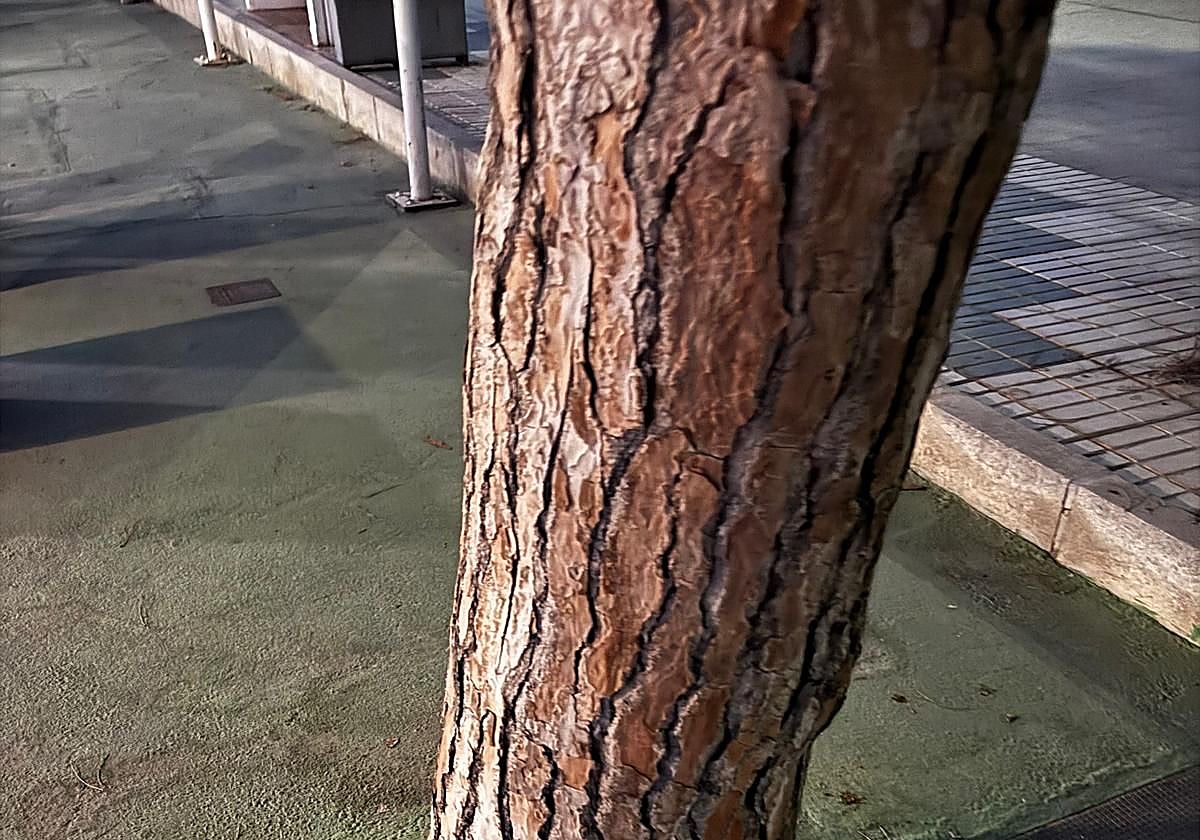
The problem areas within the urban tree population that have been identified are as follows: 44,882 empty or blocked tree pits (covered with paving slabs or other surfacing), 27,116 tree pits containing a tree stump (the trunk left behind after a tree has been felled) or a dead tree, and 76,164 so-called ‘suffocating’ tree pits
The problem areas within the urban tree population that have been identified are as follows: 44,882 empty or blocked tree pits (covered with paving slabs or other surfacing), 27,116 tree pits containing a tree stump (the trunk left behind after the tree has been felled) or a dead tree; and 76,164 so-called ‘suffocating’ tree pits, which are those where, although a tree is present, the soil in which it stands is sealed with concrete or resins, or tree pits that are so poorly designed that the tree’s trunk is even larger than the space left for it. The data, broken down by municipality, can be consulted on the website ecompa.org .
![[]](http://static.vocstatic.com/voc26/latest/assets/images/favicon/surinenglish/apple-touch-icon-57x57.png)