
Festivals
Why do the locals throw wheat at San Isidro in Periana?
The town in the Axarquía area of Malaga province uses more than 40,000 kilos of wheat during its patron saint celebrations on 15 May as the procession takes up to twelve hours to cover a distance of just over one kilometre

Málaga
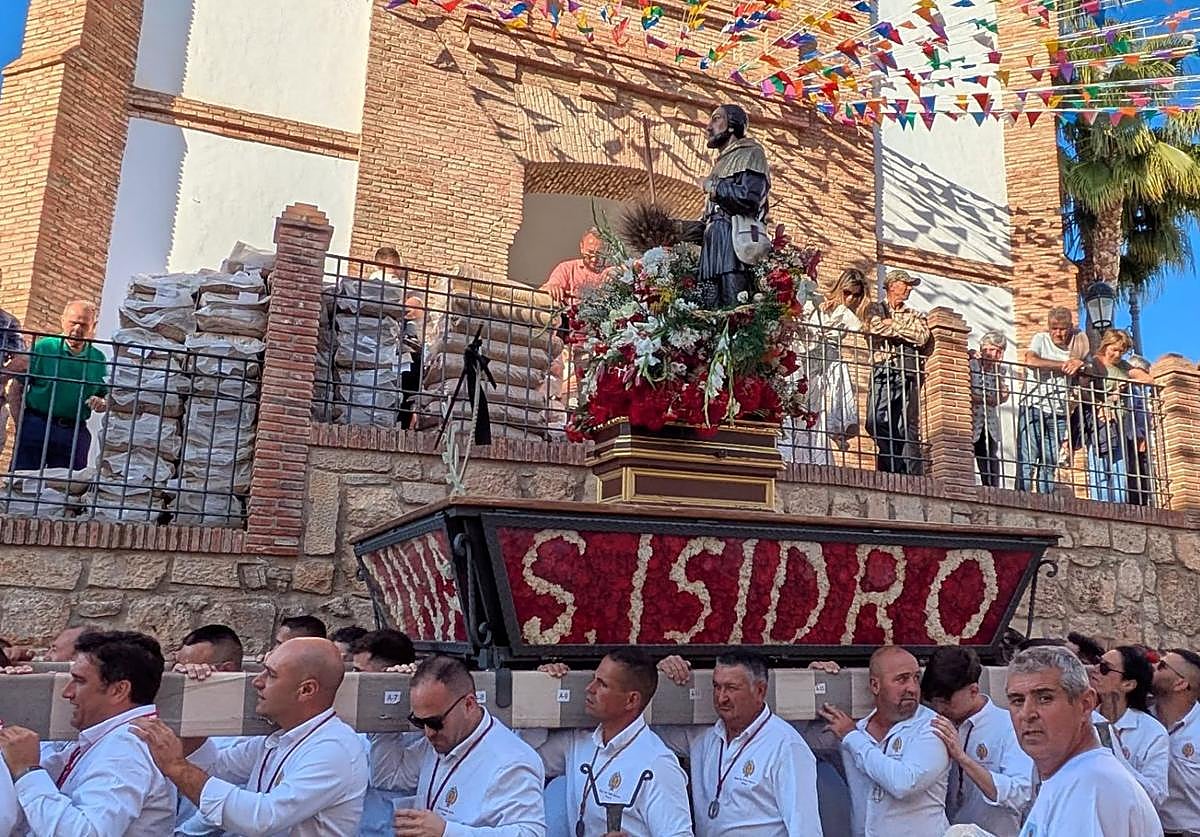
Every 15 May, the town of Periana in the Axarquía area of Malaga province experiences one of the most curious traditions during its patron saint ... festival. As the image of San Isidro Labrador moves slowly forward, locals throw wheat from the balconies and rooftops. Although it's not the only town to celebrate the saint in Malaga province, it is the only one to uphold this curious tradition.
On Friday 15 may 2026 thousands of kilos of wheat will be thrown at San Isidro in a tradition that has been passed down from generation to generation and which, according to the local historian and researcher José Manuel Frías Raya, could have a much more specific origin than previously thought.
Frías Raya has been researching the festival in newspaper archives, archives and oral testimonies since the seventies. The result is now part of an extensive dossier prepared to request that San Isidro de Periana be declared a Fiesta of Tourist Interest in Andalucía.
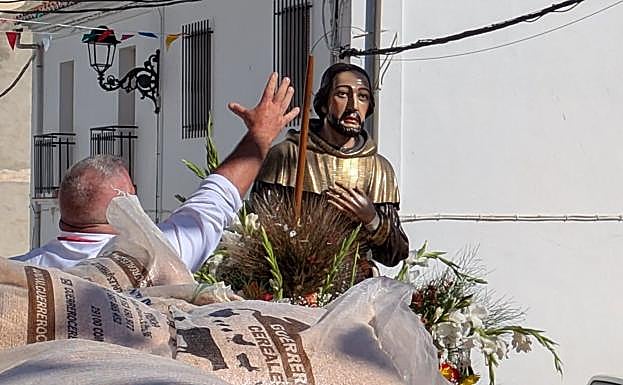
"Much has been speculated and nothing has been written about the ritual in Periana of throwing wheat to San Isidro", explains the researcher in his work. The key, according to his theory, lies in an episode passed down by his maternal grandfather, Rafael Raya Zorrilla, locally known as 'Ganguita'.
According to this story, farmers used to offer the saint fifteen freshly harvested ears of corn when the procession passed in front of their houses. But a year of extreme drought completely changed that custom. It did not rain when it was supposed to and the crops never grew. On 15 May that year there were no ears of corn so a farmer asked to take the image of the saint to his balcony, from where he threw a quart of wheat, just over a kilo, on to San Isidro.
That gesture marked the beginning of a tradition that is still alive today. The following year the rains returned and the harvests came back, but the ears of corn had already been replaced by wheat. The farmers began to set aside some of the wheat they had sown to throw at the patron saint during the procession.
The slowest procession
But San Isidro de Periana is not only notable for its wheat. It is also for its rhythm. Or, rather, for its slowness. José Manuel Frías Raya himself decided to time the procession in 2017 and came to a conclusion that it is possibly one of the slowest processions in the world.
The image of the saint left the church at 4.34pm and did not return until 3.14am, taking more than ten and a half hours to cover just 1,190 metres. In other years it has even exceeded twelve hours. The reason for this is the constant stops made by the throne to receive wheat from balconies, terraces, windows and balconies. That year alone there were 64 stops along the route.
Fundraising
During the procession, the wheat falls into a structure set up as a kind of hopper. When a sufficient quantity is accumulated, the grain is placed in sacks which are then sold. Part of the money obtained is used for social work and another part is used to finance the following year's festivities.
The uniqueness of this tradition has attracted the attention of newspapers, photographers and television broadcasters for more than a century. There are references in the press since 1915 and in recent years images of San Isidro covered in wheat have appeared on national channels and programmes specialising in popular festivals.
But in Periana San Isidro is not just a procession. It is about promises, family reunions, faith, memory and an image that continues to surprise even those who have seen it all their lives: a patron saint advancing slowly under an endless rain of wheat.
![[]](http://static.vocstatic.com/voc26/latest/assets/images/favicon/surinenglish/apple-touch-icon-57x57.png)