
Beaches
Dogs that save lives at sea: the work of the remarkable canine team in Torrox
The Malaga province town is the only one in Spain to have formally incorporated dogs into its municipal rescue service

Víctor Modelo
Málaga
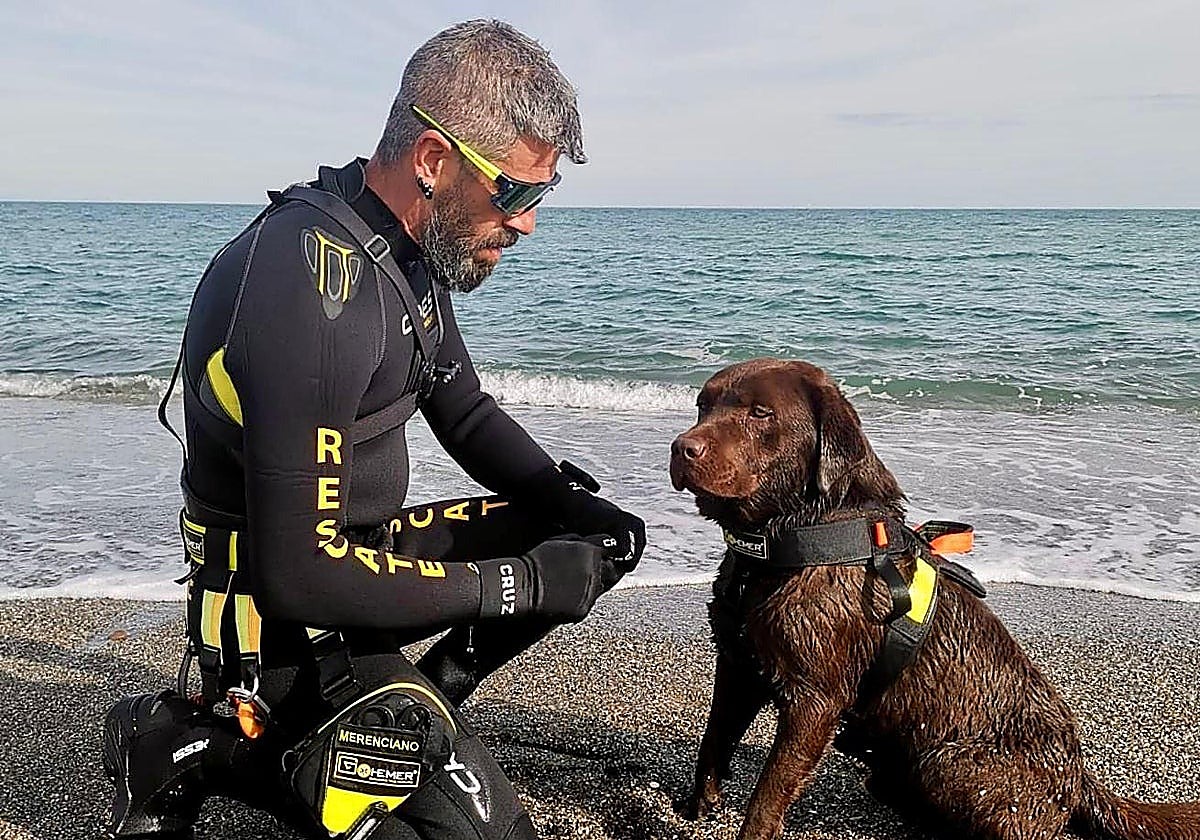
A swimmer is struggling to stay afloat, a lifeguard dives into the water while, a few metres behind, a Labrador Retriever cuts through the waves ... with astonishing power. In a matter of moments, the dog catches up with its handler, bites onto a toy attached to a floating rope and begins to tow both the lifeguard and the victim towards the shore.
This is neither a display nor a demonstration, but a meticulously designed rescue protocol that forms part of the Torrox beach lifesaving service on the eastern Costa del Sol. In fact it is the only place in Spain to have incorporated professional rescue dogs into the municipal team. Behind this pioneering project lie years of training and a close bond between handler and dog.
The initiative came about almost by chance. While the town hall was drawing up the tender specifications to award the contract for beach lifeguard services, the then head of the local police proposed including two innovative aspects: drones and dogs. The idea eventually became a first of its kind in Spain.
Miguel Sánchez, trainer and handler of the dogs that assist with rescue operations in Torrox said, "When the tender specifications were published, it was the first time in this country’s history that a rescue dog had been explicitly included in a public contract for beaches."
For him, it also represented recognition of a career spanning almost three decades training dogs for search and rescue, detection and assisted therapy and more than ten years specialising in water rescue. After leaving the world of volunteering, he decided to commit to professionalising a discipline that was still in its infancy in Spain.
A faster and safer rescue
The main advantage of using dogs in rescue operations is their effectiveness. In a conventional rescue, the rescuer must conserve some of their energy to return to the shore while towing the victim. This means they have to pace themselves from the very start. “I can swim at 100 per cent of my capacity because I know my dog will do the towing,” explains Sánchez. This reduces response times, a key factor in increasing the chances of survival for a person in distress at sea.
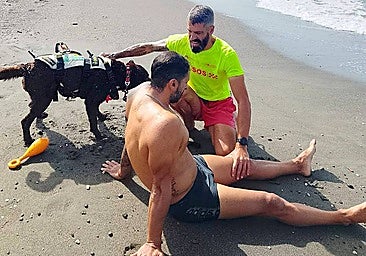
The procedure is perfectly synchronised. The lifeguard enters the water first and secures the victim. On receiving the command, the dog joins the rescue, takes hold of the floating rope and begins towing the victim towards the shore. Ultimately, behind such a dramatic event, there are manoeuvres that have required hours of training and absolute coordination between handler and dog.
Labrador characteristics
However, not all dogs are equally effective in this type of rescue. Although there are several breeds suited to water-based work, Miguel Sánchez has no hesitation when asked which he considers to be the best. “For me Labrador Retrievers tick all the boxes,” he says. Brown, Nancy and Milka the three dogs currently part of the pioneering rescue team in Torrox.
Related story
-
 Eugenio Cabezas
The explanation lies in the dog’s genetics. Its double coat protects it from the cold; it has webbed feet that enable it to swim efficiently; it maintains a horizontal position while swimming; and it uses its characteristic otter- tail as a rudder to change direction quickly. The breed offers the best balance of strength, stamina and speed for professional rescue work.
A dog isn’t born ready for the sea. Training begins when the dog is a puppy, first in calm waters and then on beaches with a green flag. Gradually, it is introduced to more challenging situations, where it becomes familiar with the waves, jet skis, boats and kayaks.
Anyone watching a rescue of this kind might think that the relationship between the handler and the dog is down solely to training. However, the reality is quite different. Sánchez maintains that the real difference does not lie solely in the technique.
Prevention
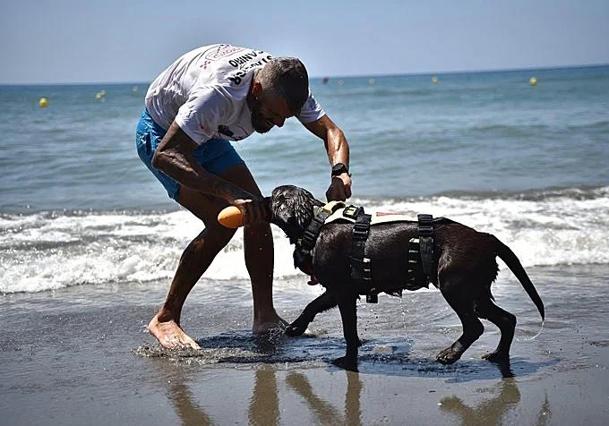
Trust between the dog and the rescuer is essential during a rescue. Sánchez recalls that he has even jumped into the sea in five-metre waves and that his dogs have never hesitated to follow him. "My dog sees my jump into the water and dives in after me," he says, demonstrating the loyalty shown by these dogs, whose work often goes unnoticed.
No doubts
Trust between the dog and the rescuer is essential during a rescue. Sánchez recalls that he has even jumped into the sea in five-metre waves and that his dogs have never hesitated to follow him.
The sight of the dogs entering the water draws admiration from beachgoers, but the day-to-day routine is far less visible. Continuous training sessions, physiotherapy, hydration, veterinary check-ups, daily cleaning to remove salt water, year-round physical fitness training and constant care are all part of their daily work.
“People see the glamorous side, but behind the scenes there’s a great deal of work, a lot of time and a lot of expense.” That is why Sánchez believes it will be difficult for the Torrox model to spread rapidly to the rest of the country, but he feels that initiatives like this can pave the way for other local authorities to understand the potential offered by canine units in water rescue.
Anyone who devotes their life to saving people eventually comes to a very clear conclusion: the vast majority of emergencies could be avoided. In Sánchez's view, a large proportion of accidents are caused by overconfidence, a lack of knowledge about the sea, or simple carelessness. The solution is simple: pay attention to the colour of the flag, familiarise yourself with the beach’s characteristics, always ask the professionals if you are in any doubt, and act responsibly.
Meanwhile, on the beaches of Torrox, Brown, Nancy and Milka continue to patrol the coastline. Many do need see the hours of training and care that go into the service, but for those who understand their work and their potential for dedication, they are something more: exceptional four-legged creatures with unwavering loyalty and the discipline to help others, capable of reducing response times in moments when every second counts to save a life.
![[]](http://static.vocstatic.com/voc26/latest/assets/images/favicon/surinenglish/apple-touch-icon-57x57.png)