
Depopulation
Tackling depopulation: six Axarquía villages offer grants of up to 1,000 euros per baby
Municipalities step up financial aid as 2024 regional figures show 110 deaths against just 53 births across the six inland towns
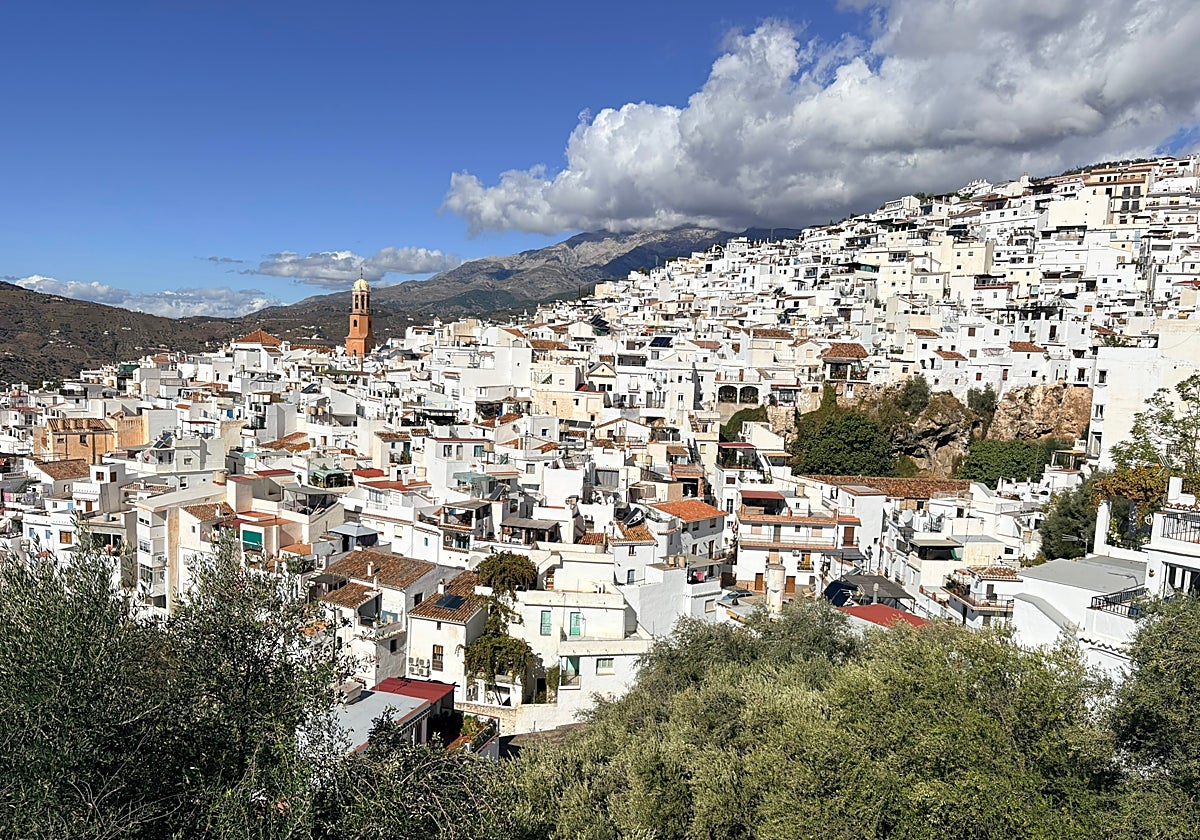

The small municipalities of the Axarquía are seeking ways to boost the birth rate and encourage families to put down roots in a region characterised ... by an ageing population and a low birth rate.
Since 2024, six local councils in the region have been offering financial assistance for births or adoptions, with amounts ranging from 500 to 1,000 euros per child, according to data published in the national grants database (BDNS).
The latest call for applications comes from Cómpeta, which opened the application period on Friday 30 October for a grant of 500 euros. These initiatives aim to help cover the costs associated with the arrival of a new family member and to address a demographic challenge reflected in official statistics: in 2024, more people died than were born in the six municipalities, despite the fact that five of them have seen their populations grow over the last decade.
Cómpeta, with a population of 3,824 according to the latest official figures from the national institute of statistics (INE), dated 1 January 2025, has seen an increase of 321 residents compared with the 3,503 recorded in 2015, representing an increase of 9.2 per cent. However, an ageing population remains one of its main challenges: 29.6 per cent of the population is aged 65 or over, according to the 2025 census.
In 2024, there were 21 births compared with 39 deaths. The town hall has allocated 15,000 euros to its new scheme, which provides 500 euros for every child born, adopted or taken into pre-adoption care during 2026, including in cases of multiple births. To be eligible for the grant, applicants must, among other requirements, provide proof of at least one year’s registration and actual residence in the municipality. Applications may be submitted until 15 January 2027.
The largest grant is for Iznate, whose council approved a payment of 1,000 euros for every child born in 2025, aimed at families who have been registered as residents for at least one year. The deadline for applying for this grant, which was ten working days from its official publication, has now passed. This small municipality currently has 940 inhabitants, compared with 899 in 2015, representing an increase of 4.6 per cent. Unlike other inland towns, Iznate has a relatively younger population, with 20.5 per cent of residents aged 65 or over. However, it also has a negative natural increase: in 2024, there were six births and seven deaths, according to data from the Andalusian institute of statistics and cartography (IECA).
Cómpeta’s population has grown by 321 in ten years, but almost three in ten residents are aged 65 or over, according to the latest census from 2025
In Canillas de Aceituno, the local council awards 750 euros for each birth or adoption in 2026 , provided that families meet the established conditions and provide receipts to substantiate the costs of items for the child. Applications must be submitted within three months of the birth or adoption.
The town’s population has risen from 1,737 in 2015 to 1,801 in 2025, an increase of 3.7 per cent. However, this growth contrasts with the trend in the birth rate: in 2024, only five births were recorded, compared with 23 deaths. Furthermore, 27.5 per cent of its residents are aged 65 or over, while those under 16 account for less than ten per cent of the registered population. The demographic structure highlights the difficulties in ensuring generational renewal in this town situated at the foot of the Sierra Tejeda.
The situation is particularly precarious in Canillas de Albaida, the only one of the six municipalities analysed to have lost residents over the last decade.
Related story
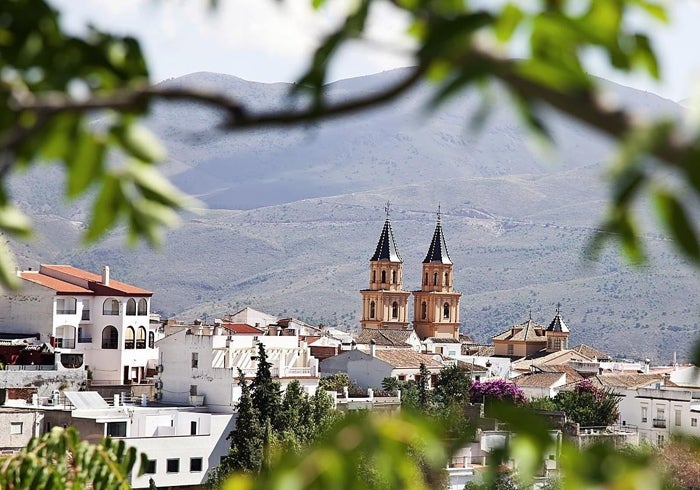
According to the official census data from the INE, the population has fallen from 842 residents in 2015 to 807 in 2025, representing a decrease of 4.2 per cent. This year, the local council awarded grants of 600 euros for births registered in 2025. The latest available figures show that in 2024 only two children were born, while there were 12 deaths. Furthermore, 32.1 per cent of the population is aged 65 or over and the average age exceeds 51, according to the IECA. These indicators place the municipality among those facing the greatest demographic challenges in the region, despite the partial recovery in the number of residents recorded over recent years.
Sayalonga
Another local council offering financial support to families is Sayalonga, which is providing a grant of 500 euros for each birth or adoption in 2026. Among the requirements is that at least one parent must provide proof of 24 months’ registration on the local council’s register, while the application period is three months from the date of birth or adoption.
The town’s population has grown over the last decade, rising from 1,505 inhabitants in 2015 to 1,672 in 2025 – an increase of 11.1 per cent. However, the ageing of the population remains significant: 31 per cent of the population is over 65, and in 2024 there were only four births recorded, compared with eight deaths. The increase in the number of inhabitants, therefore, does not correspond to positive natural growth.
In Alcaucín, the council has announced a grant of 500 euros this October for families with children born or adopted in 2025, who must provide proof of two years’ registration on the local council’s register. This municipality has experienced the highest percentage growth of the six analysed over the last decade: it has risen from 2,375 inhabitants in 2015 to 2,671 in 2025, that is an increase of 12.5 per cent. Despite this, it also has the highest percentage of people aged over 65, who account for 33.8 per cent of its population. In 2024, there were 15 births and 21 deaths, confirming the persistence of a negative natural increase even in those towns that have managed to attract new residents.
A joint analysis of the official data reveals a complex demographic picture. The six municipalities had a combined population of 10,861 in 2015, rising to 11,715 by 2025 – equivalent to 7.9 per cent. However, this growth does not mean that there is sufficient generational renewal taking place. In five of the towns, more than a quarter of the population is aged 65 or over, while Iznate has a slightly lower percentage, at 20.5 per cent. Ageing is particularly pronounced in Alcaucín, Canillas de Albaida and Sayalonga, where approximately one in three residents belongs to this age group. The arrival of new residents may help to sustain the population, but it does not, on its own, prevent the number of deaths from exceeding the number of births.
The six municipalities recorded a total of 53 births and 110 deaths in 2024, despite gaining 854 residents over the last full decade
The natural population change statistics for 2024 – the latest final figures available with this municipal breakdown – show that 53 children were born and 110 people died across the six villages, resulting in a negative natural increase of 57 inhabitants. Cómpeta and Canillas de Aceituno show the greatest discrepancies, with 18 more deaths than births in each, followed by Canillas de Albaida, with ten. In Alcaucín, the difference was six people; in Sayalonga, four; and in Iznate, one.
This trend extends across the Axarquía region as a whole, where 28 of the 31 municipalities recorded more deaths than births during that year. This situation helps to explain why various local councils have decided to incorporate direct financial support for families into their municipal policies, although there is as yet no data available to determine its actual impact on the birth rate.
In addition to the municipal schemes, Malaga provincial council’s grant scheme for births and adoptions is available, aimed at families living in towns with fewer than 10,000 inhabitants. This year, the provincial authority allocated 350,000 euros to a grant scheme offering 1,200 euros per child, for which applications were open from 27 February to 26 March.
Among the requirements were proof of two years’ continuous registration on the local council’s register and a maximum annual family income of 25,000 euros. The vice-president for citizenship and territorial balance, Antonia Ledesma, said at the time that these grants aim to help families meet the extra costs associated with the arrival of a child, as well as encouraging the birth rate and helping to retain the population in small towns. At present, Cómpeta is the only town to have just opened a new municipal application window, while the other forms of support mentioned relate to schemes with their own timetables and conditions. Trends in the local population registers show that combating population ageing will continue to be one of the main challenges facing the inland areas of the Axarquía.
