
Protected areas
Junta de Andalucía strengthens protection of Maro-Cerro Gordo park with eco-friendly buoys
Eight new ecological mooring points off Nerja and Almuñécar form part of a 25-buoy marine project to shield seabed reefs and Posidonia seagrass from anchor damage
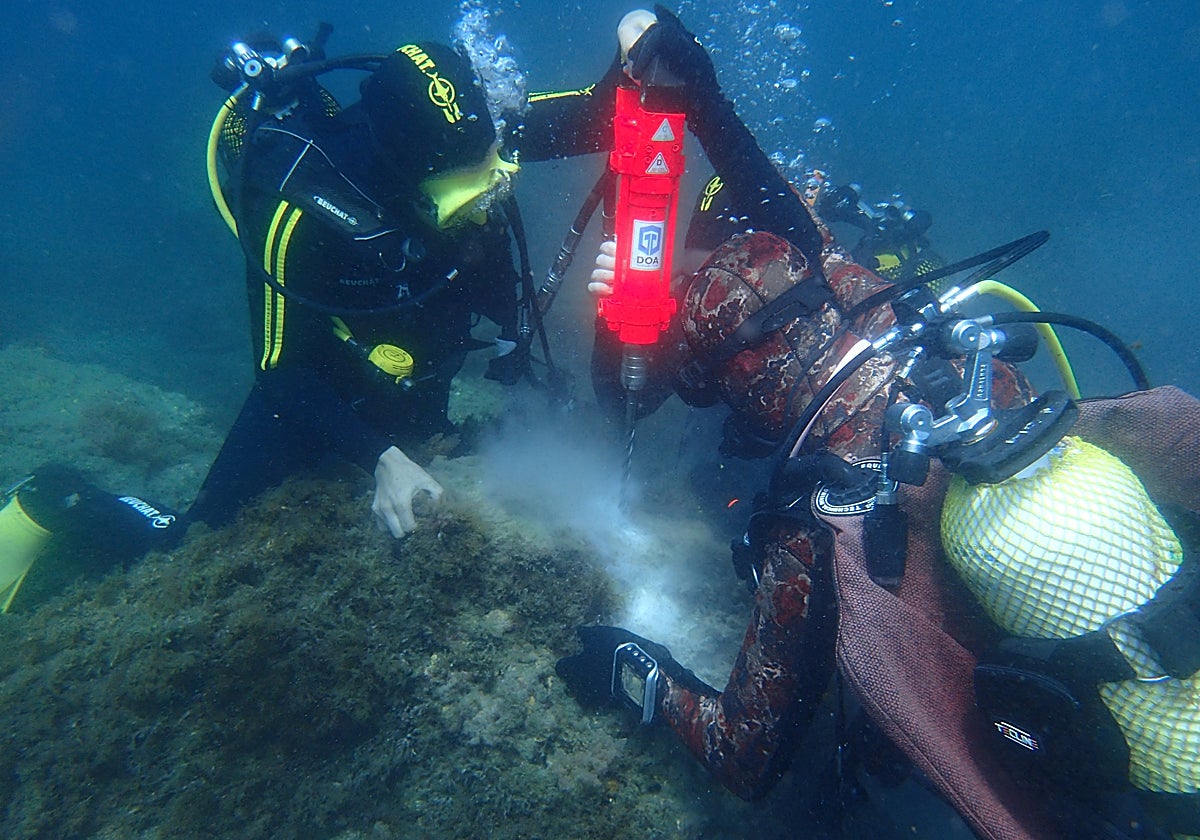

Diving boats will have three new eco-friendly mooring points off the coast of Nerja to prevent them from having to drop their anchors onto ... the seabed.
The Andalusian regional government has included these mooring points as part of a project comprising 25 moorings spread across protected areas along the coasts of Malaga and Granada provinces. The aim is to reduce the impact that anchors can have on reefs and Posidonia seagrass meadows.
The Maro-Cerro Gordo Cliffs protected area will have a total of eight moorings: three in the section belonging to Nerja and a further five off the coast of Almuñécar on Granada province's Costa Tropical. According to the regional government, all eight have now been installed. Of the 25 planned in total, 17 have been installed so far: in addition to those at Maro-Cerro Gordo, another five at Punta de la Mona and four at Calahonda-Castell de Ferro, in Granada province.
The aim is to provide vessels involved in underwater activities with fixed mooring points without the need for conventional anchoring. The regional government warns that the use of anchors can cause physical damage to particularly sensitive ecosystems, by striking or dragging across reefs and Posidonia oceanica seagrass beds.
The three moorings in Nerja are among the eight already installed in Maro-Cerro Gordo to reduce the damage caused by anchors
The system used varies depending on the characteristics of the seabed. In sandy areas, each mooring is secured using a 5,500-kilo concrete block, reinforced with steel and fitted with a stainless-steel eye. If the seabed is rocky, chemical anchors are used. The installation is completed with a 32-millimetre rope, a 60-litre buoy and a submerged guide buoy that keeps the line vertical to prevent it from rubbing against or dragging along the seabed.
This initiative is of particular importance in Maro-Cerro Gordo due to the environmental value of this coastal area shared by Nerja and Almuñécar. The regional government estimates its area at around 1,913 hectares and recognises four protection designations: Natural Area, Special Area of Conservation (SAC), Special Protection Area for Birds (SPA) and Specially Protected Area of Mediterranean Importance (SPAMI). Among its twelve habitats of Community interest it is precisely the Posidonia meadows that are listed as priorities.
Investment
The joint investment totals 66,550 euros and is funded under the LIFE IP Intemares project, officially titled 'Integrated, innovative and participatory management of the Natura 2000 network in the Spanish marine environment'. The initiative is coordinated by the Biodiversity Foundation, which reports to the central government's Ministry for Ecological Transition and the Demographic Challenge, and the Junta de Andalucía is participating as the regional authority.
Intemares aims to improve the management of marine areas included in the Natura 2000 network through habitat restoration, scientific monitoring, surveillance and the involvement of sectors related to the marine environment. The project involves work on Posidonia seagrass beds, reefs and soft seabeds, and one of its objectives is to reconcile environmental protection with activities such as sustainable fishing and ecotourism.
The pressure exerted by human activities on Maro-Cerro Gordo has been the subject of debate for years. A study carried out by the Axarquía Nature Research Centre (GENA)-Ecologistas en Acción recorded around 1,500 species in the terrestrial part of the area alone. Its coordinator, the biologist Rafael Yus, argued at the time that this biodiversity "in itself bears witness to the importance of the natural area and the need for its strict protection".
The LIFE Intemares project is funding a scheme worth 66,550 euros to protect reefs, Posidonia and other sensitive seabed habitats
The environmental importance is also particularly significant underwater. The regional government itself highlights the extensive seagrass beds in the area and the diversity of corals, sponges and fish that find refuge on these seabeds. The regional government maintains that the new moorings form part of its strategy to promote the "sustainable use of protected areas" and reduce the impacts associated with recreational activities.
![[]](http://static.vocstatic.com/voc26/latest/assets/images/favicon/surinenglish/apple-touch-icon-57x57.png)