
Protest
Overcrowding on public transport in Vélez-Málaga since it joined the metropolitan consortium causes outrage
Two public campaigns have already gathered over a thousand signatures, and those affected are organising a protest to demand more buses, more frequent services and better connections
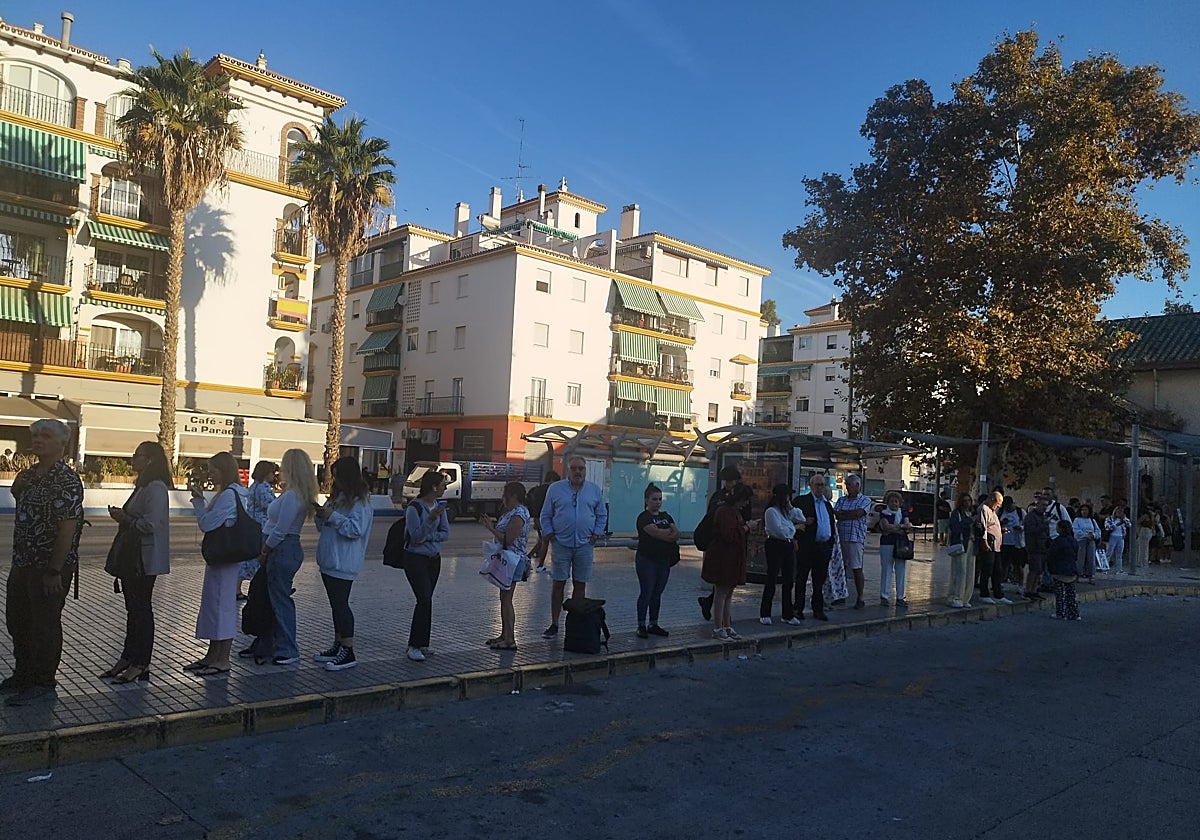

The reduction in bus fares following the inclusion of Vélez-Málaga in the Malaga metropolitan transport consortium has led to a surge in passenger numbers, ... but also in complaints. Five months after the municipality joined the metropolitan transport system, residents from various parts of the municipal area are once again organising themselves to complain about packed buses, long waiting times and district which, they claim, remain virtually cut off from public transport.
One of the most recent initiatives is the campaign launched on Change.org under the title 'Vivir en Vélez-Málaga sin coche es un castigo y un peligro: ¡Exigimos transporte digno y seguro ya!' (Living in Vélez-Málaga without a car is a punishment and a danger: We demand decent and safe transport now!) The petition, created by Silvia Mira, has already gathered 509 signatures and calls on the town council, the Junta de Andalucía and the consortium to take urgent measures to improve the service.
Among the main demands are more buses, more frequent services, minibuses for the higher-lying districts, routes serving specific housing estates and improvements to pedestrian safety at access points to the stops on the former N-340. Those organising the petition argue that the lack of alternatives places daily constraints on students, workers, the elderly and local residents who do not have access to a private vehicle.
Residents complain about overcrowded buses, long waits and a lack of connections in districts, housing estates and inland towns
The neighbourhood protest is also being organised outside digital platforms. A WhatsApp group for those affected now has around 170 members, according to its organisers, and its members are preparing a demonstration for next week with the aim of taking their demands to the streets. In addition, they have submitted written complaints to Vélez town council, the metropolitan transport consortium and the Andalusian ombudsman.
Among those who have spoken out about the consequences of overcrowding is Reme, a 17-year-old student. She explains that she used to take the bus from the area around the Guardia Civil barracks to get to school and that she began to fall behind because some services were already full or didn't stop. «In the first week, because I was arriving late so often, I was going to fail the year because they were going to expel me for my absences,» she says. In the end, she had to change schools.
N-340
The complaints are not limited to connections with Malaga city centre. The petition highlights Benajarafe, Chilches and Valle-Niza, where developers claim that many residents of housing estates in the higher-lying areas have to walk all the way to the N-340 to reach the bus stops, in some cases along stretches they consider unsafe due to the lack of pavements or street lighting.
Complaints are also emerging from villages in the interior. Those affected mention Cabrillas, Cajiz, Triana and Trapiche, and complain about insufficient or non-existent services for their daily journeys. The campaigners place particular emphasis on the difficulties this situation causes for older people who do not drive and rely on public transport to get around.
The district of La Villa has once again been added to this list. Its residents' association points out that in January 2025 it held a meeting with the councillor for transport, Celestino Rivas, to request that the L4 urban bus route be extended to the upper part of the district. The group states that the request has not been successful and is reiterating its call, citing the transport needs of a population it estimates at around 1,300 residents.
Joining the consortium has made travel cheaper and caused demand to soar; the town council had already requested more services and greater capacity back in July
The root of the problem lies, to a large extent, in the sharp rise in demand caused by metropolitan integration. Vélez-Málaga joined the consortium on 1 May and the fare reduction made travelling by bus to Malaga much more attractive. In certain cases, the journey came to cost less than one euro with the consortium card, with discounts of up to 80 per cent.
The town council itself acknowledged over the summer that services needed to be adapted to cope with this increase in passenger numbers. The then mayor, Jesús Lupiáñez, held a meeting in July with officials from the consortium to request more seats and more frequent services in response to complaints about full buses and passengers being left behind. The local council argued at the time that the integration was «a historic step», but admitted that the capacity issues needed to be resolved.
Difficulties
The complaints now being made by users show that, in the view of those affected, the problems persist several months later. The greatest difficulties are concentrated at certain peak times, particularly amongst those who need to arrive on time at workplaces, secondary schools, universities, medical appointments or administrative offices in Malaga city centre.
Reme says she has had to wait for hours after being left without a seat. «Those of us who study and work are going to be badly affected,» warns the young woman, who also criticises the lack of information when a bus fails to arrive or is already full. Her experience is one of the testimonies being used by those affected to support the campaign. Local residents want the improvements not to be limited solely to the Torre del Mar–Malaga route. They are calling for a more comprehensive review of the network, with connections that also serve the housing estates, higher-lying districts and small villages within a particularly large and scattered municipal area.
In addition to this campaign, another petition was launched on 6 July by Eva Bonilla, which has also gathered half a thousand verified signatures. The petition claims that the reduction in ticket prices following the area's inclusion in the consortium has caused demand to soar without, according to its organisers, a sufficient increase in service frequencies, resulting in full buses and passengers being left stranded between Torre del Mar, Vélez-Málaga and the city. The organisers are calling for an increase in direct services and for the introduction of express routes to reduce journey times. The campaign argues that some journeys with stops can take over an hour and a half and warns of the consequences for workers, students, the elderly and passengers with medical appointments.
Those affected are organising a protest and calling for more services, better connections to higher-lying districts and improved safety at bus stops
Nor is the problem confined solely to Vélez-Málaga. In Rincón de la Victoria, there have also been complaints in recent months about overcrowded buses and the frequency of services to the capital, a situation that reflects the sharp rise in demand for public transport along much of the eastern coastline caused by constant traffic jams on the motorway.
The petition campaign now aims to increase the pressure on the authorities involved. With 509 signatures, a group of affected passengers numbering around 170 members and a protest in the pipeline, users are calling for fare integration to be accompanied by a corresponding improvement in the service. The demand is simple: cheaper travel should not mean being left without a bus.
