
Culture
Nerja Cave Festival set to return in 2027 following two-year legal deadlock
Procurement tribunal rejects Mundo Management’s appeal and clears PIES Compañía Discográfica to organise up to 12 outdoor shows
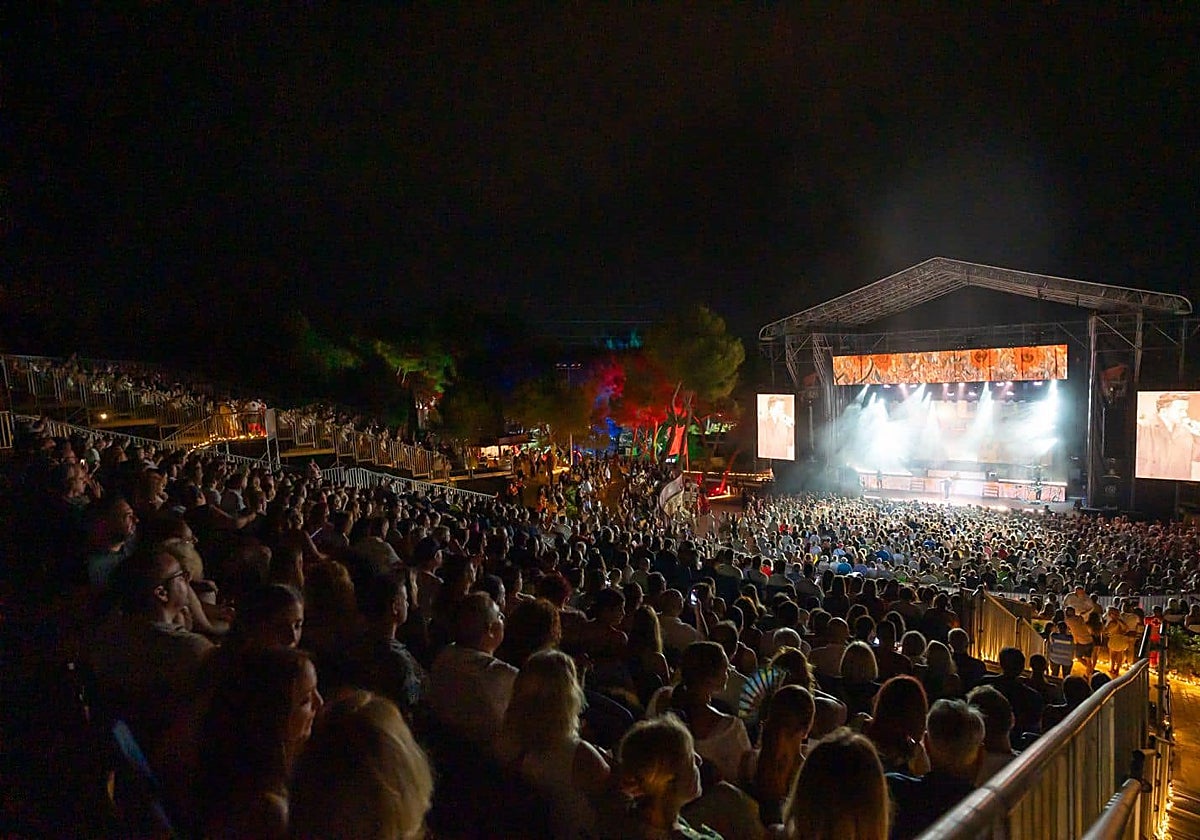

The Nerja Cave International Music Festival is preparing for its long-awaited return in July 2027 after two consecutive years of cancellation caused by protracted ... legal disputes over its management tender.
The Central Administrative Court for Contractual Appeals (TACRC) has dismissed in full an appeal filed by event promoter Mundo Management against the contract awarded to PIES Compañía Discográfica. Resolution 1691/2026, issued on 22 October, confirmed that PIES met all technical, financial, and organizational criteria, thereby lifting the interim stay that had frozen preparations.
The procurement dispute began in November 2025 when the Cueva de Nerja Public Services Foundation launched a five-year contract valued at over €12 million. Although Mundo Management initially secured the award, an appeal by PIES led the tribunal to annul that decision in April 2026. After the contract was reassigned to PIES, Mundo Management lodged a counter-appeal in June, forcing the Foundation to cancel the 2026 summer edition due to tight deadlines. This followed an earlier cancellation in 2025 caused by similar tendering complications.
With administrative remedies now exhausted, the Foundation confirmed on Wednesday that the 64th edition of the festival will go ahead in July 2027, featuring up to 12 outdoor concerts. The framework covers 2027 and 2028, with options for annual extensions through 2031.
Under the agreement, the Foundation will provide an annual institutional contribution of €748,869.40 (including IVA), while PIES manages artist bookings, stage production, catering, security, and ticket distribution.
Shows will take place at the outdoor Manuel del Campo Auditorium, located in the gardens adjacent to the caves near Maro. The venue replaced the interior of the cave in 2019 to preserve the site's natural heritage. The Foundation plans to announce the first confirmed artists between December and January before opening ticket sales.
The PSOE is calling for the modernisation of the Nerja Cave and is demanding improved access
The general secretary of the PSOE in Malaga, Josele Aguilar, has claimed that the Nerja Caves have undergone "the greatest transformation and modernisation process in their entire history" over the past eight years under Pedro Sánchez’s central government.
Speaking at the natural monument alongside the Socialist spokesperson on the Malaga Provincial Council, Josele González, and the general secretary of the PSOE in Nerja, Patricia Gutiérrez, Aguilar defended recent public funding allocated to scientific research, technological innovation, and heritage preservation. He linked the continuation of these investment projects directly to the upcoming general election on 29 November.
According to figures presented by Aguilar, the Nerja Caves welcomed more than 530,000 visitors in 2025—a 22 per cent increase on pre-pandemic levels—while the operating Foundation generated revenue of 8.6 million euros. Key improvements highlighted included modernized access routes, updated lighting, and enhanced conservation technology.
Josele González called on the Regional Government of Andalusia (Junta de Andalucía) and the Malaga Provincial Council (Diputación) to increase funding for regional transport links serving the site, which has drawn over 20 million visitors since opening in 1960. González specifically urged the regional administration to fulfill its commitment to upgrade the strategic 'Arco' road, while requesting that the provincial council improve local roads to facilitate tourist coach access and expand public bus services across the Axarquía region.
Patricia Gutiérrez, leader of the local PSOE in Nerja, defended the central government's management framework and urged authorities to improve connections between the caves and the neighboring hamlet of Maro. Gutiérrez requested that the provincial council resume work on unfinished sections of the Senda Litoral coastal path, extending the route to Maro rather than terminating at the Balcón de Europa. "Maro is also part of the Costa del Sol and part of Nerja," she stated, stressing that tourism investment must benefit local satellite communities.
