
Vega de Maro
Mayor of Nerja defends 'the general interest' in latest confrontation over Maro land
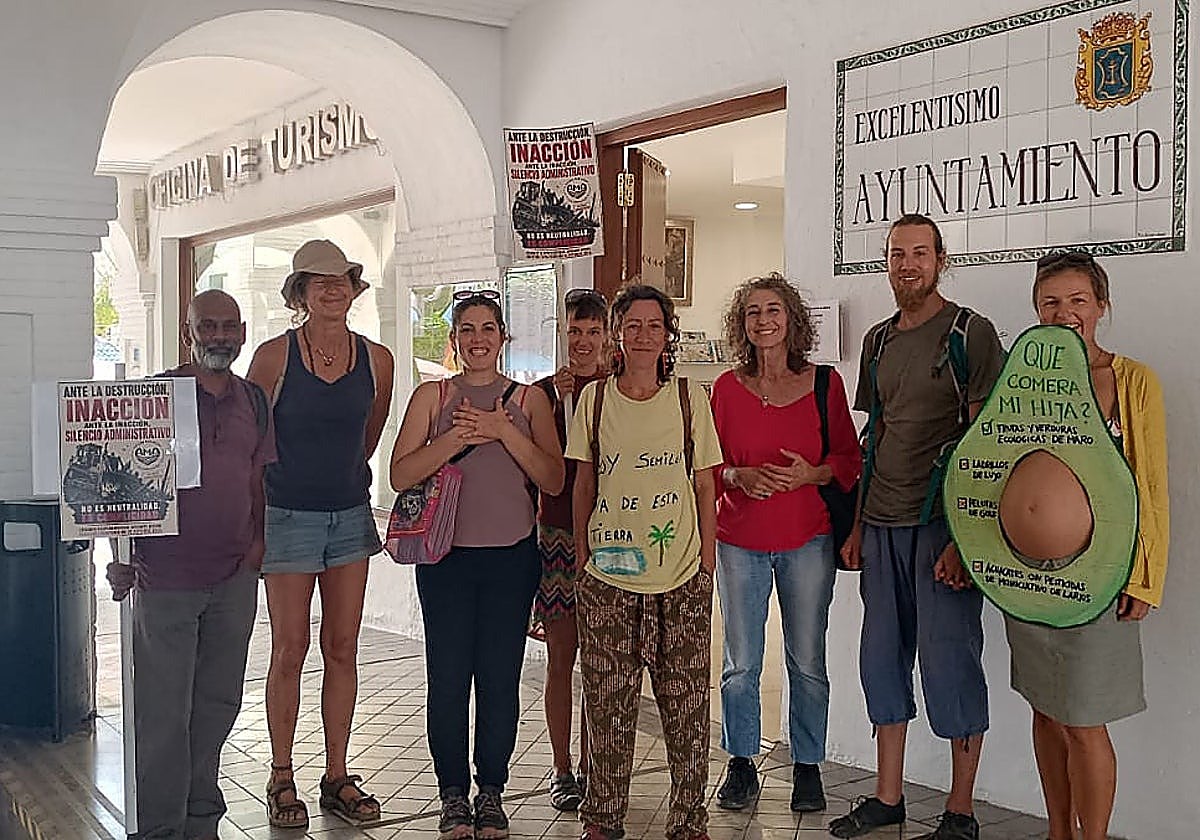
AMA brought its concerns to the council meeting on Thursday 30 April regarding the work, which, in the association's opinion, is being carried out without the required administrative and environmental safeguards
Eugenio Cabezas
The last full council meeting held at Nerja town hall on the easten Costa del Sol in Nerja on Thursday 30 April, once again focused on the Vega de Maro, the land which has been at the centre of controversy between landowners Sociedad Azucarera Larios and farmers and growers who rent plots from the landowners.
Thursday's council meeting was the scene of a new clash between the Platform for Maro and its Agriculture (AMA), environmentalist organisations and the town hall, led by the Partido Popular (PP), which holds an absolute majority.
The group denounced the lack of municipal action regarding the work being carried out since January by Sociedad Azucarera Larios, on an area of 1.3 million square meters, including the demolition of buildings and the felling of trees. Mayor José Alberto Armijo defended the town hall, stating that it is acting legally and "defending the general interest."
AMA brought its concerns to the council meeting regarding the work, which, in the association's opinion, is being carried out without the required administrative and environmental safeguards. Representatives stated that there are no records of inspections, environmental impact studies, or sanctioning proceedings, despite considering the work to be being done without licenses, permits, or environmental certifications. In this context, they demanded "procedure and legality" in the face of what they described as a situation of "administrative inaction."
Traditional agriculture
The association also warned of the impact on protected land designated in the general urban development plan (PGOU), including areas listed as cultural heritage sites (BIC) and alerted authorities to the felling of trees during peak nesting season, as well as the damage to irrigation ditches and other activities affecting the traditional agricultural landscape. AMA insisted that the town hall must clarify whether a complete file exists justifying the actions and called on councillors to act "with conviction" to guarantee compliance with the law.
This complaint was echoed by a statement from the Axarquía-based environemntal campaign group Gena-Ecologistas en Acción, which maintains that the destruction of homes, properties, trees, and irrigation ditches is taking place on the Maro land. Gena links these interventions to the preparation of the land for future urban development projects, including nearly 500 homes, three hotels, and an 18-hole golf course, and demands that the work be halted until the necessary permits and sector-specific studies are clarified.
In response to these criticisms, Armijo firmly stated, "We don't defend the interests of the powerful, even if some laugh; we defend the general interest." He went on to say that the town hall does not act based on specific or sectoral interests. The mayor added that he cannot give instructions to the Guardia Civil or Seprona (the Guardia Civil's nature protection service), "but I can to my fellow council members and technical staff," and stated that, with the information he has, "there is due process and there is legality" in the actions.
Mayor's vision
The councillor for planning, José Alberto Tomé, pointed out that the legality of both parties' actions would have to be examined, specifying that if the tree felling was for agricultural purposes, a permit would not be required, although technical staff would have to determine if any irregularities existed. Armijo also insisted that the town hall does not practice "administrative silence," but rather acts "in accordance with the legal framework of this institution."
In an attempt to ease tensions, the mayor asked for respect from those present and defended the platform's right to express its concerns during the council meeting. "Our obligation is to listen to you; we believe you deserve the respect and attention we give you," said Armijo, who said that Nerja is "a paradise" and that the debate must take place within the democratic framework and the rule of law.
The mayor also outlined his vision for the area. “My current forecast for Maro is for an agricultural Maro,” he stated, adding that agriculture “has been, is, and will continue to be a pillar of Nerja’s economy.” Without specifying a timeframe, he maintained that the town hall will try to ensure that this activity “has a long future in Nerja.”
The conflict places the Vega de Maro land once again at the centre of local debate, in an area where the agricultural value of the land, urban development pressure, and environmental protection clash frequently.
Golf course and hotels
Expectations for land transformation is a debate that threatens to continue shaping Nerja's political agenda. Last week, the Guardia Civil arrested two people during a protest against tree felling on one of Larios's properties after they refused to identify themselves to officers. The incident highlighted the growing tension between local residents, farmers and Larios.
The two left-wing opposition groups, the PSOE and IU-Podemos, have asked the local government to monitor Larios's actions and to mediate with the company so that tenants who wish to remain on the properties can continue farming and living there.
Larios has previously stated that its objective is to restore an "orderly and professional" agricultural use of the properties, after terminating some 400 lease agreements, while awaiting further progress in the bureaucratic process for the project to construct an 18-hole golf course, nearly 500 homes, and three hotels on the land which is currently categorised as agricultural.
![[]](http://static.vocstatic.com/voc26/latest/assets/images/favicon/surinenglish/apple-touch-icon-57x57.png)