
Water
Map reveals areas of Malaga province with high levels of nitrates in tap water
A new interactive tool produced by Greenpeace, which allows users to check water quality across Spain on a town-by-town basis, shows that around ten towns in the Costa del Sol province with high levels of concern
Eugenio Cabezas
Drinking water in Malaga province is under the spotlight due to nitrate contamination: a new interactive map published by Greenpeace, which allows users to check water quality across Spain on a town-by-town basis, shows that around ten towns in Malaga province with levels of concern, with some falling within ranges deemed critical under the law.
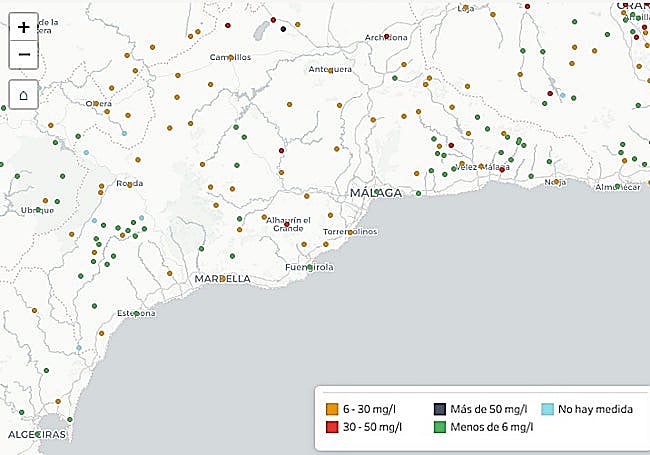
The tool, compiled using official data from the Ministry of Health’s national drinking water information system (SINAC), with analyses dating from 2024 – the most recent available in this database – shows that high concentrations of nitrates have been detected in ten municipalities in the province. Of these, nine are at the red level, with nitrate concentrations of between 30 and 50 milligrams per litre, a threshold which, whilst not exceeding the legal limit, is already considered a risk.
Those that show very high levels of nitrates are Fuente de Piedra, Cuevas Bajas, Villanueva de Tapia, Archidona, Algarrobo, Benamargosa, Sierra de Yeguas, Alhaurín el Grande and Álora, located mainly in the north of the province and the Axarquía.
Related story
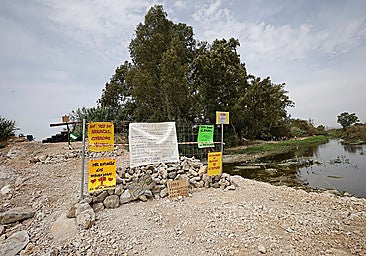
Humilladero is classified as ‘black’, with levels exceeding 50 mg/l, meaning that in 2024 the water was unfit for human consumption, as it exceeded the legal limit established in Spain and the European Union. In fact, the problems in Humilladero, which has over 3,000 registered residents, began in December 2022, when the water was declared unfit for consumption.
Greenpeace warns, however, that this limit of 50 mg/l, set out in Royal Decree 3/2023, is ‘outdated’ from a health perspective. The environmental organisation proposes reducing it to six mg/l, in line with more restrictive scientific criteria, which would place many more municipalities at risk.
In contrast to these figures, the province also has a large group of municipalities with low nitrate levels. In the green zone, below this recommended threshold, are Malaga city, Rincón de la Victoria, Torrox, El Borge, Macharaviaya, Fuengirola, Ojén, Istán, Estepona, Jubrique, Benarrabá, Gaucín, Casarabonela and Carratraca, among others.
However, experts warn that the fact that these levels are lower does not mean the underlying problem has been resolved. Nitrate contamination is closely linked to intensive farming, the use of fertilisers and the management of slurry, particularly in inland areas and agricultural valleys, where aquifers are most vulnerable, as is the case in Humilladero.
Added to all this is a factor that introduces uncertainty: the blue dots, which indicate a lack of data or missing measurements. These areas, also present in the province, show that the problem is not only pollution, but also the lack of comprehensive information on the quality of the water consumed by the public.
The causes of this pollution are clearly identified. Greenpeace points directly to the intensive agricultural and livestock model, particularly the massive use of chemical fertilisers and manure from industrial livestock farming. According to European data, up to 81 per cent of the nitrogen entering the water comes from these activities.
The environmental organisation also warns in a statement that the problem is ‘invisible’, as water contaminated by nitrates shows no changes in smell, taste or colour, making it difficult for the public to detect. For this reason, they insist on the need to facilitate access to information and review the current legal limits.
The scientific community considers the current limit of 50 mg/l to be "completely obsolete" and believes it should be reduced to six mg/l to minimise health risks, including, as they point out, colorectal cancer, which has the highest incidence in Spain. Greenpeace’s map not only puts figures on a growing problem, but also issues a clear warning: without changes to the production model and water management, nitrate pollution will continue to spread and affect more and more areas, including Malaga province.
![[]](http://static.vocstatic.com/voc26/latest/assets/images/favicon/surinenglish/apple-touch-icon-57x57.png)