
History
The 'U-bend' story of how a section of road in Malaga province got its rather rude name
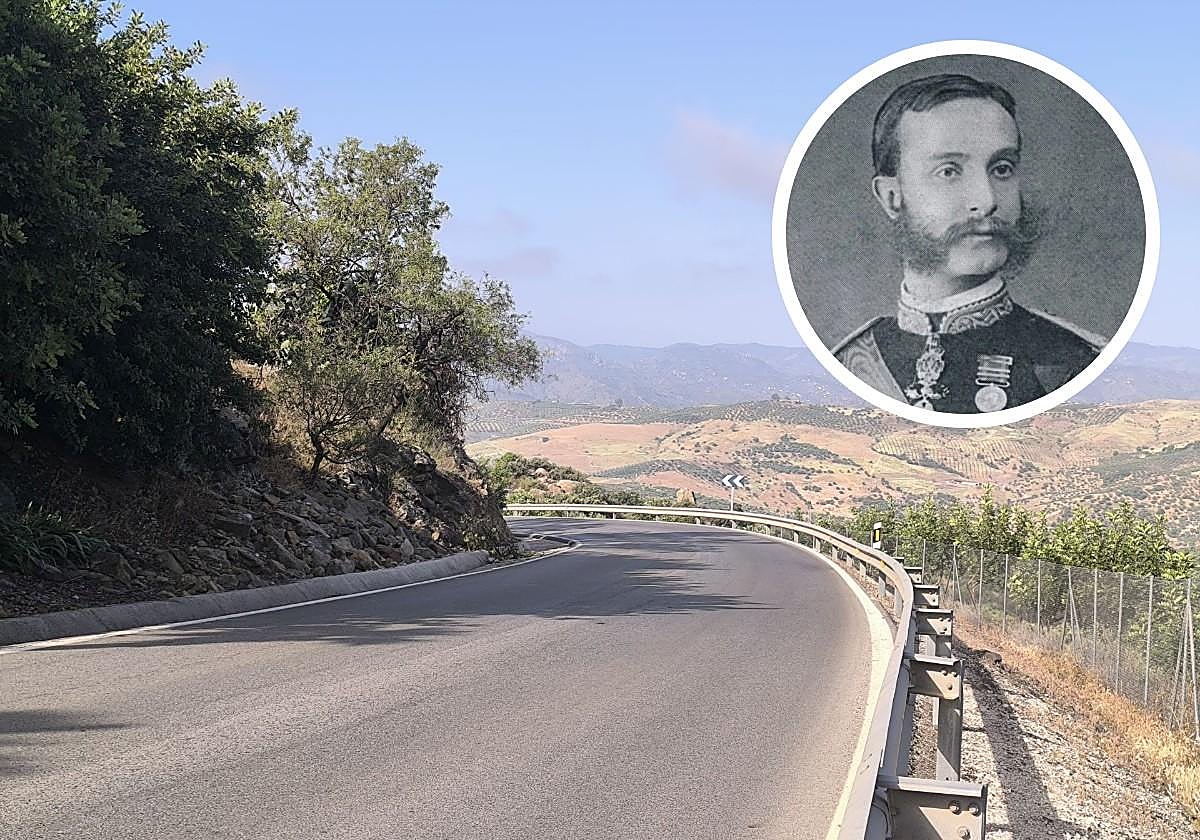
According to a local legend in Periana the 'Curva de Caga Oro' got its name when King Alfonso XII literally paid a visit following the devastating earthquake of 1884

Málaga
Few names arouse as much curiosity in Periana in Malaga province's Axarquía as the 'Curva de Caga Oro' (literally the gold shit bend) on ... the A-7204 road between the town and neighbouring Alcaucín. It does not appear on Google Maps or road maps, but it does feature in the urban legends of the town.
Nearby is also the 'Cortijo de Cagaoro ' - or 'Caga Oro', depending on who you ask - another place-name that bears witness to a history which has managed to stay alive through the generations.
This bend in the road has for generations been associated with King Alfonso XII, the devastating earthquake of 1884 and a popular tale that has managed to survive for over 140 years. According to popular tradition, this story dates back to January 1885, during King Alfonso XII’s visit to the Axarquía following the devastating earthquake that had ravaged the area on Christmas Day 1884.
On the night of 25 December 1884, while many families were celebrating Christmas, a powerful earthquake shook much of the provinces of Malaga and Granada. Periana was one of the towns hardest hit by the quake.
There were dozens of deaths, hundreds of injuries and a huge number of homes destroyed or seriously damaged. The subsequent aftershocks, the bitter cold and the difficulties in providing shelter for the population made the situation even worse for the survivors. Many residents had to temporarily leave their homes and seek refuge in other nearby towns.
The scale of the tragedy prompted aid to be sent from various parts of Spain and led to a personal visit by King Alfonso XII, who wished to see for himself the extent of the damage suffered by the affected area.
Arrival in Periana
On 18 January 1885 Alfonso XII arrived in Periana accompanied by members of his entourage. THe story that has been passed down through the generations is that the monarch toured the affected areas, took an interest in the plight of those affected and distributed financial aid to the residents hardest hit.
His presence also provided a boost to the subsequent reconstruction of the town. Among other measures, the construction of homes for families who had lost theirs and support was provided for the restoration of public and religious buildings damaged by the earthquake.
Traces of that visit can still be found in the town centre. Local tradition identifies a house on what is now Calle Las Monjas, popularly known as the Casa de la Bartola, as the king’s lodgings. Just a few metres away are the surroundings of the church of San Isidro, which had to be rebuilt following the damage caused by the earthquake and whose history remains linked in popular memory to the aid that arrived after the royal visit.
The present-day Avenida de la Constitución and other areas of the town also form part of the backdrop to that recovery which enabled Periana to get back on its feet following one of the most difficult periods in its history.
The legend
It is precisely at this point on the current A-7204 road, some 1.2 kilometres from Periana in the direction of Alcaucín, where the legend of the 'Curva de Caga Oro' comes from. The most widely accepted version is that Alfonso XII was forced to stop on his way to Periana due to an urgent need to relieve himself. After doing so, someone is said to have uttered a phrase that ended up giving the place its name.
However, there is a much more elaborate version: José Manuel Frías, a historian from Periana, recalls hearing this story on numerous occasions when he was a child. According to that version the chamber pot that usually accompanied the king when he needed to relieve himself could not be used because the horses responsible for carrying it had fallen off a cliff during the journey.
The entourage then sought an emergency solution at a nearby farmhouse. The members of the entourage inspected the available facilities, but felt that the rudimentary hole used by the farmhouse’s inhabitants was not the most suitable place for a monarch to relieve himself. In the end, they decided that the king should use the base of a nearby tree as a makeshift toilet.
Once the procession had resumed, several onlookers gathered at the scene. According to oral tradition, upon realising that the faeces left by the sovereign were exactly the same as those of any ordinary neighbour, one of them remarked: ‘The king may eat glory, but his shit is just like ours’. Another of those present is said to have replied immediately: ‘What did you expect, that he’d shit gold?’ And it was from that idea that the name of the farmhouse – and later that of the bend next to it – is said to have originated.
There is no known document that confirms this anecdote. Nor is it recorded in the official accounts of Alfonso XII’s visit to Periana. Even the research carried out by José Manuel Frías has so far failed to uncover any written references that would verify the episode. However, the lack of evidence has not prevented the story from surviving to the present day.
In fact, more than 140 years later, many local residents still refer to the place as the 'Curva de Caga Oro', while the nearby farmhouse retains a very similar name. The survival of this place name is, in itself, proof of the enduring influence this legend has had on the town.
Whether or not the story attributed to the monarch is true, the 'Curva de Caga Oro' is now part of Periana’s intangible cultural heritage. The 1884 earthquake destroyed homes, disrupted streets and transformed the lives of hundreds of families forever. However, amongst the memories that have survived the passage of time, this curious legend also endures.
Today, anyone passing that spot on the road will find what appears to be a perfectly ordinary bend. But behind its peculiar name lies a story that blends tragedy, a royal visit, oral tradition and a sense of humour.
![[]](http://static.vocstatic.com/voc26/latest/assets/images/favicon/surinenglish/apple-touch-icon-57x57.png)