
Trivia
From Montreal to Nerja: the winter that gave rise to Trivial Pursuit’s 6,000 questions
Chris Haney’s brother has published memories and photographs from 1980, when the team prepared the board game’s question cards in the Axarquía town
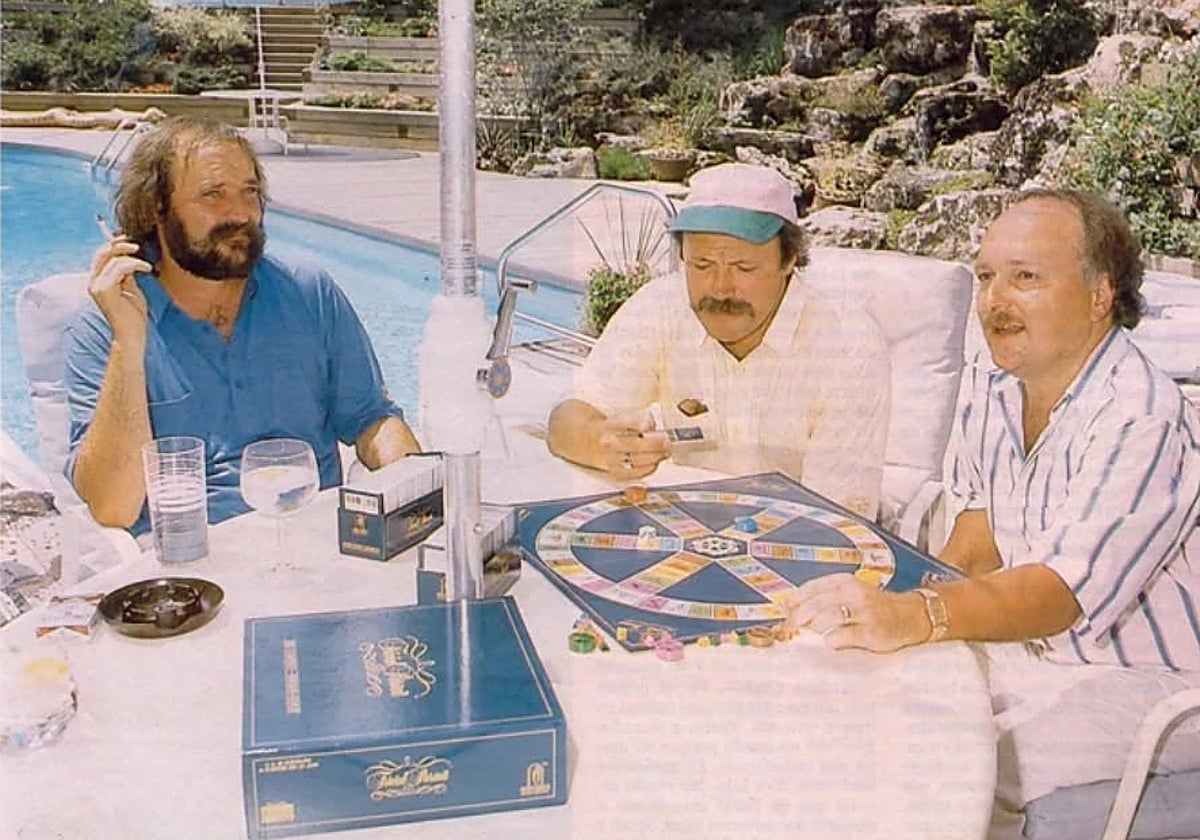

Few could have imagined that, amidst walks along Burriana beach, visits to the village bars and long days spent surrounded by encyclopaedias, one of the ... greatest successes in the history of board games was taking shape in Nerja.
Trivial Pursuit, which would go on to sell over 100 million copies worldwide, owes a significant part of its origins to this town in the Axarquía region. This was recalled on Monday 9 November – coinciding with International Inventors’ Day – by the Nerja museum, which has unearthed photographs and testimonies from the creators’ stay there in 1980, coinciding with the publication of the memoirs of John Haney, the brother of one of the inventors and a contributor to the game’s development.
The story began in December 1979 in Montreal (Canada), when journalists Chris Haney and Scott Abbott decided to design a quiz game based on general knowledge. The idea came about during a get-together with friends and soon developed into a business venture, with John Haney and Ed Werner joining the team. However, much of the work required to turn that initial concept into a commercial product would take place the following year, thousands of kilometres away, on the east coast of Malaga, where the Canadians found the ideal place to work on the thousands of questions they needed.
In late 1980, Chris Haney arrived in Nerja accompanied by his wife, Sarah, and his brother John. Scott Abbott joined them later. In their luggage they carried encyclopaedias, almanacs and numerous reference books to help them prepare the content for the future game. The town was not unfamiliar to Chris, who had first visited it in 1973 and whose mother owned a house there. For several months, the group combined their research and writing work with daily life in a town that was, at that time, beginning to establish itself as an international tourist destination.
The idea was conceived in Montreal in 1979, but the 6,000 questions in its first edition were drafted in Nerja, according to its creators
Chris Haney himself recounted those months in an interview published by the Lecturas magazine on 12 August 1987. According to his account, during that winter they wrote the 6,000 questions and answers that made up the first edition of Trivial Pursuit whilst in Nerja. Their work was not confined to the hours they spent poring over books and encyclopaedias; they also made the most of their afternoons by the sea to continue preparing the cards. Among the anecdotes from that period is the story of how they made the first dice using the cork from a bottle of Rioja wine - a makeshift prototype of what would eventually become an international phenomenon.
The stay also left him with many personal memories. In that 1987 interview, Haney confessed that he had been captivated by Nerja since his first visit and that he had even thought about settling permanently in Spain. Among his favourite spots were Burriana beach and the well-known Ayo picnic area, which he referred to as ‘Tito’s picnic spot’, where Miguel Joven’s father - the popular actor from the series ‘Verano Azul’ - used to work. It was there that he learnt to make paella and even cooked one for a hundred people, as recalled by the Canadian inventor, who maintained his connection with the town for much of his life.
An investor from among the residents of Nerja
The rediscovery of this story coincides with the publication of My Trivial Pursuits: The Inside Story of the Board Game That Conquered the World, John Haney’s memoir, published this year by Sutherland House. The 280-page book recounts the game’s origins and includes a chapter entitled ‘Spanish Solitude’, as well as photographs taken during the Canadians’ stay in Nerja. Among them are pictures of brothers John and Chris Haney walking towards Burriana beach, possibly along the old path at the end of Calle Carabeo, and another image from December 1980 in which Chris poses alongside Mary, according to documentation released by the Nerja museum.
But the Canadians did not limit themselves to working on the game’s content. They also took advantage of their stay in the town to seek funding from residents and business owners. This matter had already been investigated by the British journalist David Baird, who was based in Frigiliana, and reported by SUR in an article published on 22 August 2010. According to that investigation, Chris Haney, who died on 31 May 2010 in Toronto at the age of 59, and Abbott visited establishments and businesses in the town, offering them the chance to take part in a project that many considered unpromising. Eventually, they found an investor willing to contribute a thousand dollars, a sum that, over the years, would go on to become an extraordinarily profitable investment.
That partner was a resident of South African origin, raised in Canada and living in Nerja since the early 1970s, who ran a bar in the El Capistrano housing estate. When SUR pieced together the story in 2010, following the death of Chris Haney, the businessman expressly asked to remain anonymous and to avoid any references that might identify him. Other local business owners acknowledged at the time that they had had the opportunity to invest in the venture, but had declined to do so for fear of losing their money. The story of the El Capistrano investor thus became one of the most remarkable anecdotes surrounding the origins of Trivial Pursuit.
Back in 2010, SUR reported on how a local resident donated a thousand dollars to the project; the new memoirs bring back memories of that winter
The game went on sale in Canada in 1981, initially with a print run of 1,100 copies, but its popularity soared in the years that followed. By 1984, it had sold some 20 million units and began to be distributed in Spain as well. On 13 November of that year, the newspaper Diario 16 was already reporting on Nerja’s involvement in its development. The town’s connection with the game subsequently featured in reports in La Vanguardia, Diario de Burgos and Lecturas. Over time, Trivial Pursuit would go on to sell over 100 million copies and eventually become one of the most internationally recognised board games. In 2025, it was also inducted into the US ‘National Toy Hall of Fame’.
The story has lived on in Nerja for decades, fuelled by the memories of those who knew its creators. SUR revisited it in August 2021, eleven years after the first feature, recalling Baird’s research. It also focused on some of the stories circulating about the Canadians’ stay, such as the suggestion that the circular Balcón de Europa square may have inspired the design of the well-known ‘cheese-shaped’ pieces on the board – a version that is not supported by documentary evidence. Now, 46 years after that winter, John Haney’s memoirs and the photographs released by the Nerja museum once again link the town to a business venture that began with a simple question: why not invent our own game?
