
Property
Four under investigation for unauthorised building work in Vélez-Málaga
The authorities have established that the structures had been erected on land not zoned for development in the small village of Cajiz
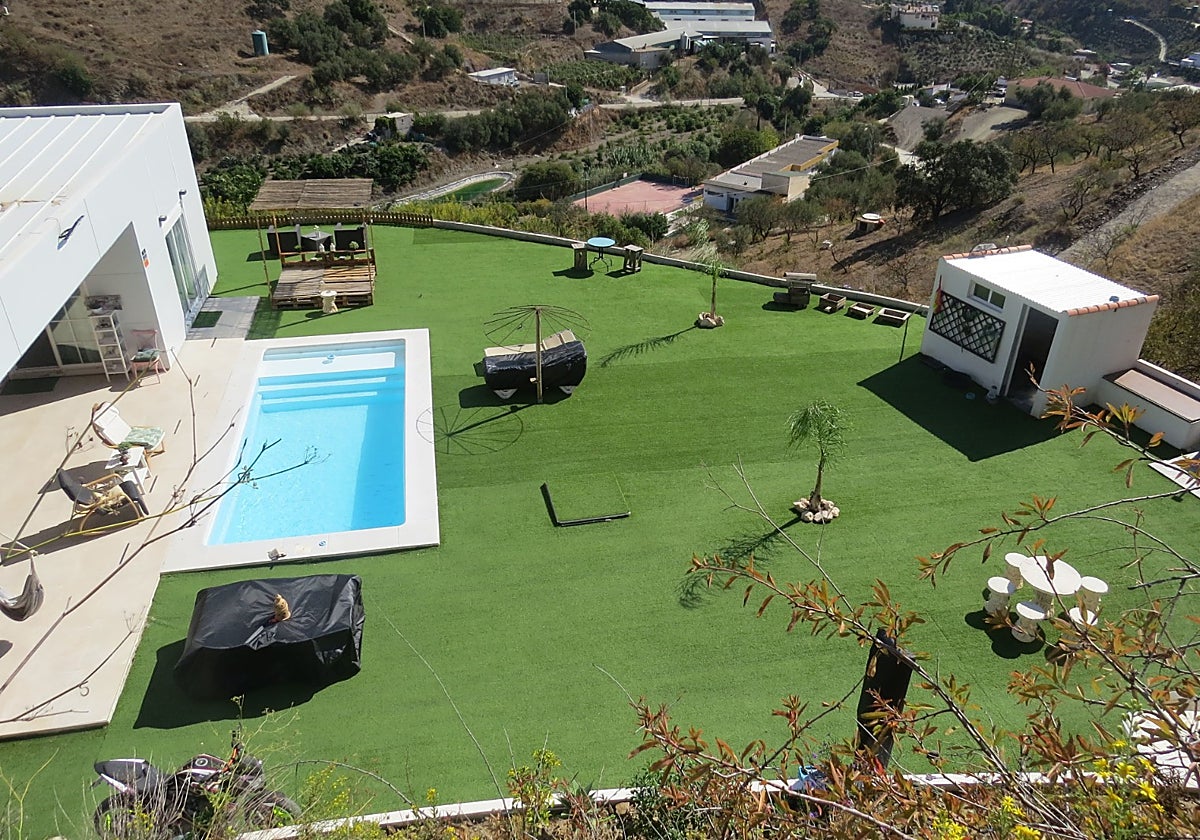

The proliferation of unauthorised buildings is once again leading to legal proceedings in the Axarquía area of Malaga province: officers from the National Police unit ... attached to the Andalusian regional government are investigating four people for their alleged involvement in the construction of several unauthorised buildings in Cajiz, one of the rural hamlets within the municipality of Vélez-Málaga.
The investigation, carried out by officers from the Malaga provincial police headquarters, has concluded with the case being referred to the judicial authorities on suspicion of an offence against land-use planning, as reported by the Andalusian regional government in a statement released on Tuesday 17 November.
Police investigations have confirmed that the buildings were erected on land classified as "non-urbanisable", where the work carried out lacked the required municipal planning permission. Officers obtained technical reports to determine the characteristics of the buildings and their compliance with current regulations. According to the regional government's statement, the experts concluded that the work "was not legal under any regulatory framework".
The Local Police state that the structures were unlicensed and that the local authority's order to remove them had not been carried out
The investigation has also revealed that Vélez-Málaga town hall had already taken administrative action against these buildings and had ordered their demolition and instructed those responsible to restore the affected land to its original state. However, according to information provided by the regional government, these municipal orders had not been complied with by the time the officers intervened. The failure to carry out the demolitions is one of the most significant aspects of this case, which once again highlights the difficulties in restoring compliance with planning regulations in certain rural areas after unauthorised buildings have been erected.
The photographs released by the regional government show various buildings in the rural area around Cajiz, some of which appear to be residential and are situated on hillsides surrounded by farmland. The images include a plot fitted out with artificial turf and a swimming pool, a metal structure under construction, and several buildings with modern designs set against a backdrop of steep slopes.
Another photograph shows an official vehicle at the scene of the operations. However, the photographic evidence alone does not allow for a determination of the legal status of each property, nor does it identify which ones correspond to each of the four individuals under investigation. Nor does the police information specify the exact number of buildings involved.
Unauthorised development in rural areas
Police officers have taken statements from the four individuals involved, who are being treated as suspects and have forwarded the relevant report to the judicial authorities. As yet, the regional government has not reported any arrests nor specified which court will be handling the proceedings. Nor have the dates on which the work were carried out, the floor area involved, or the dates on which the municipal demolition orders were issued been disclosed.
The case concerns a municipality with a large rural area and numerous scattered houses, where farms, traditional and newly constructed buildings coexist. Urban planning enforcement in these areas is particularly important due to the restrictions imposed by regulations on the construction of residential properties outside built-up areas. The Cajiz case once again highlights that the problem does not necessarily end when an authority detects an unauthorised building and orders its demolition. It is also necessary for the remedial measures to be actually implemented, something which, according to the regional government, had not occurred on the plots investigated in these proceedings.
The investigation is now in the hands of the courts and the case adds to the pressure on rural land in Malaga province
The pressure exerted by illegal development on rural land is a concern that extends across the whole of the province. In January the Guardia Civil reported that it had investigated 125 people, including private individuals, developers, builders and technical experts, during Operation 'Murus', carried out throughout 2025 under the coordination of the Malaga Environmental Prosecutor's Office.
These investigations led to the identification of 62 alleged offences against land-use planning and the carrying out of 104 inspections in various municipalities. Among the cases investigated were unauthorised detached houses, prefabricated houses used for residential purposes, swimming pools and agricultural buildings subsequently converted into dwellings. This is a different operation from the one currently being carried out by the police in Cajiz and no link between the two has been reported.
The Andalusian regional government recorded a total of 1,986 town planning inspections across the region in 2025, resulting in 351 illegal buildings or plots being sealed off and 54 cases of voluntary demolition. The difficulty in carrying out demolitions has also been highlighted by the Malaga Environmental Prosecutor's Office. In January 2025, the prosecutor Fernando Benítez told Cadena SER radio that many demolition orders and court rulings drag on for years without being enforced. "We are convicting people for planning offences, but we are not restoring the rule of law," he said at the time.
