
Property
Rincón de la Victoria house wins prestigious Malaga architecture award
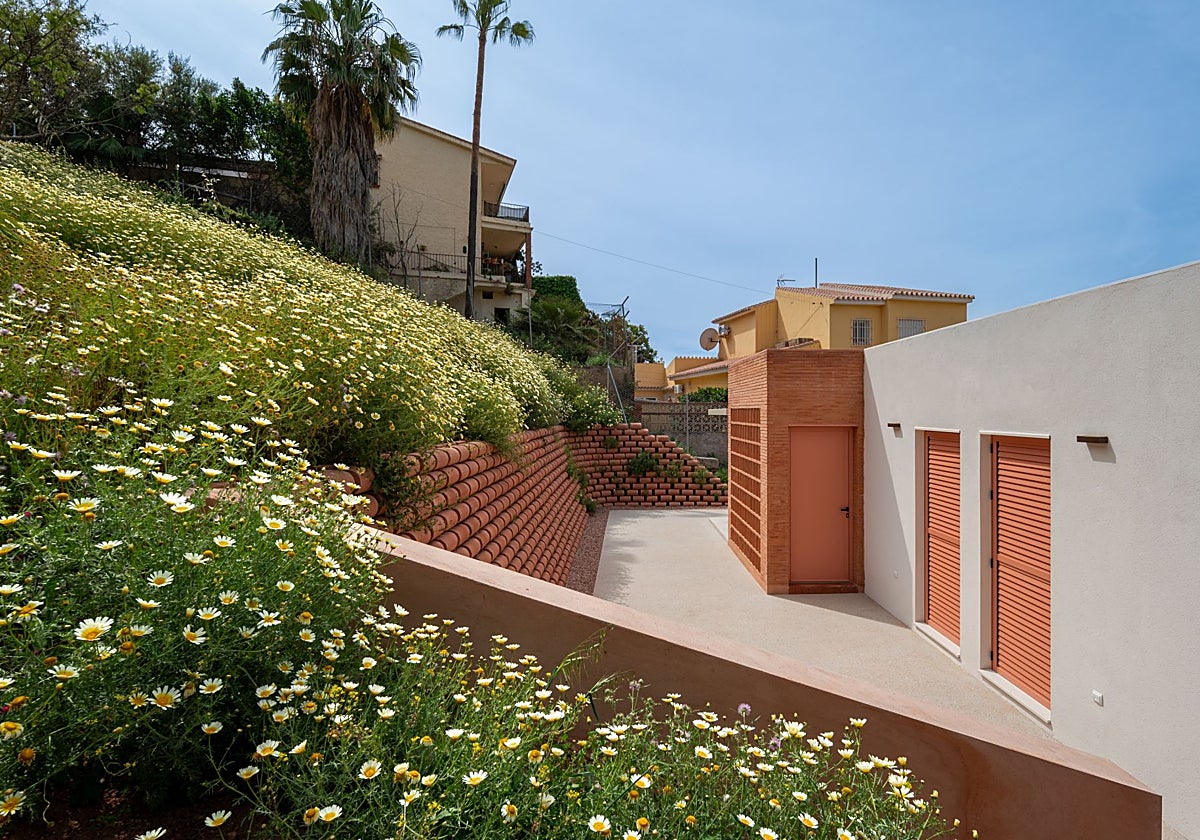
Casa Cantal in La Cala del Moral was recognised by the Colegio de Arquitectos de Málaga for its contemporary design, its focus on sustainability and the textures and colours in the brickwork, combined with how it blends into its surroundings

Rincón de la Victoria
On Calle El Greco in La Cala del Moral (Rincón de la Victoria) on the eastern Costa del Sol there is a building that is ... well worth a closer look. It is no surprise, then, that the Colegio de Arquitectos de Málaga (Malaga association of architects) has recognised the building with a Vivienda Unifamiliar (single-family home) award.
Through these awards, the association aims to highlight “those projects and works that stand out for their values of particular interest, quality and excellence” and promote the profession as “a tool capable of improving people’s lives”.
Casa Cantal, designed by the Endosdedos architectural practice made up of María Martín Sánchez and Francisco Padilla Durán. They joined the project, intended for long-term rental, developed by Zañodor and built by Serconsa Rehabilitaciones, following the retirement of the architect who had drawn up the initial proposal, with planning permission virtually granted.
Martín and Padilla are taking over with “the clear premise of not reworking the project”. However, they say they are not ruling out “refining it, adjusting its language and working particularly hard on the envelope, the finishes and the relationship between the materials and the site”.
This idea is that "the house should not climb up the slope, nor dominate it, nor become a two-storey property that competes with the topography". This approach leads to "a horizontal, compact and sheltered structure, capable of establishing a more subtle relationship with the landscape".
Location is key; El Cantal is characterised by its limestone cliffs and natural caves. With the aim of blending in with such a distinctive natural environment, the design comprises a combination of courtyards, terraces and open spaces that extend domestic life outwards. “The ceramic latticework and perforated brickwork partially envelop the house, filter sunlight, promote natural ventilation and create shifting shadows throughout the day,” they explain.
The materials used are exposed brickwork, light-coloured render, concrete and stone paving, creating a "sober, precise and restrained architecture; a house that does not seek to stand out through its form, but rather through the way it sits on the land, receives light and belongs to its surroundings"- This vision finally took shape in April 2026, when the work was completed.
Awards
The runner-up in the new build architecture was Casa Acordeón, a project in Arriate, designed by architect Francisco Ortega Ruiz. The award in the multi-family housing category has been presented to the project ‘28 courtyards and 14 social housing units’ in Almargen, designed by architects Carlos Arias Garnelo and Rafael González García. In the same category, an honourable mention was awarded to the Oceanika Coliving project in Torremolinos, designed by a large team of architects comprising Juan José Baena Martínez, Marta Gómez Martínez, Joanna Jedrus Cabrera, José de la Peña Gómez-Millán, Borja Navarro Ibáñez de Aldecoa, José María González Chamorro, José Antonio Pavón González and Myriam Rego Gómez.
In addition, the quality architecture developer award went to Nuovit, “for spearheading this project, promoting high-quality modular and industrialised architecture for living spaces, and enhancing the identity of temporary accommodation schemes on the Costa del Sol”.
The public facilities and other uses category was awarded jointly to two projects: the Malaga school of tourism, by architects Antonio Vaillo i Daniel, Yago Vaillo Usón and Joaquín López Baldán; and Funker. Hostel en la Trinidad, by Antonio José Galisteo Espartero, Álvaro Fernández Navarro and Francisco Jesús Camacho Gómez. Furthermore, the young architect award went to Casa Nuez Moscada, in Malaga, by the architect Álvaro Carrillo Eguilaz.
The jury consisted of the architects Fernando Martín Menis, Izaskun Chinchilla Moreno, Rocío Pina Isla, María José Andrade Marqués, Javier Valverde Abril, Nuria Prieto González and Luis Frade Torres.
![[]](http://static.vocstatic.com/voc26/latest/assets/images/favicon/surinenglish/apple-touch-icon-57x57.png)