
Food and drink
University of Malaga analyses 160 bottles of wine after five months under the sea
The researchers will analyse the colour, aroma, flavour and texture, as well as pH, acidity, alcohol content, polyphenols and total sugars during a tasting in October
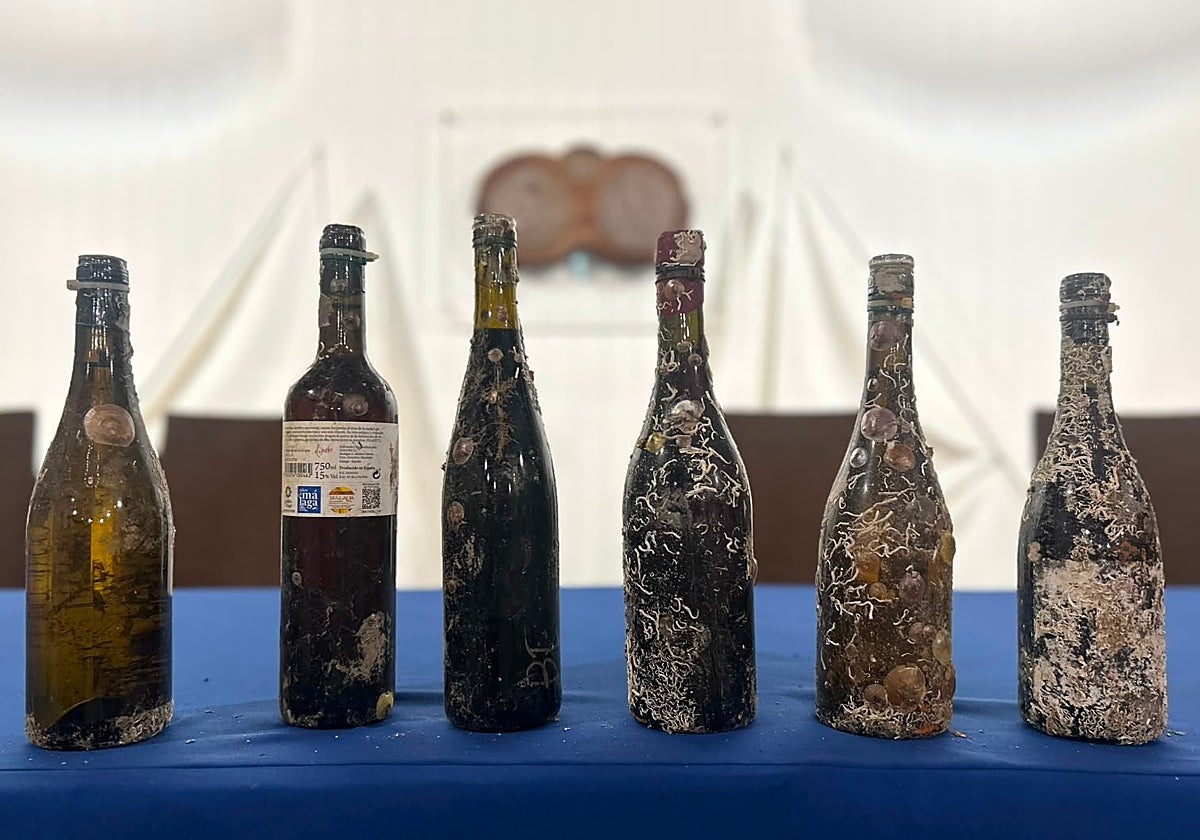

Does a wine really change when it is left under water for several months, or does much of its appeal stem from the unique appearance ... the bottle takes on?
A team of researchers from the University of Malaga (UMA) is attempting to answer this question after recovering 160 bottles of white, red and sweet wines produced by wineries in the Axarquía area of Malaga province, which have been submerged under the sea for five months at a depth of around ten metres.
The initiative, known as ‘Vinos Sumergidos’ (submerged wines) is being led by the SEJ-121 Mediterráneo Económico research group at the UMA and aims to determine whether the conditions prevailing underwater cause chemical and sensory changes that can be measured and replicated, or whether the differences perceived by consumers are influenced by the story behind the product and the external appearance of the packaging.
The conclusions will not be immediate. The bottles were retrieved this July, but the decisive phase will take place in October through a comparative blind tasting. Participants will taste samples that have been submerged and control wines from the same vintages, which have been stored at the winery’s premises during this time, without knowing which ones have been at the bottom of the sea.
The UMA will compare the bottles submerged at a depth of ten metres with control wines of the same vintages stored in the cellars
The project was presented at the Real Club Mediterráneo in Malaga in the presence of the Vice-Chancellor of the UMA, Teodomiro López; the president of the Mancomunidad association of town halls in the Axarquía, Jorge Martín; the secretary of the regulatory council for the Malaga, Sierras de Malaga and pasas (raisins) de Malaga designations of origin, Javier Aranda; the principal investigator, Gorka Zamarreño-Aramendia; and the club’s president, Antonio Manuel Díaz.
The research also benefits from the collaboration of the provincial Diputación de Málaga's Sabor a Málaga promotional brand, the Axarquía Mancomunidad and the participating wineries. The experimental cage was placed within the port area of Malaga city in February, with the authorisation of the Port of Malaga and remained in the waters of the Real Club Mediterráneo until July. During that period, the temperature, pressure, depth and water movement were recorded.
Previous experience
The infrastructure used was provided by Attis, a winery with previous experience in underwater conservation, which also contributed technical expertise to the design of the device. The UMA has incorporated storage controls and systematic monitoring of environmental variables in an attempt to distinguish between the possible actual effects of the sea and perceptions related to the product’s presentation.
The list published by the UMA includes wines from Dimobe, Bodegas Bentomiz, Viñedos Verticales, Fabio Coullet, Bodegas Almijara, Dominio de Arenas and Bodegas Jorge Ordóñez. The inclusion of sweet wines is particularly significant, as much of the research carried out to date on underwater ageing has focused on dry wines – reds, whites or sparkling wines.
The October tasting will be attended by sommeliers, critics, specialist journalists and representatives from the wineries themselves. The experts will analyse the colour, aroma, flavour and texture of the samples. These sensory assessments will then be cross-checked against physico-chemical tests to measure parameters such as pH, alcohol content, total acidity, polyphenols and sugars.
A blind tasting and chemical analyses will determine in October whether the sea consistently alters the colour, aroma or flavour
The researchers emphasise that the aim “is not to confirm in advance that the wine improves, but to establish whether it changes”. Following the extraction, a single bottle of white wine was opened and found to have a more golden hue and appears to have matured further. However, the team has said that this initial observation “does not constitute a result” and must be compared with the rest of the samples under controlled conditions.
The study also comes at a time when the Malaga wine sector is recovering. According to data from the regulatory council published on Thursday 30 July by SUR, the grape harvest began on 24 July in the Axarquía and could reach 2.6 million kilos this year.
Rainfall has been around 15 per cent above the historical average and the incidence of mildew has been ‘practically non-existent’, although the heat at the end of July has slightly limited the growth of some grapes. Against this backdrop of “cautious optimism”, underwater research opens up a potential avenue for commercial and wine tourism differentiation for wineries seeking to add value without losing the identity of traditional Malaga wines.
![[]](http://static.vocstatic.com/voc26/latest/assets/images/favicon/surinenglish/apple-touch-icon-57x57.png)