
The Malaga village that's home to Spain's largest yellow Camino de Santiago waymarker
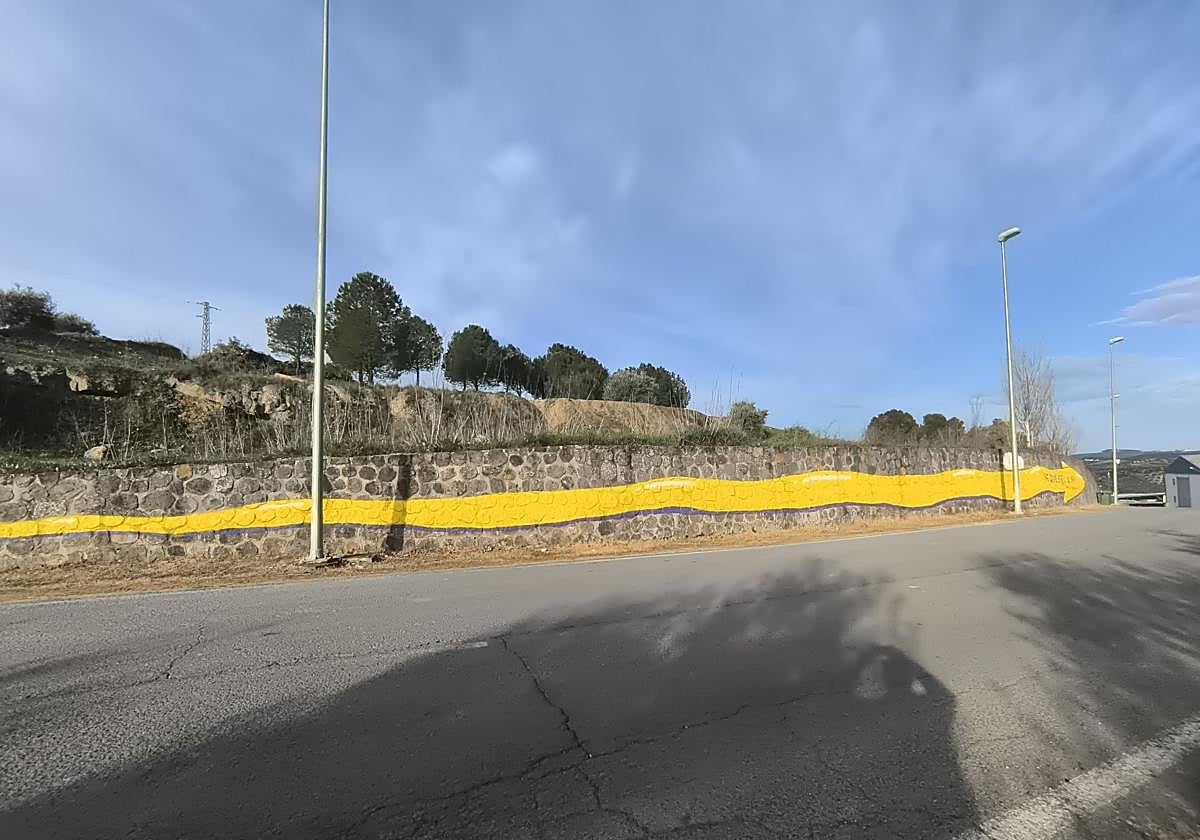
The 50-metre sign in Cuevas Bajas has become a tourist draw on the Mozarabic pilgrimage route through Andalucía

Malaga
Thousands of pilgrims follow the arrows every year without giving them a second thought. A simple yellow arrow painted on a wall, rock or signpost ... is enough to confirm they are heading in the right direction towards Santiago de Compostela.
In Cuevas Bajas, however, the familiar symbol of the Camino de Santiago has been given an extraordinary makeover.
At the entrance to the village stands what is considered Spain's largest yellow Camino arrow. Measuring around fifty metres in length, it has become one of the most photographed landmarks on the Camino Mozárabe, the historic pilgrimage route that crosses Andalucía before joining the routes north to Santiago. Despite its modest size, Cuevas Bajas has become an important stop along the trail.
The giant arrow was painted by the Cuevas Bajas town hall in 2025 to raise the profile of the Camino Mozárabe as it passes through the municipality. Until then, the record had belonged to Purullena in Granada province, whose forty-metre arrow, created by street artist Reyes19, was for years regarded as the largest of its kind in the world.
More than just a curiosity, the landmark reflects Cuevas Bajas's growing importance on the route linking Andalucía with Santiago de Compostela. The village marks the end of the stage from Villanueva de Algaidas and the beginning of the next section towards Encinas Reales in Cordoba province.
Two stages through olive country
The stage from Villanueva de Algaidas covers just over twelve kilometres through the olive-growing landscapes of the Sierra Norte de Málaga. It also follows part of the Gran Senda de Málaga, a long-distance walking trail that circles the province, passing extensive olive groves as well as riverside woodland and viewpoints including El Cedrón, which offers sweeping views across the surrounding countryside. The route ends in Cuevas Bajas, a peaceful village on the banks of the River Genil.
Pilgrims continuing towards Santiago face a much shorter next stage. The trail leaves the village along Camino del Soto, passes through the industrial area and crosses the River Genil via a bridge marking the boundary between Malaga and Cordoba provinces. From there, it climbs gently to Encinas Reales over just 5.7 kilometres, a walk that takes around two hours.
Cuevas Bajas's connection with the Camino Mozárabe is also reflected in its pilgrims' hostel and other initiatives designed to strengthen its role on this cultural and tourism route. In fact, the giant arrow stands beside the trail itself, serving as a reference point for both arriving pilgrims and those setting off again after an overnight stop.
The yellow arrow itself has an interesting history. It was introduced in the 1980s by Elías Valiña, the Galician parish priest of O Cebreiro who is widely credited with helping revive the modern Camino de Santiago.
According to tradition, he used leftover yellow road-marking paint to mark the routes and stop pilgrims losing their way. What began as a practical solution eventually became the best-known symbol of the Camino network.
![[]](http://static.vocstatic.com/voc26/latest/assets/images/favicon/surinenglish/apple-touch-icon-57x57.png)