
Culture
A treasured experience in the heart of Seville
Founded in 2006, the MBF offers visitors the opportunity to explore the magical world of flamenco dance
Tony Bryant
For many visitors to Seville, flamenco is among its most treasured experiences. Tourists flock to the city's numerous tablaos (flamenco clubs) and live performances to catch a glimpse of this vibrant Andalusian art. After attending one of Seville's many captivating shows, one might feel inspired to learn more - and fortunately, the city offers visitors the perfect setting to do just that.
Tucked away in the side streets of the Alfalfa district, one will find the beautiful 18th century palace that houses the Museo del Baile Flamenco (MBF). This state-of-the-art museum is an institution to flamenco dance, and inside, one becomes submerged in this wonderful facet of Andalusian culture.
The museum opened its doors to the public in 2006, and this year it is organising a series of events to mark its 20th anniversary. The facility was masterminded by one of Spain's most established flamenco dancers, Cristina Hoyos, who was born, and who grew up, in the very same streets where the museum now stands. The former choreographer of the Andalusian ballet company has worked with many legends of flamenco during a career that has spanned more than 65 years, many of whom are honoured in this museum. Different areas of the museum are dedicated to Hoyo's teachers, including Antonio Gades, Enrique el Coto and Pilar López.
This flamenco institution is a mixture of old-style museum and 21st century technology
The flamenco dance museum is situated in the heart of the historic centre of the city (Calle Manuel Rojas Marcos 3), just a few minutes' walk from the cathedral. This four-story palace, which has kept much of its 18th century appeal, is where the deepest roots of flamenco and the latest state-of-the-art technology come together to start visitors on a journey into the magical world of flamenco dance.
-k2WC--1920x1344@Diario%20Sur.jpg)
At the basement level is where one begins to feel the atmosphere of this building. Arched brick passageways lead into the old cellar, where workshops, seminars and lectures on the history of flamenco are regularly held. A small patio, which reveals parts of the old Moorish walls of the city, tempts visitors to sit and take in the ambience of this beautiful building before beginning a tour of the museum.
The ground floor houses the teaching area, where dance, guitar, singing and rhythm classes are held: one is subjected throughout the visit to the sound of clicking castanets, stomping feet and the mellow strings of the flamenco guitar.
Interesting sculpture
There is also another delightful patio on this level, complete with a small stage where up to four flamenco shows are held each day. Above the stage is an interesting suspended sculpture of high-backed Andalusian chairs and two lemon trees – both symbolic of the region.
This area also houses a permanent exhibition of charcoal drawings by renowned artist Miguel Alcalá, whose graphic legacy has captured the essence of flamenco and the Andalusian Gypsies.
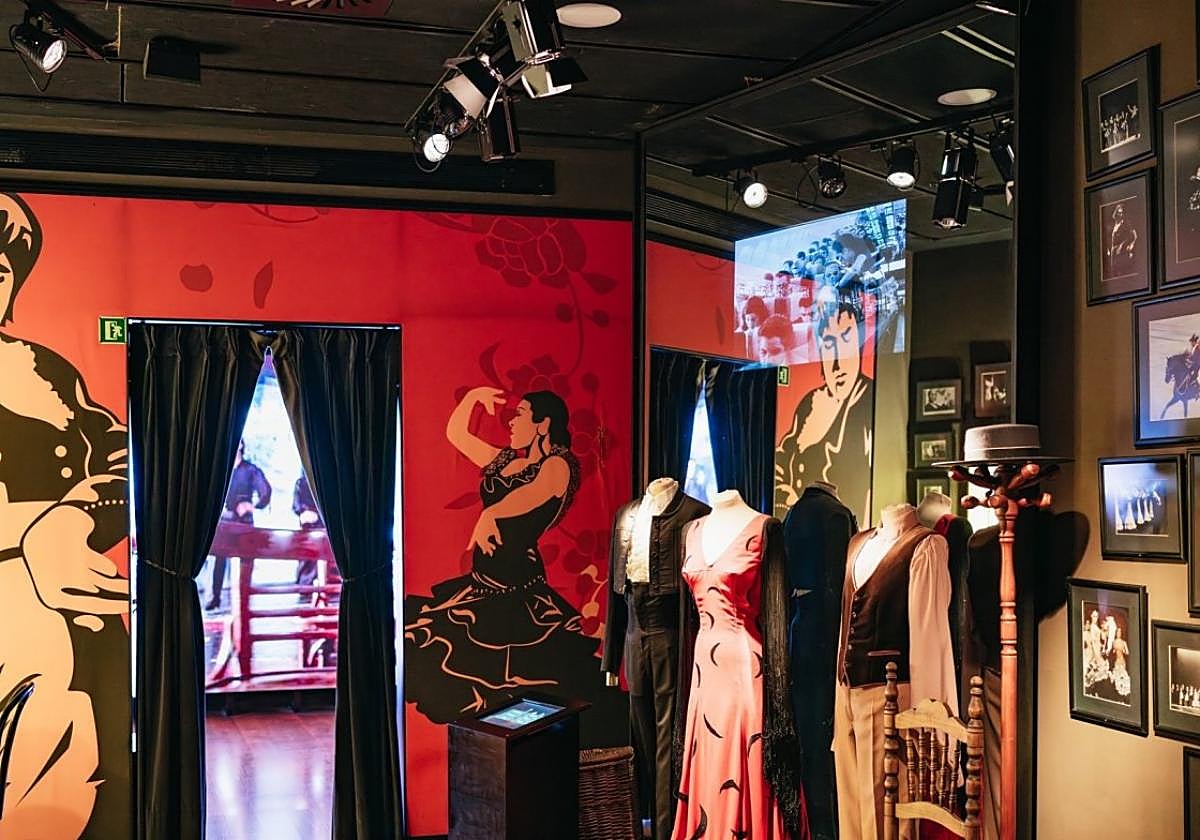
The first floor is where one really begins to explore this mysterious art. The dress room is where costumes and memorabilia from the classic era of flamenco can be viewed, along with some of the treasures from Cristina Hoyos' screen performances. These include Carlos Saura's Bodas de Sangre (blood wedding). Many of the film's costumes and props, including the knife from the famous fight scene, as well hats, shawls, castanets and fans are displayed as a reminder of flamenco's rich cinematic past.
Evolution of Spanish dance
This institution is a mixture of old-style museum and 21st century technology, as the screen room will prove. In this area, one is taken on a journey through the evolution of Spanish dance, from its earliest days when the Gypsies danced for pleasure at the fairs or on their patios, through the Café Cantante period (1850-1910), to the present-day theatre shows performed by large flamenco companies. Visitors can choose one of several languages, which include English, Chinese, Japanese, German, French and Spanish.
Next on the agenda is the tablao room, where large screens relay images of a dance show similar to what one would experience in a traditional flamenco club, only here one is entertained by Cristina Hoyos and her dance company.
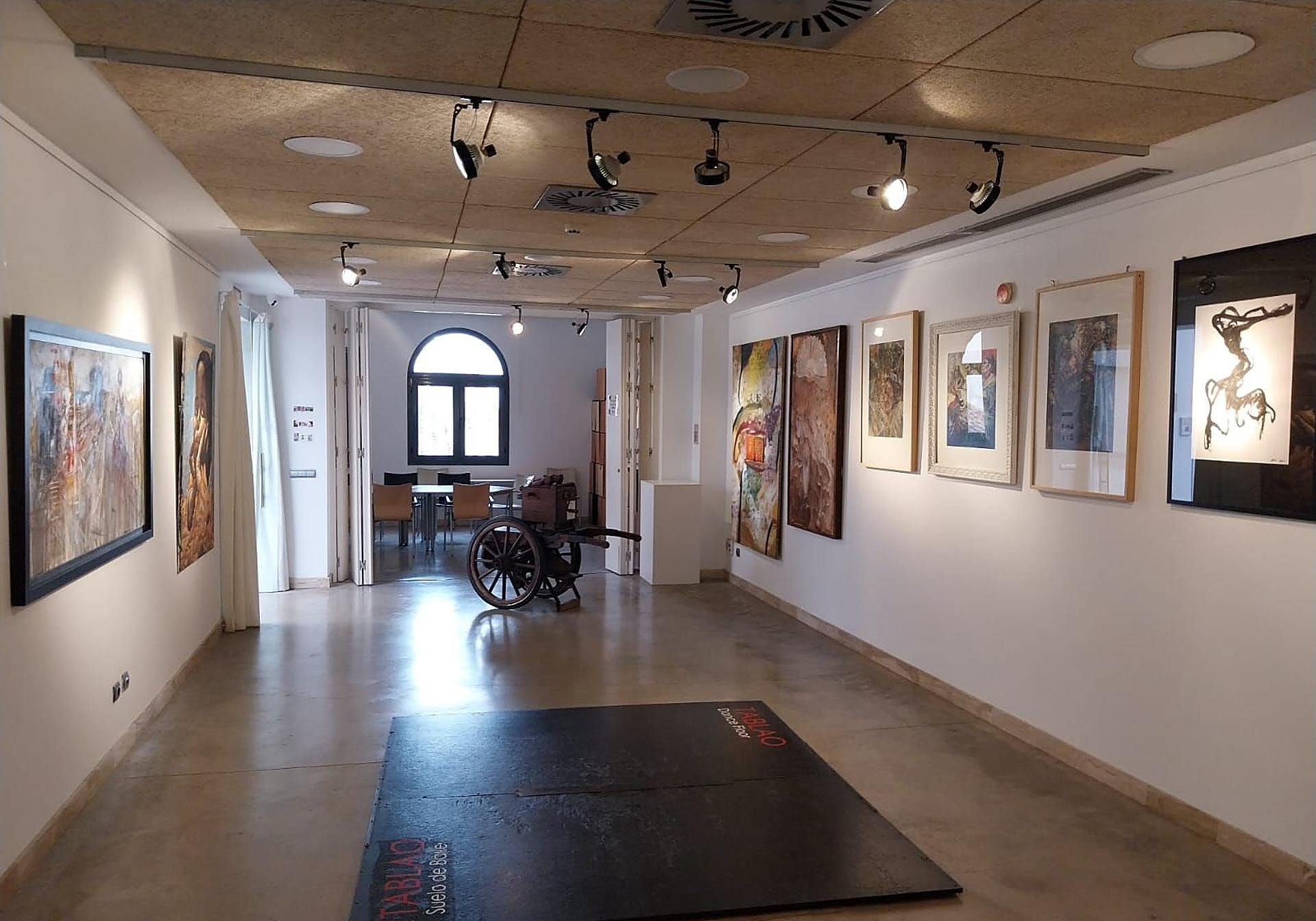
The second floor is the main exhibition space, offering rooms full of colourful paintings by numerous foreign and Spanish artists, along with sculptures and busts of legendary dancers who have left their mark on the history of Spanish dance. Lining the walls around this area are dozens of black and white photographs of some of the most famous people connected to flamenco
Well worth checking out is the machine that demonstrates the technique used with the castanets, and another that teaches the steps of the different flamenco styles.
The museum shop, which is located on the ground floor, sells everything from CD's and DVD's, to dance shoes, castanets, custom-made jewellery, guitars and posters, along with a range of flamenco books in numerous languages, including English.
![[]](http://static.vocstatic.com/voc26/latest/assets/images/favicon/surinenglish/apple-touch-icon-57x57.png)