
Extra Melilla
Melilla and its African Holy Week that reminds you of Malaga
The autonomous city celebrates Easter with many nods to Malaga’s brotherhood traditions
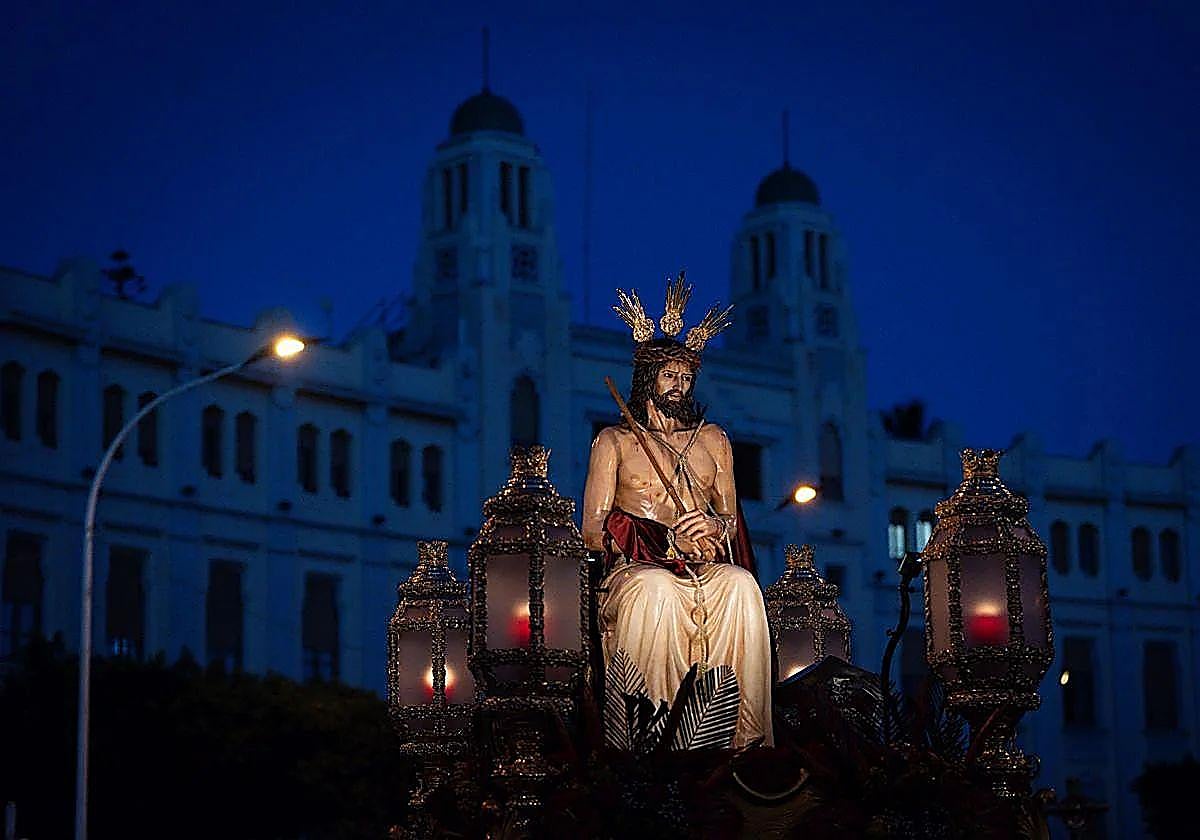
SUR in English
Melilla
It often goes unnoticed that devotion crosses the Mediterranean and beats with overwhelming force in North Africa itself. Not only do Melilla and Malaga share a diocese, but, in an embrace of faith, even share their patron saint, the Virgin of Victory.
With that shared thread of devotion, Melilla’s five brotherhoods keep the Passion alive in a way that, for many in Malaga, can feel distant, as if it belongs to another place altogether. Yet to glance at Melilla’s calendar through brotherhood eyes is to discover a captivating hall of mirrors. Melilla doesn’t ‘imitate’ Andalucía, it carries it within and reflects it back as a Holy Week filled with echoes of Malaga’s 'cofrade' culture.
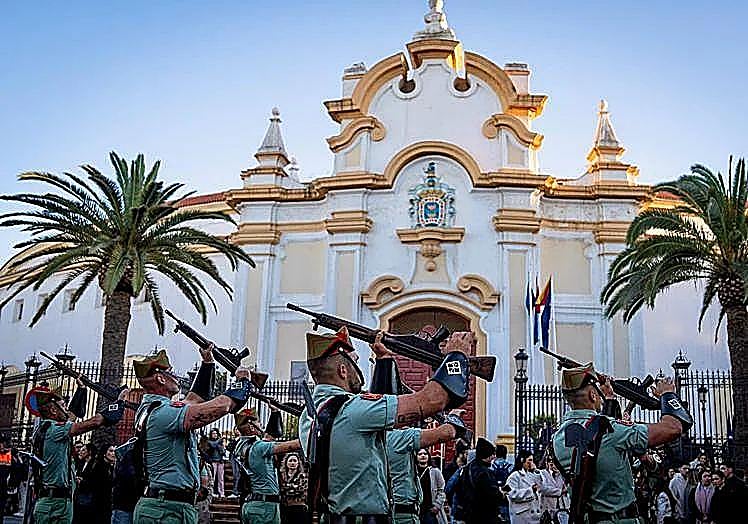
The connection begins on Palm Sunday. In both cities, Pollinica opens proceedings, sharing a bright rhythm of palms and emotion. Alongside walks María Santísima de Gracia y Esperanza, that green presence which, in the Andalusian imagination, is not just an image but a way of being. In Melilla, however, incense and the sea breeze merge as the ground trembles to the march of the Tercio Gran Capitán I of the Legion. There, hearing ‘El novio de la muerte’ is not simply listening to a march, it’s witnessing a prayer in military step, sung at full voice, as the floats pass among the palm trees of Parque Hernández. It carries the same intensity, the same shiver felt in Malaga when the legionnaires arrive to accompany the Cristo de la Buena Muerte at the church of Santo Domingo.
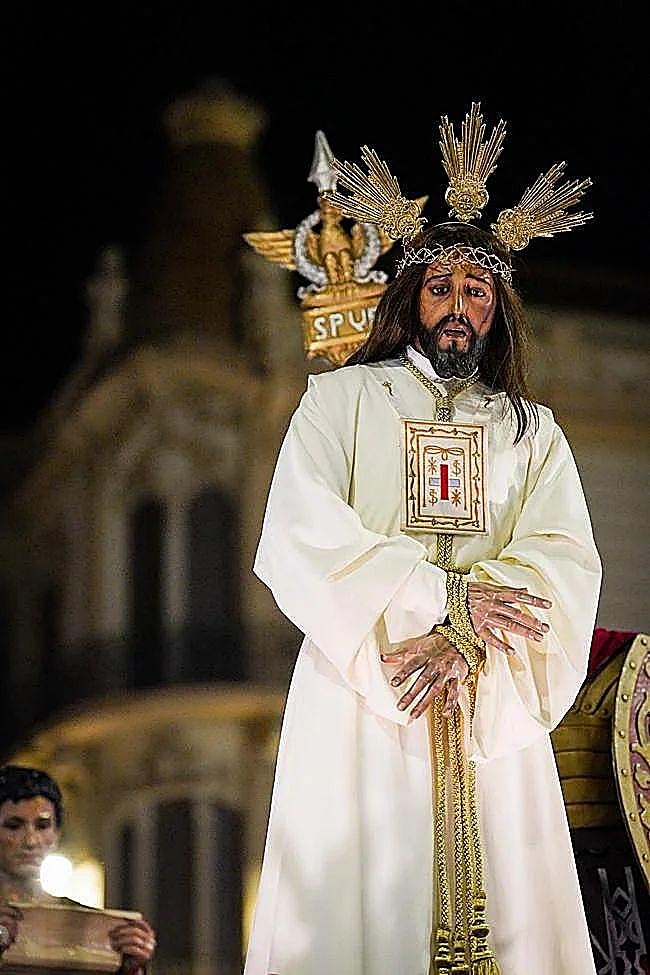
The following day, Holy Monday, dazzles in white. In Malaga, El Cautivo advances from La Trinidad in near silence. In Melilla, that same whiteness appears in Jesus Before Pilate (‘La Sentencia’). But there’s a twist: the float moves with a different rhythm, following the style seen in Seville. It feels like Andalucía in miniature, with Malaga at its heart and another way of moving in perfect balance.
Meanwhile, on Holy Tuesday, Nuestro Padre Jesús Humillado, with his burgundy velvet cloak, inevitably recalls the sober aesthetic of the Estudiantes.
Holy Wednesday offers a striking scene. The Cofradía del Nazareno sets out from the bullring, known as the ‘Mosque of Bullfighting’. The Nazareno carries clear Malaga character in both its float and its movement, while María Santísima de los Dolores provides contrast, swaying in the characteristic Seville style. Two traditions come together here, reaching their peak in the emotional encounter as the processions return.
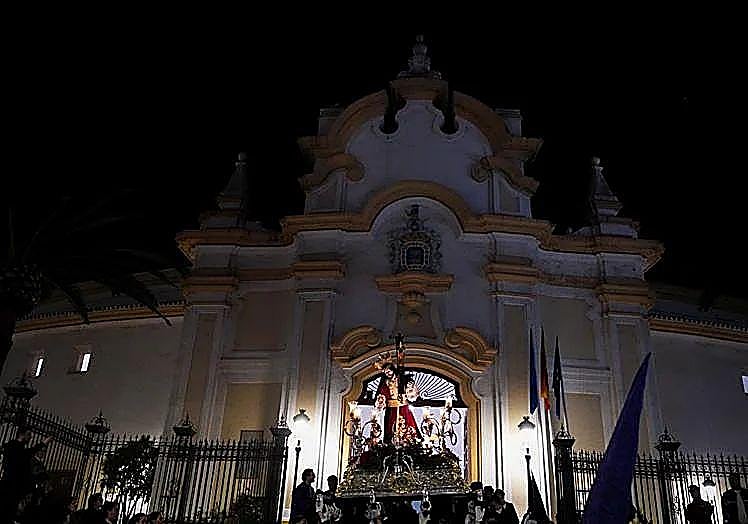
Strong emotional link
Holy Thursday is perhaps the strongest emotional link between these sister cities. Melilla’s Cautivo begins its procession surrounded by a large, working-class neighbourhood that shares a name spoken with deep devotion in Malaga, La Victoria. Along the route, the night builds to a powerful moment with the release of a prisoner, one that brings the same lump to the throat as when El Rico gives his blessing in Plaza del Obispo. That said, the connection goes beyond symbolism: a telling historical detail reminds us that the same sculptor, José Navas Parejo, created the Cautivo of Melilla and Jesús El Rico.
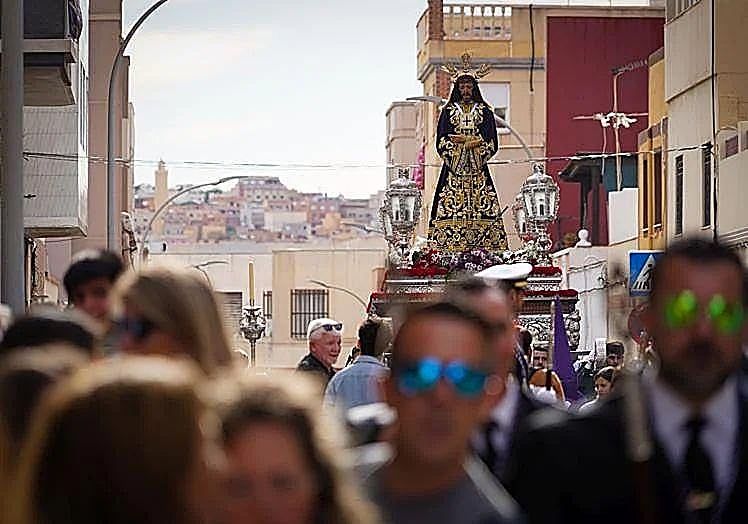
Following this, the mood shifts and the light returns. The Virgen del Rocío, known as the ‘Novia de Melilla’, glows in the darkness, similar to the ‘Novia de Málaga’. The parallels keep coming: the Flagelado and Nuestra Señora del Mayor Dolor take to the streets, echoing Malaga’s Reales Cofradías Fusionadas. Those with a keen memory will also notice that the Cristo de la Paz is now carried on what was, for decades, the float of Malaga’s Resucitado. It is a powerful image, one of carved wood that has crossed the sea and found a new story.
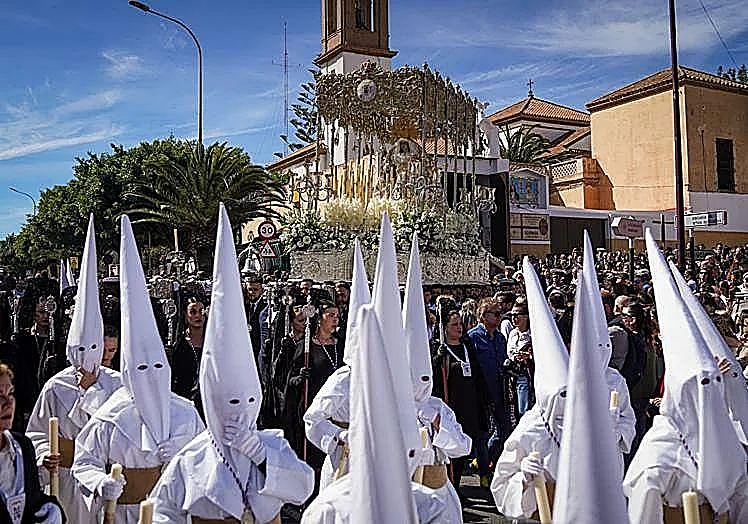
Good Friday draws to a close with the Soledad de Nuestra Señora, in a mood of quiet reflection that recalls the Servite Order in Malaga’s historic centre. The wide Avenida Juan Carlos I falls completely dark, and the people of Melilla light the Virgin’s way with their own candles.
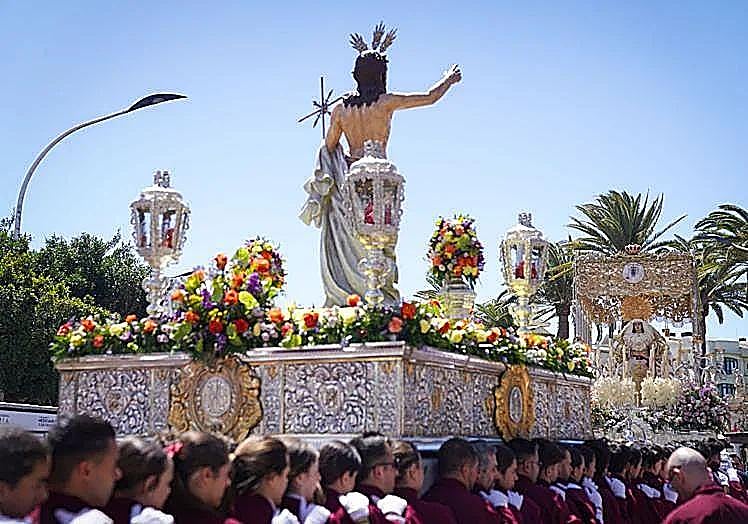
For those who stay a little longer, there is something Malaga doesn't have: on Easter Sunday, the Plaza de España bursts with faith as the Resucitado meets the Virgen del Rocío, who returns to the streets for this encounter with her son.
Diverse and hospitable
All of this is made possible by the tireless efforts of the brotherhood members themselves. The same people who carry the floats one day may be musicians or 'nazarenos' the next. Set to the familiar sound of Andalusian marches, this Passion offers something unexpected: the chance to experience devotion without the crowds or the pressure. There is space to take it all in, to listen to a full march and to appreciate the silence before a ‘levantá’ or the strike of a bell.
People of other faiths also take part in the brotherhoods, reflecting Melilla’s remarkable multicultural character.
For first-time visitors, Melilla is, above all, a place of constant surprise that welcomes you with open arms. Its people are famously hospitable, and the rhythm of daily life adds to the experience. While afternoons and evenings belong to the processions, incense and devotion, the mornings invite you to explore the city in the bright Mediterranean light. What's more, the spring weather makes it hard to resist a first swim of the year on its beaches or a quiet escape to its sheltered coves.
Plenty to explore
With the sea breeze as a companion, a walk through the city naturally leads to its striking modernist architecture, designed by Enrique Nieto, which turns streets like Avenida Juan Carlos I into open-air museums. From there, the contrast is clear as you step into the walled enclosure of Melilla la Vieja, a fortress city overlooking the sea, where five centuries of history live on within its walls.
Walking through this network of stone streets evokes key moments from its past, such as the Siege of Melilla. That history is closely tied to the city’s military heritage, which still reflects its strong links with the Spanish Legion and the Regulares. Visitors can explore this legacy through local museums and barracks.
After this journey through time, the food takes centre stage. Melilla’s cuisine tells the same story of coexistence as its streets. Traditional Andalusian fried fish sits alongside Berber spices, while seasonal dishes such as salt cod stew and torrijas remain essential at this time of year. It is a fitting ending in a city where Christians, Muslims, Jews and Hindus share the same skyline.
If you are looking to escape mass tourism and overcrowded streets, consider heading to the other side of the Mediterranean. In Melilla, you will find the perfect place to truly switch off, with quiet beaches and a captivating Passion that evokes Malaga but can be experienced at a slower, more relaxed pace. If you want to breathe deeply and enjoy tradition carried on the Levante breeze and warmed by Africa, create a playlist with your five favourite Holy Week marches. That's roughly the flight time between Malaga and Melilla, your next destination.
Make the most of this Holy Week by discovering a truly unique place, a corner of Spain in Africa, washed by the Mediterranean. Find the best discounts on flights at https://bonosmelilla.es/.
![[]](http://static.vocstatic.com/voc26/latest/assets/images/favicon/surinenglish/apple-touch-icon-57x57.png)