
Travel
Lublin's hidden history, beyond breweries and delicious pastries
Poland. A multicultural city built on legendary tales, Lublin offers more than good beer and a quiet ambience
Anya Soares
For visitors, southeastern Poland may appear to be quietly unassuming. Although perhaps after a weekend in bustling Krakow, and only a three-hour train ride away, Lublin province offers a respite.
Engulfed by evergreen forest - that is the Unesco protected Balowieza forest - and many ancient stone castles, this region is nothing short of a fairytale.
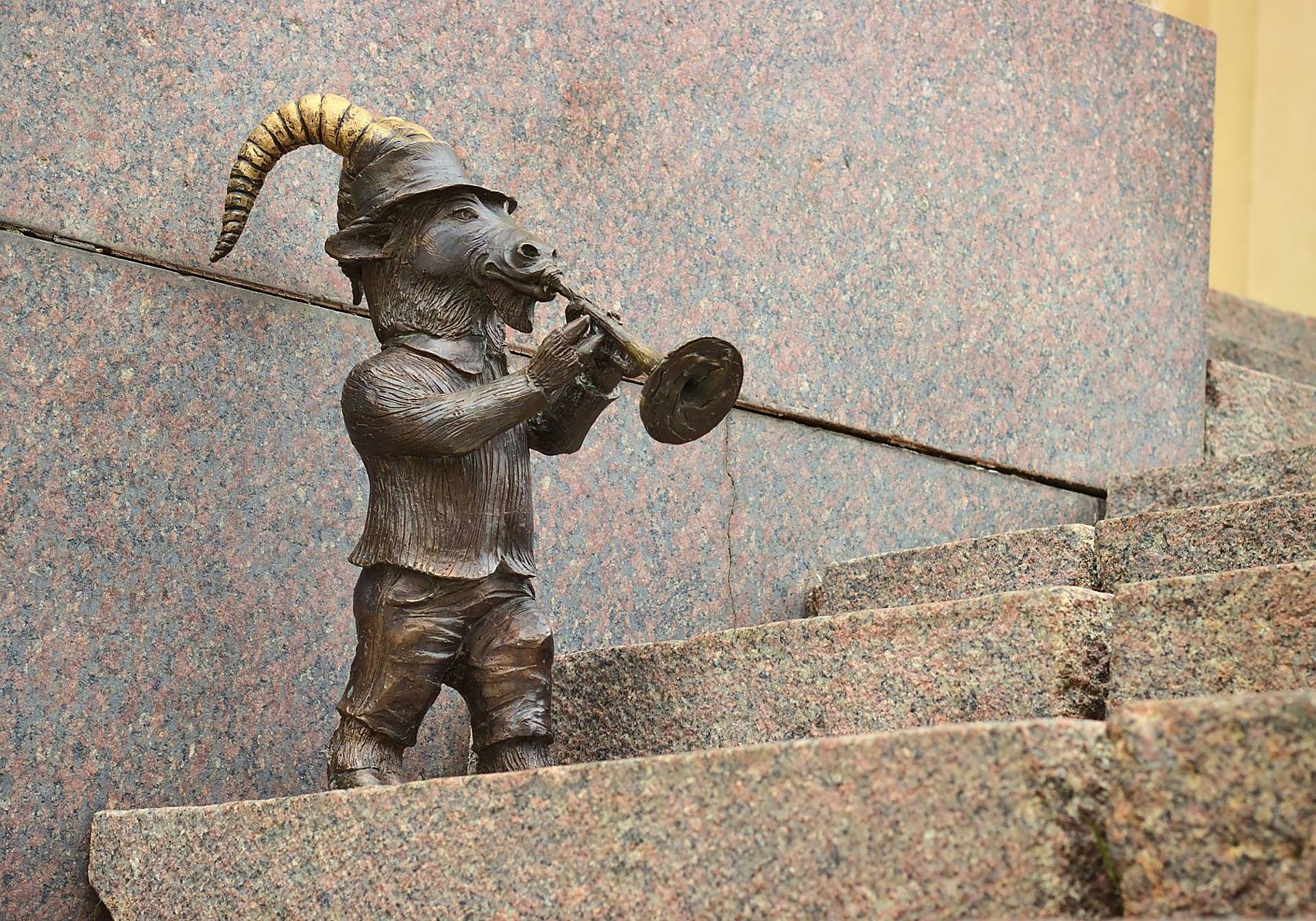
Like many tales of old, Lublin is folkloric, where legends are embedded into the fabric of the city. For instance, there are bronze billy goat statues dotted around the old town, counting 1 in total. These are curious creatures: one character reads a book; another plays the trumpet.
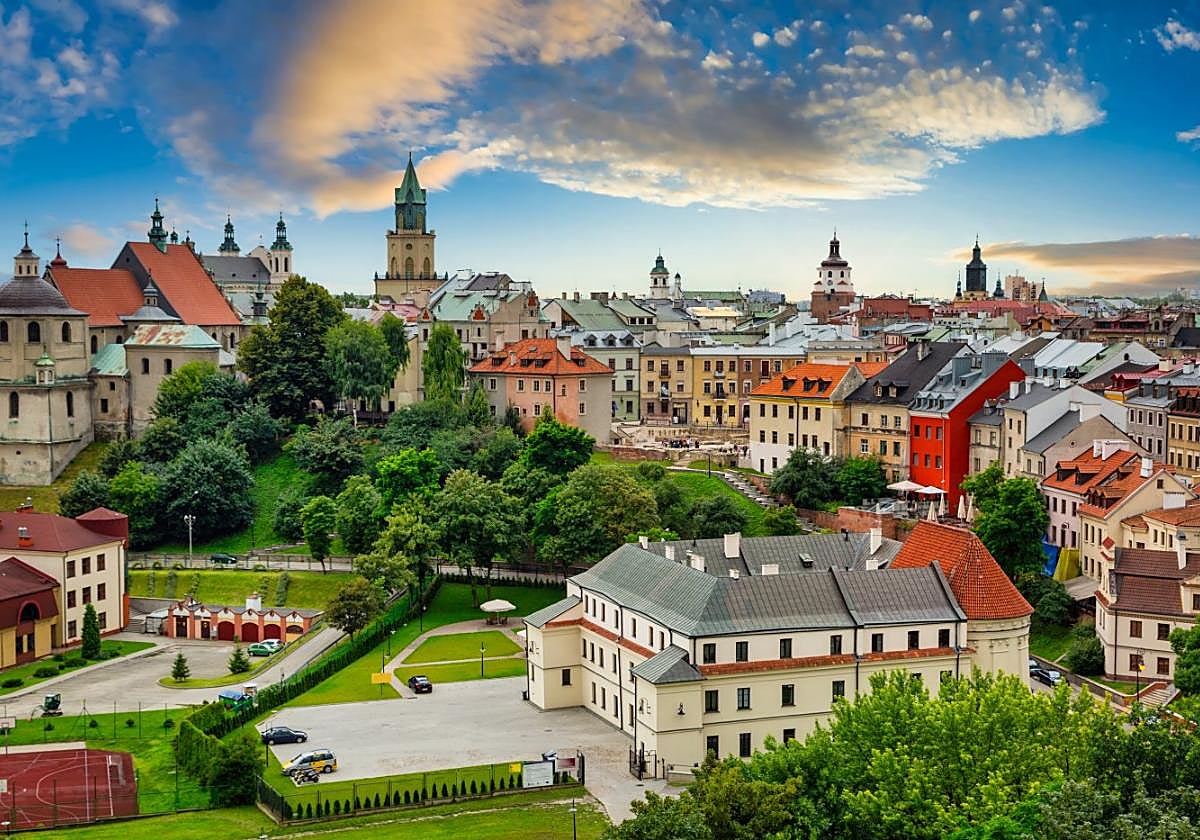
Lublin stand out for its distinct architectural style, differing from other European cities
Goats
Legend has it that during the Tartars brutal invasion of Poland in 1241, a handful of children managed to flee by taking refuge in a ravine, and only survived through drinking the milk of a goat. Once Lublin was liberated, the story spread far and wide, and the ruler at the time, King Ladislaus I (nicknamed King Ladislaus the Short) enjoyed the tale so much that he granted Lublin municipal rights, and the goat was placed on its coat of arms.
As well as its goats, Lublin stands out for its distinct architectural style, differing from other European cities, where the European gothic and baroque styles predominate.
The Great Fire
Notably, this innovation only came as a result of the 'Great Fire' of 1575, when a blaze spread throughout the city and decimated many of its monuments and religious buildings, which were originally made from wood.
The story goes that the fire can be blamed on one resident. In preparation for the feast of St Stanislaus (the patron saint of Poland), a citizen called Jadwiga was frying pancakes, and then she promptly fell asleep. What started as a small fire in her kitchen quickly spread, and resulted in the majority of the city being burned down.
Lublin's renaissance
During Lublin's reconstruction in the late 16th and early 17th centuries, the Lublin Renaissance architectural style rose to prominence. The city's status as a powerful trading hub that connected Eastern and Western Europe (as well as being the seat of the Polish-Lithuanian commonwealth) meant that the city experienced relative economic prosperity. Reconstruction was bolstered by a wave of Italian masons and architects who emigrated to Poland and then redesigned the city with stylistic influence from the Italian Renaissance movement, but used local materials. This, in turn, gave birth to the Lublin Renaissance movement.
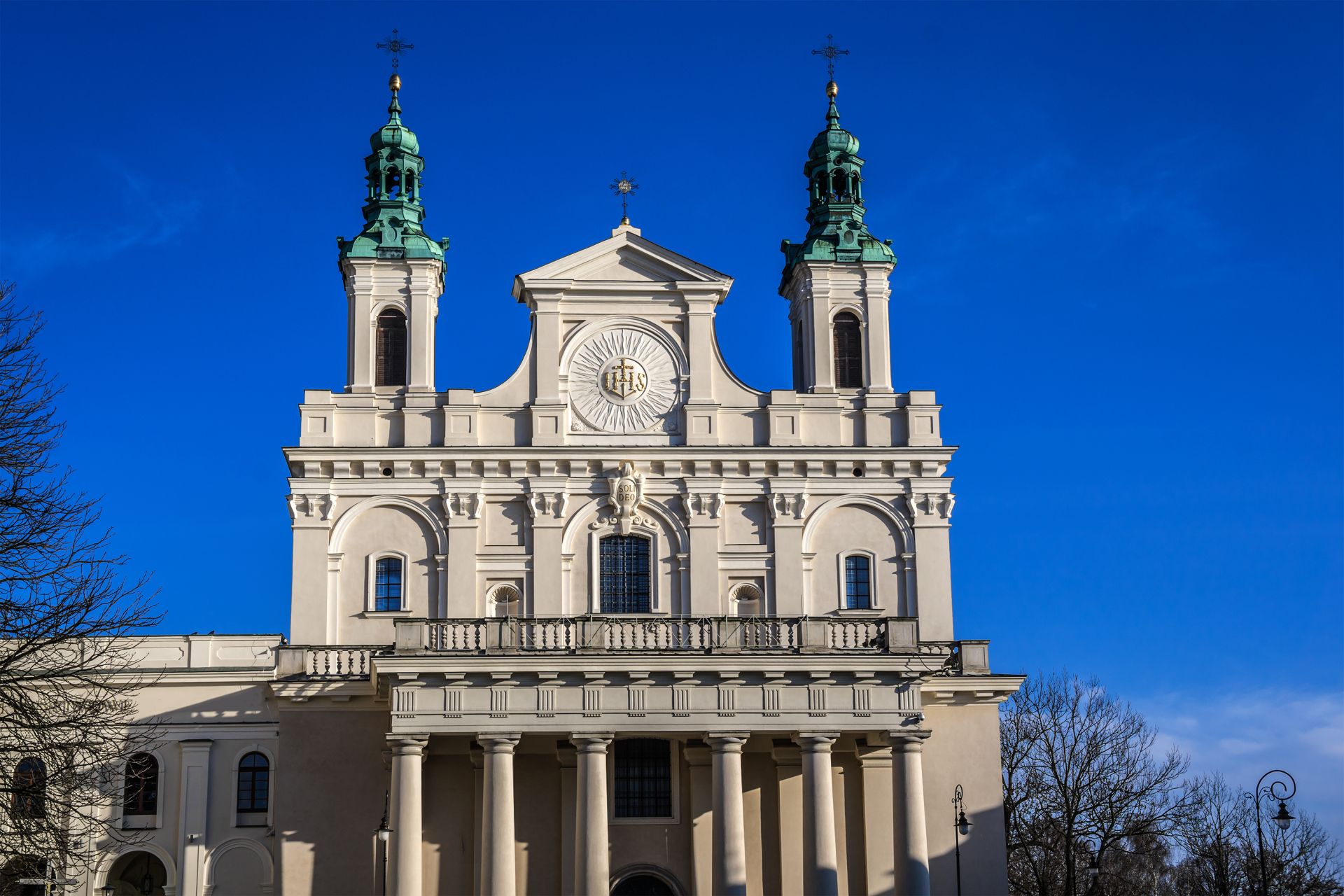
Furthermore, there are many examples of buildings in this style in Lublin's old town, which isn't just home to cosy pubs selling Perla beer (a local beer brewed in Lublin), but also beautiful sites that were reinvented centuries ago, such as the Church of St John the Baptist or Lublin Cathedral.
The latter is markedly part of the Lublin Reinaissance movement, characterised by its single nave, frescoes on the ceilings depicting scenes from the Bible, and a rich baroque interior that managed to survive the Great Fire, dating back to the 14th century.
The Jewish quarter
However, despite the number of Catholic churches in Lublin, it would be wrong to assume that the inhabitants of the city were Catholics. Due to its position as a strategic trading hub, the city saw waves of immigrants from all over Europe - from the Tartars to Ashkenazi Jews - emigrate to Lublin.
Much like Prague, Lublin had a sizeable Jewish population; in the early 20th century, 42,000 out of the city's 120,000 were Jewish. However, once Poland was occupied by the Nazis in 1939, all traces of the Jewish Quarter - including the synagogue complex and hospitals - were destroyed. An estimated 30,000 people were deported to concentration camps across Europe.
Madjanek is one of six concentration camps still left in Poland, found on the outskirts of Lublin, and is a site that not only tourists visit, but also Jewish people who choose to honour their ancestors by remembering the darkest parts of their history.
Unlike the city's beautiful religious buildings, or its well preserved Old Town - Jewish life could never be rebuilt, only commemorated.
For instance, Grodzka gate is one of the archway entrances to the Old Town, and it used to bridge the now erased Jewish Quarter with the rest of the city, facilitating a cultural blend between Catholics, Orthodox Christians and the Jewish population of Lublin.
Today, Grodzka gate hosts a permanent exhibition called Lublin. Memory of the Place (2009), which features a photographic archive of Jewish historical life pre-WW2, and an artistic installation devoted to the memory of what once was.
Although Lublin may appeal to passersby for its cobblestone streets and pastry shops selling 'cebularz' (a tasty traditional onion-filled pastry), it's easy to overlook its history - one of beauty, sadness and folklore.
![[]](http://static.vocstatic.com/voc26/latest/assets/images/favicon/surinenglish/apple-touch-icon-57x57.png)